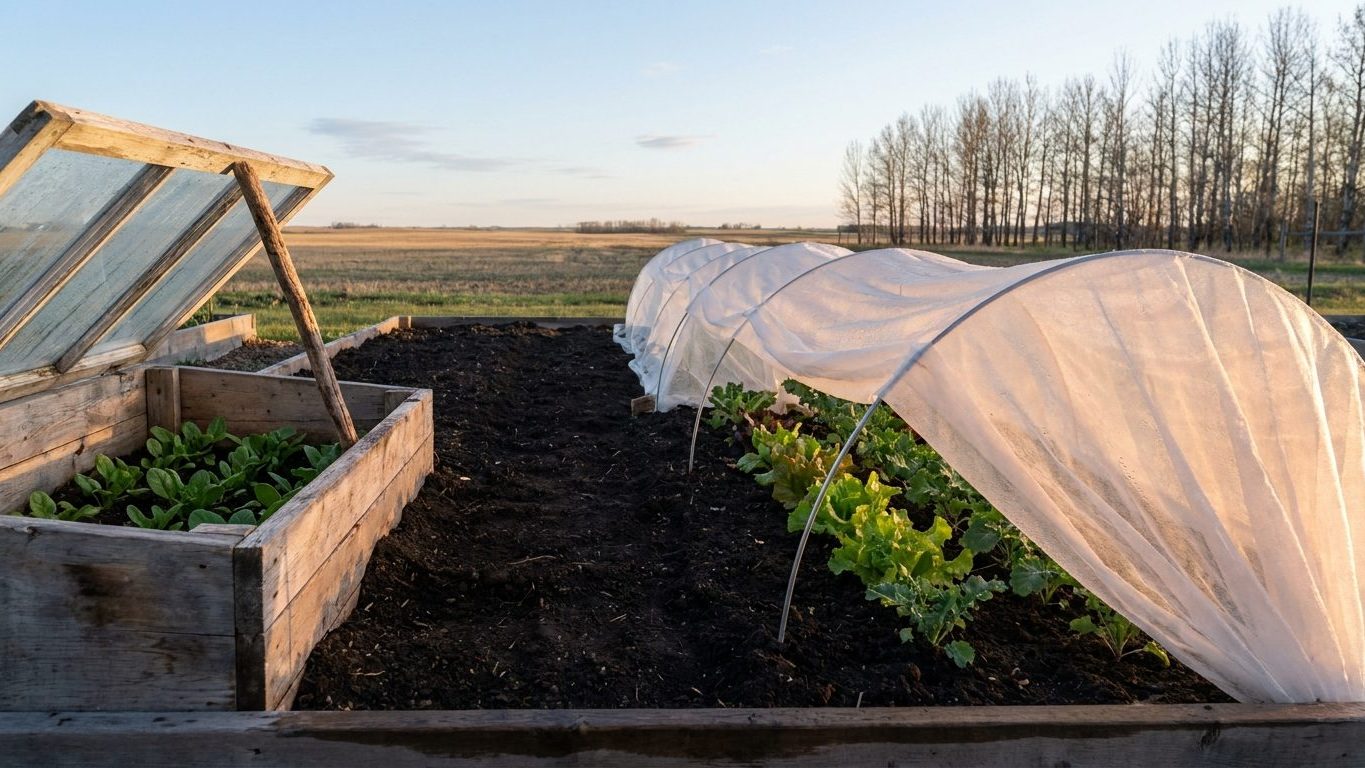

Sturdy, simple covers do the job in Colorado: floating row cover, low tunnels and cold frames. Wind, strong sun and late wet snow wreck flimsy kits, so anchoring and venting matter more than the brand on the box. Done well, covers buy a few weeks at each end of the season for cool-season crops and tender transplants. They will not turn a mountain town into Denver, and they will not rescue a crop sown too late.
The short answer for Colorado
Match the cover to the job. Floating row cover handles light frost on seedlings and transplants. Low tunnels hold spinach, lettuce and peas through cold snaps. A cold frame carries hardy greens into winter, and water-filled plant protectors give tomato and pepper transplants a head start. A high tunnel pays off only when it is anchored deep and braced for wind and snow load.
The frost dates explain the timing. At the Denver reference station, the last spring freeze falls between May 1 and May 11, and the first fall freeze between September 30 and October 12. Those dates bracket the 30 to 70 percent probability band of a 32°F freeze in NOAA’s 1991-2020 climate normals.
Which season extender fits which job?
| Extender | Best use on the Front Range | What to watch |
|---|---|---|
| Floating row cover | Light frost protection, early transplants, insect barrier | Pin or bury the edges; wind lifts loose fabric fast |
| Low tunnel | Cool-season crops in early spring and late fall | Vent on sunny days; wet snow can flatten weak hoops |
| Cold frame | Hardening off, hardy greens from fall into winter | Prop the lid open whenever the sun is out |
| Water-filled protectors | Tomato and pepper transplants in spring | Remove or open them once nights stay mild |
| High tunnel | Larger plantings, longer seasons at both ends | Deep anchoring, bracing, daily venting |
Can covers carry a garden through a Colorado winter?
Partly. The coldest month at Denver has a mean daily minimum of 18.4°F, and an unheated cover only softens that. Hardy crops such as spinach and kale survive under it, but they grow very little. Denver sits at 39.83 degrees north, so winter days are short, and growth nearly stops in the deepest part of winter whatever the temperature under the cover. Plan fall crops to reach size while the days are still long, then treat the cover as a place to store and harvest them.
What will not work here

Heat-lovers sown on a hopeful schedule are the first thing to fail. Melons, okra and sweet potatoes need a long warm stretch, and a May 1 to May 11 last-freeze window followed by a freeze as early as September 30 leaves little margin. A cover adds a few weeks at best. It does not add the sustained warmth those crops need, and in a mountain town, where frost can arrive in July, it adds even less.
Why do closed tunnels fail on sunny Colorado days?
Thin air and bright sun heat a closed tunnel or cold frame quickly, even in cold weather. A bed that sits near freezing at dawn can cook by early afternoon with the ends shut. Seedlings wilt or scorch within hours. Plastic laid directly on leaves is worse, because it burns tissue where it touches. Any structure you cannot open at midday, or cannot reach until evening, is the wrong choice for this climate.
Why does weekly watering fail under cover?
Low humidity and steady wind dry soil fast, and a tunnel also keeps rain and snow off the bed. A gardener who waters once a week by habit will find the soil under cover bone dry between visits. Drip lines or a soaker hose, checked by pushing a finger into the soil, work better. Check beds under cover more often than open beds, not less.
Wind, hail and wet snow finish off the weakest gear. Lightweight row cover held down with a few stones ends up in the neighbor’s yard. Thin plastic shreds in a hailstorm. Spring and fall storms drop heavy, wet snow that bows slender hoops flat. Use stakes or earth anchors, add bracing hoops, and brush snow off tunnels promptly. Timing matters too: covering a bed after a freeze has already hit does little good, and When to Cover Your Garden in Colorado walks through when to put covers on and when to pull them off.
Late sowing is the last trap. Cover does not stretch the daylight, so seeds sown in September for a fall crop have almost no time left to grow before the first freeze window opens on September 30.
What changes across Colorado
Colorado is not one garden. The USDA Plant Hardiness Zone Map (2023, built on 1991-2020 normals) places the state in zones 3b through 7b. That spread covers high mountain valleys, the Front Range plains and warmer low country, and no single recommendation fits all of it. The Denver dates above are a reference point, and the frost dates there are far from typical for the whole state.
Hardiness zones are built on the average annual extreme minimum temperature. They tell you which plants survive winter. They say little about when frost ends in spring, and a gardener who relies on the zone number alone can be caught by a June freeze. Look up your location on the USDA map for your zone, and treat it as one input rather than an answer.
Readers in the north or at altitude should shift in a consistent direction. Expect a shorter season and later spring planting. Lean on sturdier protection, such as double layers of row cover, taller or better-braced tunnels and cold frames, and choose fast, cold-tolerant crops. Mountain towns can frost in July, so keep cover on hand all summer. On the western slope, the pattern differs again from the plains, so Denver’s dates do not carry over. Denver’s latitude is 39.83 degrees north, and a reader far from that, in the far north or south of the state, should check their own latitude as well. A broader overview is in Extending the Growing Season in Colorado.
Where to check this for your own county
Start with Colorado State University Extension, which runs offices serving counties across the state. A county recommendation beats a state one, because a county office knows the local elevation, the frost pockets, the typical wind and the soil. Anything written for the whole state, Denver’s dates included, is a starting point.
Look for two things there. The first is the local planting calendar for your area, which gives dates adjusted to your elevation and frost pattern. The second is the list of varieties trialled in your county. Extension staff and Master Gardener volunteers test which varieties actually produce under local conditions, and the results often differ sharply between a plains county and a mountain one.
Ask the office what they recommend for season extension in your area: which cover fabrics, how much wind protection and what snow load to plan for. Staff in a mountain county will have a different answer from staff on the plains, and that difference is worth more than any statewide rule.
Checking this against your own garden
Your own observations outrank every date in this article. Three are worth watching, and none needs equipment.
- Soil warmth by feel. Push your hand into the soil at planting depth in the morning. If it feels cold, seeds and transplants will sit idle. Compare a covered bed with an open one: the difference tells you how much your cover actually helps, and a south-facing wall bed that feels warmer shows where early crops belong.
- The first flush of male flowers. Squash and cucumbers open male flowers first, females later. If the males appear under cover well ahead of an open bed, the cover is working. Open the cover once females appear so bees can pollinate.
- The first true leaves. Seedlings show seed leaves first, then true leaves that look like the mature plant. Slow true leaves after a cold week point to a cold or windy spot. A bed that outpaces the others marks your warmest microclimate.
Keep notes for a season or two. Over time they will show which corner of your yard warms first, which collects cold air and which takes the wind, and that map will serve you better than any statewide average.
Common questions
Can I plant tomatoes before May 1 with a season extender?
Water-filled protectors and row cover can help transplants through cold nights, but a late freeze or hail can still hit. The last spring freeze at the Denver station falls between May 1 and May 11, so keep cover handy and be ready to close it if the forecast turns cold.
Is row cover or a cold frame better in Colorado?
They do different jobs. Row cover is cheap, light and good for frost protection over a whole bed. A cold frame holds heat better and suits hardening off and winter greens, but it needs daily venting on sunny days.
Do season extenders work in mountain towns?
They help, but they cannot make up for a very short season. Frost can come in July at altitude, so choose cold-tolerant, fast crops, use sturdier protection and ask the county extension office what has worked locally.
How do I keep covers from blowing away?
Bury or pin the edges, use stakes or earth anchors for tunnels and add bracing hoops. In open, windy sites, a low profile fares better than a tall one. Check anchoring before storms, and brush wet snow off promptly.