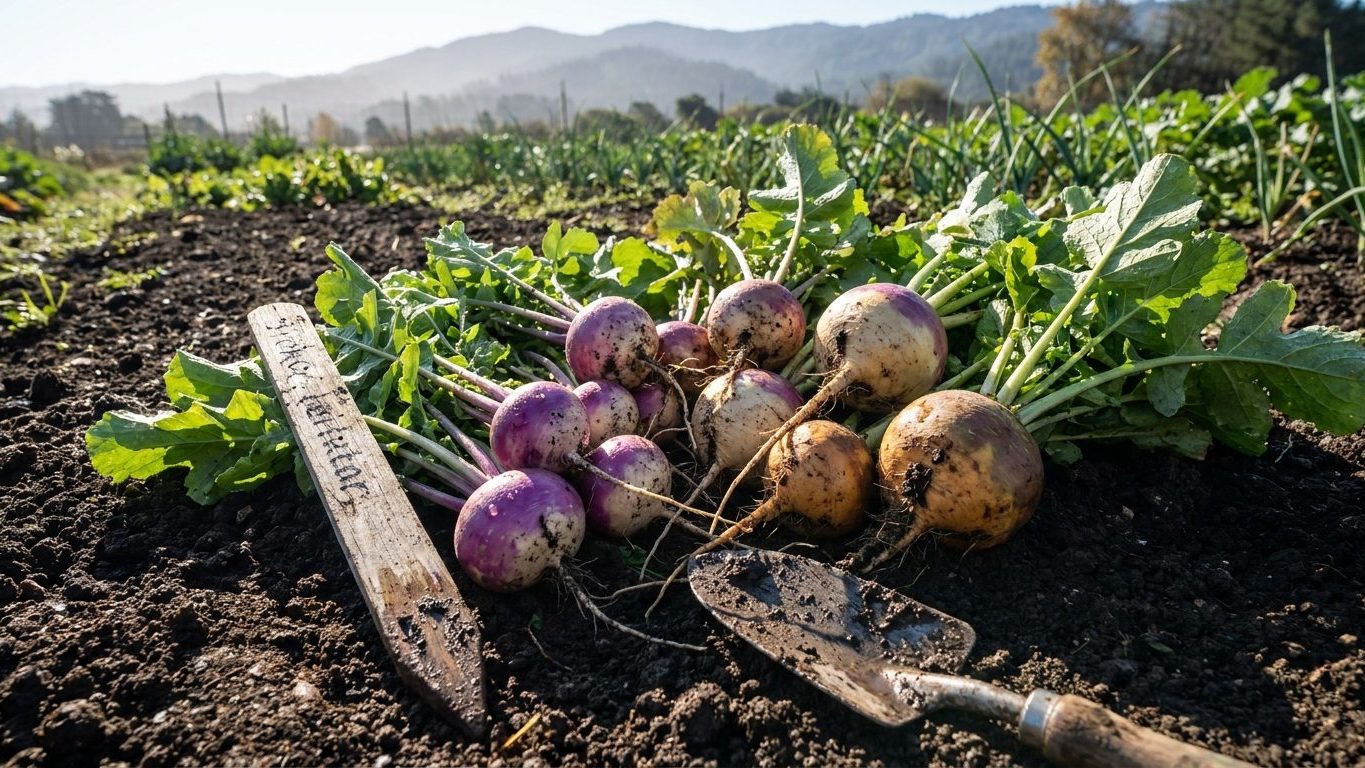

In Pennsylvania, quick small-rooted turnips suit spring and late summer, and rutabaga does best as a fall crop sown early enough to get its full season. Purple Top White Globe, Hakurei and Scarlet Ball are good turnips to start with. American Purple Top is the standard rutabaga. Sowing date matters more than the variety name, and the state’s frost dates explain why.
The short answer for Pennsylvania
Pick by type, and let the days to maturity on the packet decide. Count them from sowing, since both crops go straight into the ground. At the Philadelphia reference station, the last spring freeze (32°F) falls between March 29 and April 6, and the first fall freeze falls between November 5 and November 16. Those dates sit in the 30 to 70 percent band of the probability of a 32°F freeze, so a frost can still arrive outside them. The coldest month averages a daily minimum of 26.0°F, cold enough that roots left in the open ground all winter are a gamble.
That spring-to-fall stretch is long enough for two turnip crops and one rutabaga crop. Here is how the types sort out:
| Type | Examples | Typical days from sowing | Best slot in Pennsylvania |
|---|---|---|---|
| Quick salad turnip | Hakurei | About 35 to 40 | Early spring, and again from late summer |
| Standard globe turnip | Purple Top White Globe, Scarlet Ball | About 45 to 60 | Late summer for fall harvest |
| Rutabaga | American Purple Top, Laurentian | About 90 to 100 | Early to mid summer for a late fall harvest |
Which turnip varieties grow best in Pennsylvania?
Hakurei is a white, smooth-skinned salad turnip that is quick to mature, so it fits the narrow window between thawed soil and warm weather. Purple Top White Globe is the old standard for a reason. It sizes up in a cool fall, holds in the ground through light frosts, and stores for a few weeks in the refrigerator. Scarlet Ball adds a red-skinned option with the same timing.
Which rutabaga varieties suit Pennsylvania?
American Purple Top and Laurentian are the dependable, widely sold choices. Both need about three months of mostly cool growth, which is why they belong in the summer slot. The Growing Turnips and Rutabaga in Pennsylvania guide covers the full growing routine, and When to Sow Turnips in Pennsylvania lays out the sowing windows week by week.
What will not work here

A rutabaga sown in April is the classic mistake. It needs a long season, so it would mature in the heat of July or August. Roots that swell in warm weather turn woody, strongly flavored and prone to splitting. Rutabaga wants its last month or two of growth in cool autumn air, and Pennsylvania supplies that only if the seed goes in during early to mid summer.
The reverse trap catches fall turnips. Sow a quick globe turnip in mid-October and the first freeze, due between November 5 and November 16 at Philadelphia, arrives before the root sizes up. Cold slows growth to a crawl, and light frost only sweetens a root that is already mature. Count back from the first fall freeze date, add a week or two of cushion for slowing growth in shortening days, and you have your last safe sowing date.
Spring sowings have a clock too. Turnips planted in late April or May run into warm weather, and the roots turn pithy and sharp. Plants may bolt, sending up a flower stalk, once days lengthen and nights warm. Cabbage root maggot is also worst in the cool, moist spring that suits the crop, and the flies lay eggs at the base of young plants. Row cover laid at sowing keeps them off.
Humid summers punish crowding. Pennsylvania’s muggy weather lets leaf diseases take hold when turnip tops are packed together and the foliage stays wet. Thin globe turnips and rutabaga to give each plant room, and water the soil rather than the leaves.
Weekly watering fails in the dry spells that hit most summers. A deep soak that leaves the top inch dry between waterings suits the crop, and seedlings sown in July or August can die before they get established. Newly sown rows need light, frequent watering until they sprout. After that, uneven moisture (a dry stretch, then a heavy storm) is what splits roots.
Finally, heavy clay and stony ground distort roots into forks and knobs. Loosen beds deeply and pull out rocks, or give up on long roots and grow rounder types instead.
What changes across Pennsylvania
The state does not have a single answer. On the USDA Plant Hardiness Zone Map, which is built on the average annual extreme minimum temperature, Pennsylvania runs from 5a to 7b. That is a spread of six half-zones, from the Alleghenies and the northern tier down to the southeast corner around Philadelphia. The frost dates quoted above belong to Philadelphia, the mildest corner of the state.
Move north or uphill and spring arrives two to four weeks later, with fall frost coming earlier. A reader in the northern tier or on a ridge in the Alleghenies should shift every date on the calendar accordingly. Spring turnips go in later, once the soil is workable, and fall sowings start sooner to beat an earlier freeze.
Rutabaga is the crop that benefits most from a cool climate. Where summers are shorter and cooler, it can be sown in June and finish sweet. The same variety sown on the same day in the southeast may face a hot August in its middle weeks. Gardeners in the cooler north can also pick slow, large-rooted types more confidently.
Elevation matters even within a county. A hillside garden can hold frost later in spring than a valley floor a few miles away. To find your zone, use the USDA Plant Hardiness Zone Map and enter your ZIP code. Then adjust the dates to match.
Where to check this for your own county
The best local source is Penn State Extension, the state’s land-grant extension service, which has an office serving every county. Two things are worth looking for. The first is a local planting calendar for fall root crops. The second is any list of varieties that have been grown and tested in your part of the state. Extension educators and Master Gardener volunteers answer questions about timing, pests and soil in their own county, and they know which local conditions catch gardeners out.
A county recommendation beats a state one. Pennsylvania spans six half-zones and weather that changes with every ridge and river valley, so a statewide guide can only describe the mild southeast and tell you to adjust from there. Everything above is that state-level view. When a county office gives a sowing window that differs from the one here, go with the county.
Soil testing is also worth the small fee. Extension offices can explain how to collect a sample and where to send it, and results show pH and nutrient levels. Turnips and rutabaga like a pH near neutral, and a soil test will show whether you need lime. They also tell you whether the bed is short of the nutrients that keep rutabaga roots sound.
Checking this against your own garden
Your own observations outrank any date in a guide. Three are easy to make without any equipment.
- Soil warmth by feel. Push a hand into the bed in the morning. Soil that feels cool but not cold, and crumbles instead of clumping, is ready for spring turnips. If the soil is still cold, sowing can wait. In midsummer, the soil may be too hot to touch comfortably. Mulch it or sow in the evening, and keep the bed damp.
- First true leaves. The first pair that emerges are rounded seed leaves. The true leaves that follow are rough and lobed. Seedlings that reach that stage promptly are on pace. Slow emergence points to cold soil or dry conditions.
- Your first frost. Note the morning when frost whitens the lawn, and compare it to the dates here. If frost reaches your garden earlier than expected, you probably have a frost pocket, and every fall sowing date should move earlier.
Keep a note of what happens each year. After two or three seasons, those dates will serve you better than any regional average.
Common questions
Can I grow turnips and rutabaga in the same bed in Pennsylvania?
Yes, though not in the same season in the same spot. Both are brassicas, as are cabbage and broccoli, and they share the same soil pests and diseases. Rotate them to a different part of the garden each year, and avoid following any other brassica crop with them.
What is the best turnip variety for fall in Pennsylvania?
Purple Top White Globe is the usual pick for a fall crop. It tolerates light frost, sizes up well in cool weather and gives you both roots and greens. Sow it so the days to maturity fit before the first fall freeze, which at Philadelphia falls between November 5 and November 16.
Do turnips survive Pennsylvania winters in the ground?
Not reliably. The coldest month averages a daily minimum of 26.0°F at the reference station, and the state’s colder zones go well below that. Roots can sit through light frosts, but a hard freeze damages them. Harvest before a deep freeze, or cover with a thick layer of straw to extend the season.
When should I plant rutabaga in Pennsylvania?
Aim for early to mid summer so the roots finish in cool fall weather. Count back from your expected first fall freeze. Gardeners in the northern tier and the Alleghenies should sow earlier because frost arrives sooner there.