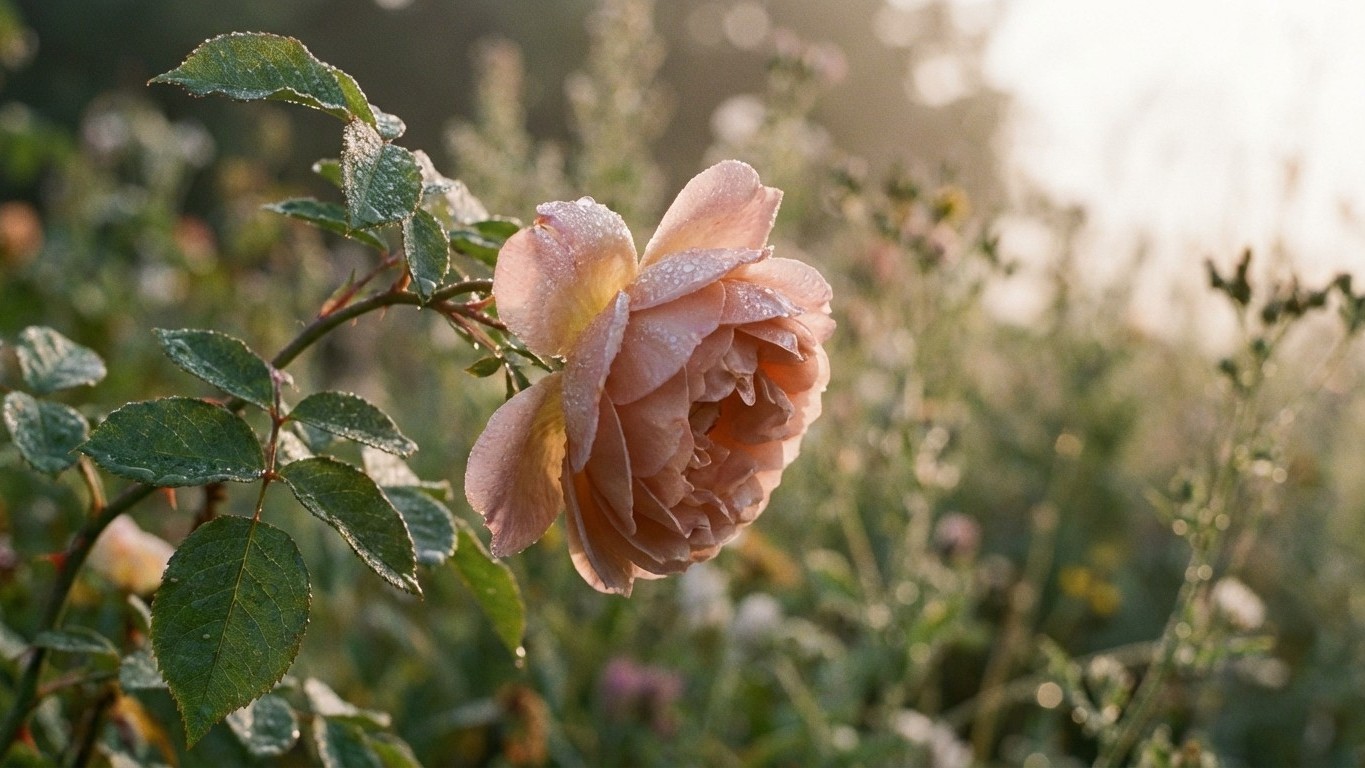

Rugosa roses, the Explorer series, and Parkland roses come through a Maine winter with little fuss, and Knock Out does in the milder south and along the coast. Hybrid teas, grandifloras, tree roses and many English roses sold at garden centers do not, unless you work for it every fall. Maine runs from zone 3b in the far north to 6b or warmer on the southern coast, so a rose that thrives in Portland can die in northern Maine. Anyone new to growing roses in Maine should start with these choices.
Which roses survive a Maine winter
What do USDA zones mean for roses in Maine?
Maine runs from 3b to 6b, with a few warmer coastal pockets, on the 2023 USDA Plant Hardiness Zone Map, which is a wide spread for one state. The USDA system rests on a single number, the average annual extreme minimum temperature. Northern and high inland Maine sit at the cold end of that range, and the sheltered coast sits at the warm end. A rose rated for the warm end can lose every cane above the snow line in the north.
Frost timing matters too, because wood that is still soft when the first hard freeze arrives is the wood that dies. Portland is the mild end of the state. At that reference station, NOAA NCEI climate normals put the last spring 32°F freeze somewhere between April 22 and May 1, and the first fall freeze between October 9 and October 21. Those are probability bands, not single dates. Inland and northern Maine run substantially later in spring and earlier in fall, so the growing season is shorter and canes have less time to harden off.
Which rose types clear the cold?
Rugosas sit at the cold end of what roses can take. Rosa rugosa, an Asian species, has naturalized along the Maine coast, shrugging off salt spray, sand and wind. Its hybrids inherit most of that toughness, and they are the safest bet in the coldest parts of the state.
The Explorer series comes next. These roses were bred in Canada for Canadian winters, and the climbers and shrubs in the line are good choices if you want a rose on a fence or arbor in Maine. Parkland roses, bred in Manitoba, work in the same way. Old garden roses such as gallicas and albas also handle cold well, though they bloom only once a season.
Hybrid teas are the other end of the scale. They were bred for flower form and a long bloom season, not for cold. Across most of Maine they need mounding and wrapping, and in the colder zones they often die to the ground even with protection. Floribundas fall somewhere in between. If you can’t give a rose fall and spring attention, skip these types.
Named roses that hold up here
Start with Hansa, a rugosa with double, magenta-purple blooms and a clove scent. It handles the coldest zones in Maine and the salt of the coast, and it sets large red hips. Therese Bugnet is another rose, with pale pink flowers on tall, reddish canes. It is one of the hardiest repeat-blooming roses you can buy, and it can take cold that would flatten most shrub roses. Both are widely sold and often grown on their own roots, which helps in the coldest zones.
Henry Hudson is a compact rugosa hybrid with white flowers that stays small enough for a foundation planting. It is a hardy rose that resists the foliage problems that bother other roses in Maine’s damp summers.
For climbers, William Baffin and John Cabot, both from the Explorer series, are the standard recommendations. William Baffin is a deep pink climber known for taking cold harder than almost any other climber. John Cabot has magenta flowers and handles most Maine winters with canes left standing. In the coldest zones, either one may lose some canes in a bad year but will regrow.
Knock Out is one of the best-known shrub roses in the country. It is rated hardy to zone 5, so it works in southern and coastal Maine, with a caveat. It blooms from early summer until frost and resists many common rose diseases. In colder parts of the state it can die back close to the snow line in a hard winter. It usually resprouts from the base. If it dies back, cut the dead canes to live green wood in spring and expect it to bloom later than it would farther south. Because it blooms on new growth, you lose less than you would with a once-blooming rose.
New Dawn is a pale pink climber that tolerates poor soil and some shade. It is hardy enough for coastal and southern Maine, where it usually comes through with some tip dieback. Inland, expect to lose more canes, so plant it against a south- or west-facing wall where it gets shelter. It is worth growing in the warmer parts of the state, but not a safe pick for the far north.
Sold here, but not for this zone
Garden centers in Maine buy from national suppliers. Shelves fill each spring with roses bred for Georgia, California and the Pacific Northwest, and the tag may not say that Maine winters will kill them. Hybrid teas are among the most common offenders, with classics such as Peace and Mister Lincoln on the shelf almost every season. They bloom beautifully and then die back to the graft or the ground after a hard winter.
Grandifloras and many floribundas fall in the same group. Tree roses, also called standards, are among the most vulnerable, because the whole trunk is exposed to wind and cold. They are usually grafted at the top of a tall stem, and a freeze that reaches the graft kills the plant above it. Gardeners in cold states typically bury or wrap them every fall, or treat them as annuals.
English roses, the David Austin type, are a mixed group. Some come through southern and coastal Maine with minimal fuss, while others are marginal even there. Mass-market versions sold in boxes or bags can be even less hardy. Miniature roses in pots, sold around Valentine’s Day and Easter, were forced under glass. They are rarely hardy outdoors unless you buy a named hardy cultivar.
None of these is a bad rose, but they require a plan. If you want one, plant it where it gets shelter, and protect the crown every fall before the ground freezes. Detailed methods are covered in Protecting Roses Through a Maine Winter. Without that protection, expect to replace the rose every few years, which gets expensive.
What to check on the label before buying
Start with the grade. Roses sold bare-root are graded, and the top grade has thicker canes and more of them than the lower grades. A No. 1 plant has more reserves to survive a hard first winter. Cheaper packaged roses are often a lower grade and cost less for that reason.
Next, find out whether the rose is grafted or grows on its own roots. A grafted rose is a cultivar joined to the roots of a different, tougher rose, and the bump where they join is the graft union. In cold climates, a hard freeze can kill the top above the graft. The rootstock may then send up shoots, but those shoots are the rootstock, not the rose you paid for, and the flowers are usually different and inferior.
An own-root rose avoids that problem. If a freeze kills the canes, new growth from the roots is the same variety you planted. The colder your zone, the more this matters, because dieback is more likely and more severe. In cold parts of Maine, own-root is the clear choice. Near the coast, grafted roses are more workable if you protect them.
Many sellers list own-root on the tag or in the online description. If the tag does not say, ask, or look for a bump near the soil line. Choose own-root plants wherever the choice exists, and check that the hardiness zone on the tag covers your location. Roses with fewer disease problems also help in Maine’s humid summers, and Rose Diseases in Maine: What the Climate Here Actually Brings explains which ones to watch for.
Checking this against your own county
Zone maps and frost bands are a starting point, and conditions change between towns, valleys and hilltops. The best local check is University of Maine Cooperative Extension, which has offices that serve each county. Staff and trained volunteers there know which roses are working in your area and what the winter did to them. Call your county office before you buy more than a plant or two, and ask which cultivars have survived locally and what zone your site falls in.
Common questions
What is the hardiest rose for northern Maine?
Rugosas such as Hansa and Therese Bugnet are the safest choices, along with Explorer and Parkland roses. Most handle zone 3b conditions, especially on their own roots, but check the hardiness rating of each cultivar, since a few Explorer roses are rated only to zone 4.
Can I grow hybrid teas in Maine?
You can, but they need protection each fall, and in colder zones they may die even so. Plant them in a sheltered spot, mound soil over the crown, and be prepared to replace them.
Does Knock Out really survive Maine winters?
In southern and coastal Maine, usually. Knock Out is rated hardy to zone 5, so in colder areas it can die back to near the snow line, and it normally regrows from the base and blooms on the new wood.
Is an own-root rose always better?
In Maine it is the safer choice. If the canes freeze, regrowth from the roots is the variety you bought, while a grafted rose may come back as the rootstock.