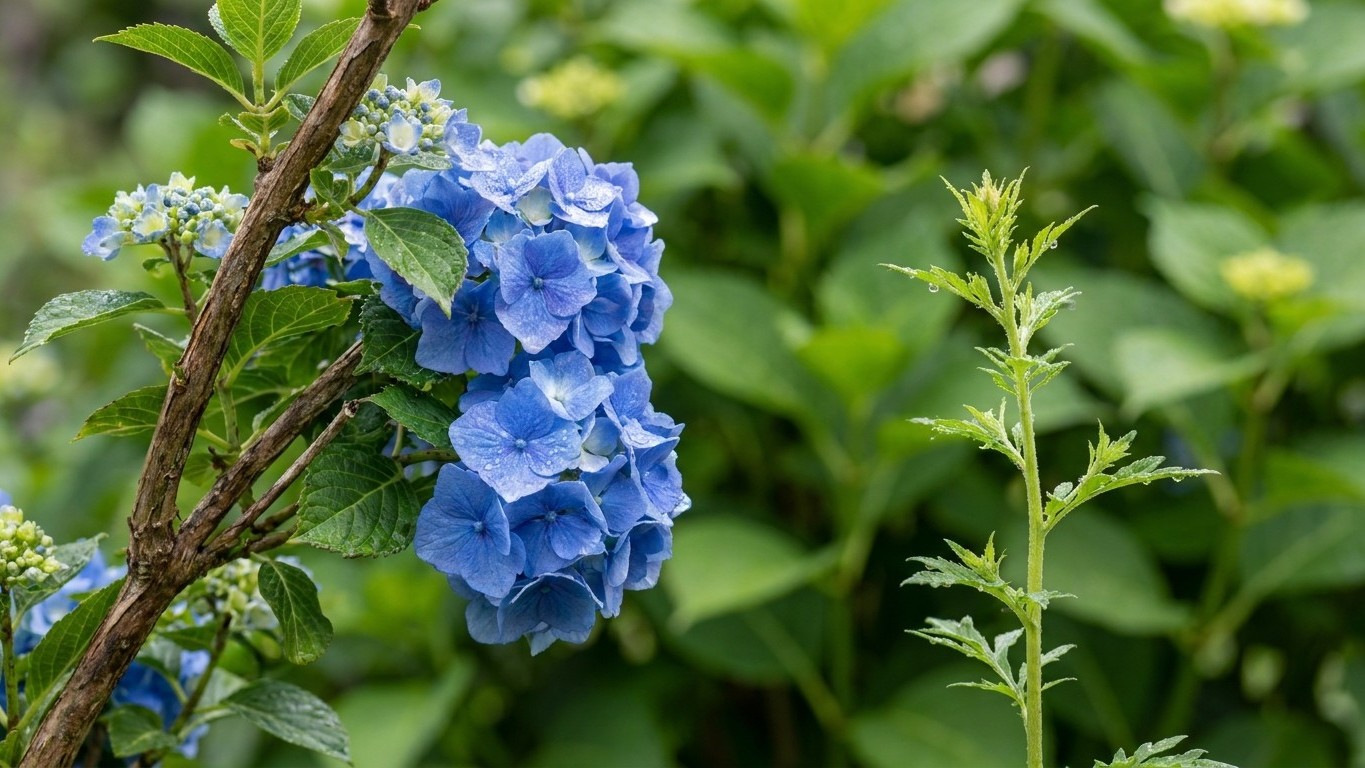

Hydrangeas that bloom on new wood, such as panicle and smooth types, get pruned in late winter or early spring before the leaves open. Hydrangeas that bloom on old wood, such as bigleaf and oakleaf, get pruned right after the flowers fade in summer. Michigan’s late springs add one rule. Hold off on old-wood types until the leaves open, because that is when you can see which stems survived the winter.
What this comes down to in Michigan

The frost window sets the pruning calendar. The last spring frost falls around April 30 in the Detroit area and in early to mid May across most of the Lower Peninsula. New-wood hydrangeas get cut before that window, while they are still dormant. Old-wood hydrangeas get their first look after it, once buds have broken and you can see what is alive.
The reason is where the flowers come from. Bigleaf and oakleaf hydrangeas set next year’s flower buds on their stems in late summer and early fall. Cut those stems in fall, winter or early spring and the blooms go into the brush pile with them. Panicle and smooth hydrangeas grow fresh stems each spring and flower at the tips, so a late-winter cut only shapes the plant. In Michigan, cold winters add a second factor, because bigleaf stems often die back partway or to the ground. Spring pruning for those plants is mostly a cleanup of wood that did not make it.
| Type | Blooms on | When to prune | How much |
|---|---|---|---|
| Panicle (such as Limelight) | New wood | Late winter to early spring, before leaves open | Up to about one-third of the plant |
| Smooth (such as Annabelle) | New wood | Late winter to early spring, before leaves open | Down to a low framework, or to about 6 to 12 inches above the ground |
| Bigleaf and mountain | Old wood, and new wood on reblooming types | Right after flowering ends; dead wood once leaves open in spring | Remove spent flowers and dead stems only |
| Oakleaf | Old wood | Right after flowering ends | Very little; thin crowded or crossing stems |
Which hydrangeas should you prune in late winter?
Panicle and smooth types. The window runs from the last cold stretch of winter into early spring, ideally before buds swell much and green shows at the nodes. Waiting until the buds fatten costs little, as long as you finish before leaves unfurl. Cutting later than that wastes the growth the plant has already invested.
Which hydrangeas should you prune after they bloom?
Bigleaf, mountain and oakleaf types. The best time is soon after the flowers fade, usually in midsummer. Buds for next year start forming in late summer, so prune soon after the flowers fade rather than waiting. Reblooming bigleaf types, which flower on both old and new wood, forgive more, but a light trim still beats a hard cut. Flower color is a separate question that pruning does not touch. The explanation is in Why Hydrangeas Are Pink in Michigan, and How to Turn Them Blue.
Working it out for your own garden
The method survives a move or a strange spring: first identify the type, then match its pruning moment to your local frost window. Everything else follows from those two answers.
How do you find your pruning window?
Start with the last spring frost range for your area. In the Detroit area it is around April 30, and across most of the Lower Peninsula it is early to mid May. For old-wood types, treat the end of that range as the day you stop waiting. Buds on bigleaf stems usually break after frost danger has mostly passed, so a hydrangea that looks dead in April may simply be asleep. Give the shrub until leaves show on the lower stems, then start judging. In a colder yard it points to later in May or even early June.
For new-wood types, count backward instead. Pick the cold, dry stretch of late winter when the plant is plainly dormant, and finish before the last frost range begins to feel close. A panicle hydrangea cut in a mild spell in March does fine. One cut in late May, after it has leafed out, loses stems that were already growing.
What does it look like to get it right and wrong?
Take a panicle hydrangea first. You cut it back by about a third in March while it is bare. It pushes new stems in spring, flowers on them in summer, and the cut cost it nothing. Now take a bigleaf hydrangea given the same March haircut. Last summer’s flower buds sat along the stems you removed, so it leafs out beautifully and produces few or no blooms. The bloom wood decides the calendar, and the line falls between those two plants.
If you do not know which type you have, check the plant tag or the leaf shape. Cone-shaped flower clusters usually mean a panicle. Big white snowball heads on a plant whose stems often die back in winter usually mean a smooth. Large, glossy, rounded leaves suggest bigleaf, and leaves shaped like oak leaves are unmistakable. When you cannot tell, wait for the plant to bloom and prune right after, which is safe for nearly every type.
For dead wood on any type, use the scratch test from the box above. Cut dead stems back to a pair of live buds or to the ground. Live stems stay.
What changes across the state
Michigan stretches across USDA hardiness zones 4a to 6b, and that range is built on a single variable, the average annual extreme minimum temperature. The Detroit area sits at the milder end, in zone 6b on the 2023 USDA map. Farther north, spring comes later and winter kills more wood.
In the northern Lower Peninsula and the Upper Peninsula, buds break later, so old-wood types need more patience before you judge winter damage. Expect the whole calendar to slide later by weeks rather than days. Dieback is also deeper there. Bigleaf hydrangeas often die to the snow line or the ground, and a blooming year depends on how much snow cover they had. Panicle types, which are hardier, are the usual pick in those colder spots, and their late-winter pruning window can run into early spring because the ground stays frozen and the plant stays dormant longer.
The Great Lakes matter too. Along the Lake Michigan shore, the water holds back spring warmth, which delays bud break and can protect buds from an early warm spell followed by a freeze. Inland sites a few miles away may leaf out sooner and then face a frost. The southeast and the far southwest warm up first. A hydrangea on a sheltered south wall in town may break buds days before an identical one in an open field.
Whatever your location, watch the plant rather than the calendar. Swelling buds and green at the nodes tell you when dormancy is over. The extension frost data tells you when the risk window is closing.
The mistakes this state punishes

Fall cutting is a costly one. A tidy-up in October or November removes next summer’s bloom on bigleaf and oakleaf hydrangeas, and it strips stems that insulate the buds below them. Leave old-wood types standing through winter, remove dead wood after leaf-out, and do any shaping right after flowering.
The second mistake is reacting to a warm spell. A string of warm days in March tempts people to prune and uncover plants. Michigan routinely follows those days with hard freezes, so a bigleaf stripped of its stems or mulch early has nothing left to absorb the hit. Wait until the frost range has passed before trimming old-wood types or pulling back protection.
A third is pruning panicle and smooth types too late. Once new growth is well underway, cutting means throwing away stems that were about to flower. If you miss the late-winter window, a light shaping is better than a hard cut.
The fourth is judging dieback too early and cutting live wood. A bigleaf that looks dead in April often has living buds near the base. Use the scratch test, and read Which Hydrangeas Survive a Michigan Winter if the same plant dies back to the ground every year. A different type may suit your yard better.
Checking this against your county
A state-wide figure is a starting point. A yard in the Thumb, a lakeshore town in the northwest and a lot in Oakland County can run weeks apart in spring. Your county office of MSU Extension can tell you local frost timing and what hydrangeas have done in recent winters nearby. For planting and general care, the guide to growing hydrangeas in Michigan covers the rest.
Common questions
Can you prune hydrangeas in fall in Michigan?
Only lightly and only for panicle or smooth types, and even then late winter is better. Fall cuts on bigleaf and oakleaf remove the flower buds already set for next summer. Fall is also the wrong time for any hard cut because the plant needs its stems to get through winter.
Why did my bigleaf hydrangea leaf out but not bloom?
The most likely cause is that the flower buds were cut off or killed by winter. Buds sit on last year’s stems, and a prune in fall, winter or early spring removes them. A hard winter can also kill them while leaving the lower stems alive. Prune after flowering next time, and consider a reblooming type, which flowers on new wood as a backup.
How far back can you cut a panicle hydrangea?
Up to about a third of the plant in a normal year. Light cuts give more but smaller flower heads. Harder cuts give fewer, larger heads, which may flop under the weight. If an old shrub has gotten leggy, you can cut harder for a rejuvenation and expect it to flower again that summer.
Should you deadhead hydrangeas?
On bigleaf types, remove spent blooms in midsummer by cutting just above the first pair of healthy leaves. Do not cut deeper, or you will take next year’s buds. On panicle and smooth types, many gardeners leave the dried heads for winter interest and cut them off during the late-winter prune.