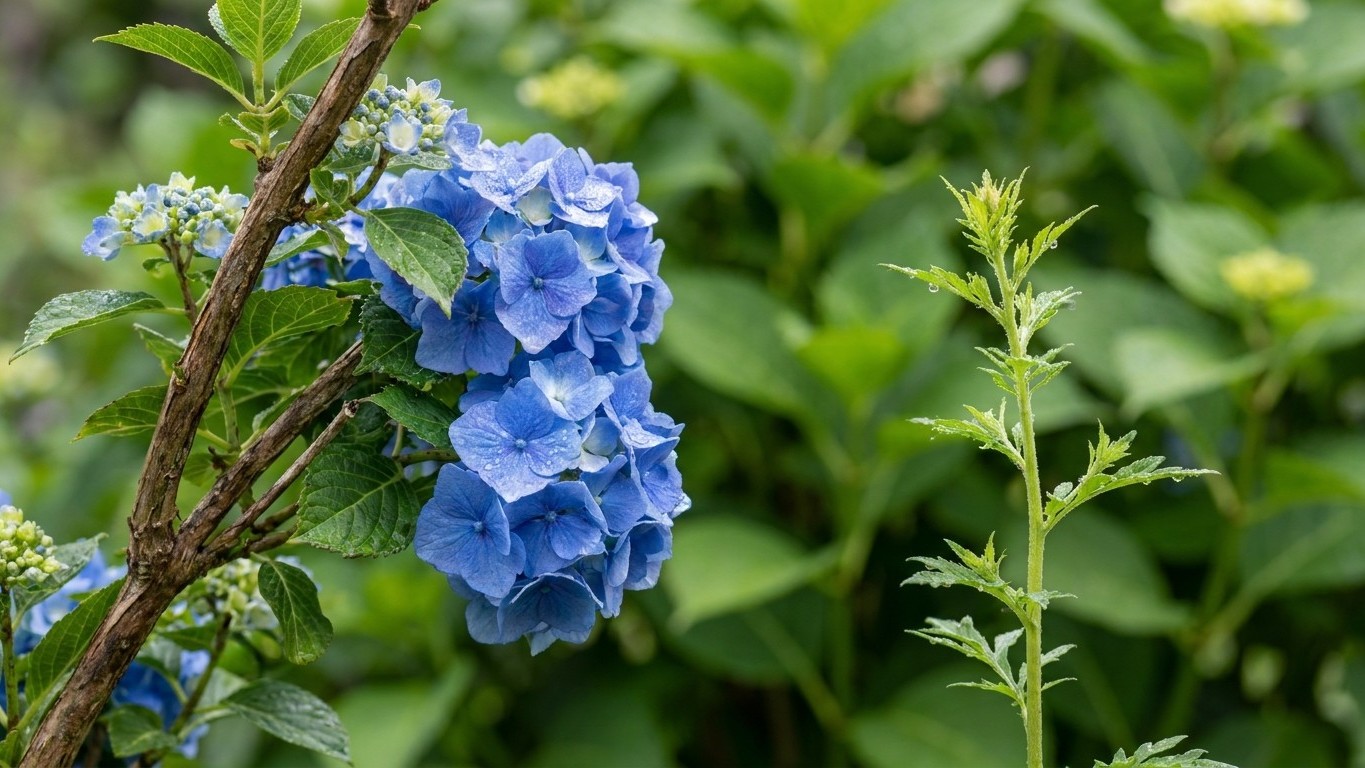

Hydrangeas that bloom on old wood, mainly the bigleaf types, need real winter protection in Newfoundland and Labrador. Their flower buds are already formed on last season’s stems, and one hard winter can wipe them out. Panicle and smooth hydrangeas bloom on new wood and usually need only a thick mulch over the crown. Protection goes on once frost has put the plant to sleep and before the ground locks up.
What this comes down to in Newfoundland and Labrador
Plan to have winter protection in place in the weeks after the first fall frost, which arrives on average October 17 at the St. John’s airport station, the reference city for these numbers. That date is the midpoint of a window. In one year out of two the first frost comes earlier, so watch the plants as well as the calendar.
The same station has about 140 frost-free days between the mean last spring frost on May 30 and the mean first fall frost on October 17. St. John’s falls in Canadian hardiness zone 6a, according to Natural Resources Canada’s plant hardiness site. That is a Canadian-system zone built from seven climate variables, and it does not convert to a USDA zone. The agency itself says there is no simple conversion between the two. If a plant tag lists only a USDA number, treat it as a rough guide.
Which hydrangeas need winter protection in Newfoundland and Labrador?
Bigleaf hydrangeas (the mopheads and lacecaps) carry next summer’s flower buds on stems that grew last season. Lose the stems or the buds and you lose the flowers. Oakleaf hydrangeas also bloom on old wood but tend to be tougher. Some reblooming bigleaf selections flower on both old and new wood, so a bud loss costs them less.
Panicle and smooth hydrangeas flower on the current season’s growth. Their stems can die back hard and the shrub will still bloom, provided the crown and roots come through. For a closer look at which types make it through at all, see Which Hydrangeas Survive a Newfoundland and Labrador Winter. Bloom color is a separate matter, driven by soil chemistry, and is covered in Why Hydrangeas Are Pink in Newfoundland and Labrador, and How to Turn Them Blue.
What actually damages a hydrangea over winter?
Cold alone is only part of it. Maritime winters swing between freezing and thaw, and each swing can heave shallow roots out of the soil and wake buds too soon. Wind dries exposed stems while the frozen ground cannot resupply water, so twigs shrivel even when temperatures are not extreme. Coastal gardens add salt spray and road salt to the list.
Then there is the physical damage. Heavy wet snow splits branches, and ice sliding off a roof can flatten a shrub planted below the eave. Moose and snowshoe hare browse woody stems where they are common, and a hydrangea nipped to the snow line has lost its buds.
Working it out for your own garden
The method is the same in any year: anchor on the mean first fall frost, count backward for the jobs that prepare the plant, and count forward for the covering. Then adjust by what the plant is doing.
When do you start protecting hydrangeas?
Start in summer. Stop feeding well before the mean first frost, once the plant has finished its summer growth. Soft late growth is the first thing winter kills. Finish any pruning of bigleaf types before buds begin to set, because later cuts remove them. Keep watering through fall until the ground freezes, since a dry shrub goes into winter in worse shape.
Protection itself goes on after the first frosts, not before. Hold off until the leaves have blackened or dropped and the stems are bare, which often takes a couple of weeks past the first frost. In a cold year it moves earlier. A warm, green spell in late October is a signal to wait.
How do you wrap or mulch a hydrangea for winter?
For bigleaf and oakleaf types, drive stakes around the shrub just outside the stems and wrap them with hardware cloth or chicken wire. Fill the cage loosely with dry shredded leaves or straw, to the top of the stems if you can. Cap it with a breathable cover such as burlap, tied on loosely. Panicle and smooth types need only a layer of leaves, shredded bark, or compost mounded over the crown.
How do you tell winter damage from other problems in spring?
Wait for new leaves before cutting anything. Scratch a stem with a thumbnail: green underneath means alive, brown and dry means dead. If a bigleaf comes back leafy from the base but has no flowers, the old-wood buds died and the roots survived. If new shoots turn limp and black overnight after leaf-out, that is late frost on soft growth. With the mean last frost on May 30, half of all years bring frost later than that, so keep old sheets or buckets on hand. Take the cage off in stages as buds swell.
What changes across the province
The St. John’s numbers describe one corner of a very large province. Distance from the open Atlantic, elevation, and the gap between the island and Labrador all move the window.
Near the coast, the ocean holds heat into fall and delays the first frost. It also keeps spring cold and foggy, so shrubs leaf out late and late-spring frost stays a risk. A garden on an exposed headland takes far more wind than one in a sheltered valley a few miles away. Wind is often what separates a shrub that comes through intact from one that dies back to the ground.
Inland and upland districts run weeks behind the reference station in spring, and fall frost tends to arrive sooner there. That shifts the whole calendar. Feeding stops earlier, covering happens earlier, and covers come off later. Snow cover matters too. A deep, steady blanket insulates roots and low stems, while a thin or patchy one leaves them exposed to the freeze-thaw swings.
Labrador is a different gardening world. Its winters are far longer and colder than anything the island’s south-east coast sees, and most hydrangeas are a stretch there. If you garden in a northern or high-elevation district, treat even the hardier panicle types as an experiment in a sheltered spot, and ask local growers what has survived.
The mistakes this province punishes
Covering too early is a common one. A warm stretch after the first frost tempts people to wrap shrubs while they are still active. Trapped warmth and moisture breed rot and wake buds. Wait until the plant is truly dormant.
Plastic is another. Sheeting or a plastic bag holds moisture against the stems and cooks the plant on a sunny winter day. Use burlap or another breathable cover over a leaf-filled cage.
Heavy mulch piled directly against stems gives mice and voles a warm nest to chew from. Keep the fill inside a wire cage, and consider a ring of hardware cloth around the base in vole country.
Fall pruning of bigleaf types removes next year’s flowers. Cut dead wood only after leaf-out. Late fertilizer is the same kind of error: it pushes soft growth that the first hard frosts burn.
Pulling covers off on the first mild day in spring is the last one. Cold snaps and frost can still occur into early June. Open the cage gradually and keep a cover ready for frost nights.
Planting a bigleaf in a wind-scoured spot and hoping for the best also costs gardeners here. A windbreak of burlap on stakes on the windward side helps. So does a spot near a south or east wall.
Checking this against your area
A frost date from one airport station is a starting point. Your garden may sit weeks away from it in either direction. For local conditions, contact the regional office of the Newfoundland and Labrador Department of Forestry, Agriculture and Lands, and ask which hydrangeas local growers have kept alive through recent winters. For the full picture on site, soil, and care beyond winter, see our guide to growing hydrangeas in Newfoundland and Labrador.
Common questions
Do hydrangeas need to be covered every winter?
Bigleaf and oakleaf types benefit from protection every year, because a single bad winter can cost a season of flowers. Panicle and smooth types usually need only mulch over the crown. Newly planted shrubs of any kind deserve extra care in their first winters.
Is burlap or plastic better for wrapping hydrangeas?
Burlap, over a wire cage filled with dry leaves. It breathes and blocks wind. Plastic traps moisture and heat and can harm the stems.
Should I cut hydrangeas back before winter?
Leave them standing. Stems protect the buds and the crown, and bigleaf types carry next year’s flowers on them. Wait until new leaves open in spring, then remove only what is dead.
How do I overwinter a hydrangea in a pot?
Pots freeze much harder than ground soil, so roots are at greater risk. After the plant goes dormant, move it to an unheated garage or shed that stays cold but out of the wind. Water it lightly now and then so the soil does not dry out completely, and bring it back outdoors once hard frosts are over.