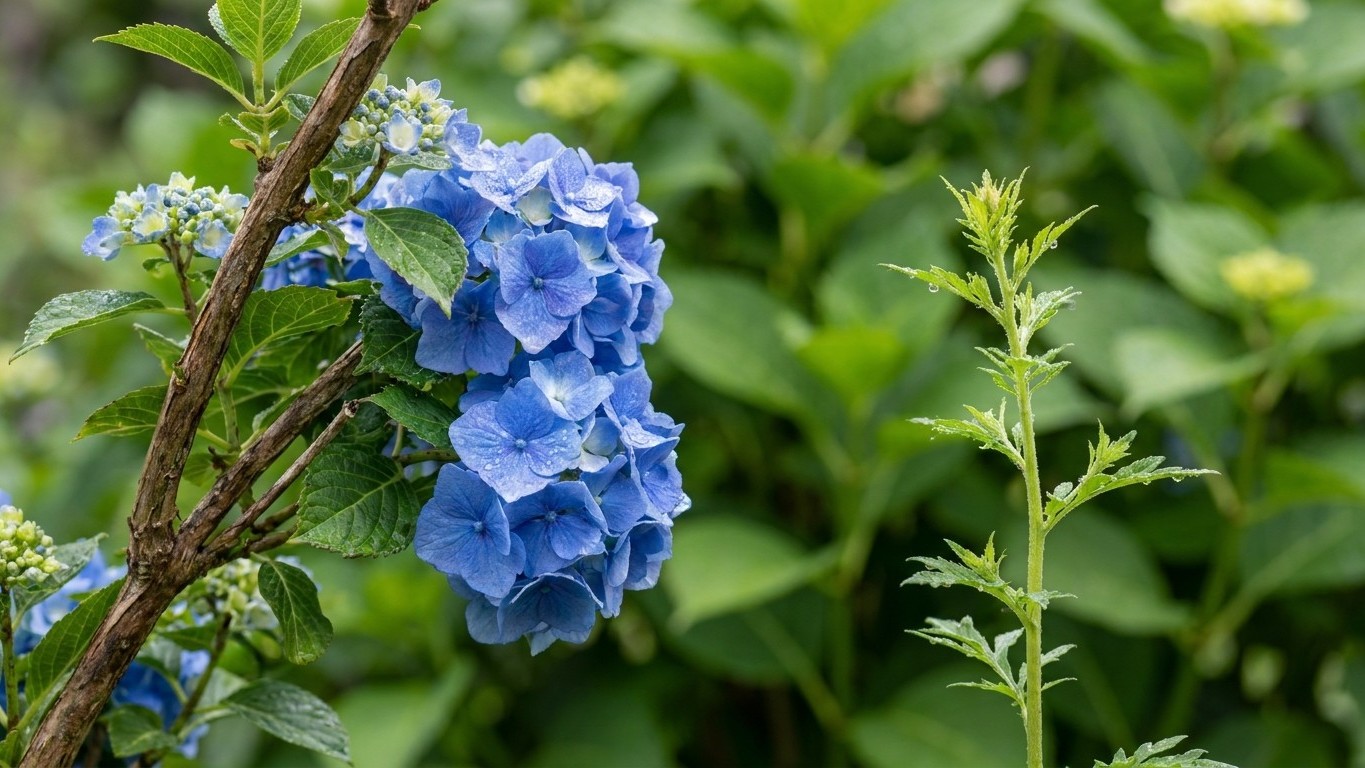

Hydrangeas that bloom on new wood, meaning smooth hydrangeas like Annabelle and panicle types like Limelight, come through a Michigan winter and flower the next summer, even when the stems freeze to the ground. Oakleaf hydrangeas are worth trying in protected corners as extras. Bigleaf hydrangeas are the gamble, because their flower buds sit on last year’s stems all winter and through every spring warm spell.
What this comes down to in Michigan

The last spring frost falls around April 30 in the Detroit area and in early to mid May across most of the Lower Peninsula, so any bud that opens before then is exposed. That window decides which hydrangeas bloom, because the cold of January rarely kills a hardy shrub’s roots, while a hard freeze after buds swell in spring kills flowers. The USDA hardiness system, which rates only the average annual extreme minimum temperature, puts the state between 4a and 6b, so the coldest nights vary a lot from one corner to another. Below, the dependable cultivars come first and the riskiest last.
Annabelle
This smooth hydrangea is the old standby, with big white mopheads on stems that grow fresh each spring. A hard winter can kill the stems back to the ground without costing a single bloom. The flower heads get heavy and can flop after a summer storm.
Incrediball
Incrediball is an Annabelle-type with sturdier stems and the same new-wood habit. It has the same winter reliability and holds its large white blooms upright better. If you like the Annabelle look but not the flopping, start here.
Limelight
A panicle hydrangea with cone-shaped blooms that open lime green, fade to white, and pick up pink in fall. It blooms on new wood, and the woody stems usually survive winter, so cold seldom sets it back. It does best in full sun to part shade.
Quick Fire
Another panicle, known for opening its white blooms early in the season and turning them pink and then deep rose. Flowers form on the current year’s growth, so a late frost only nips young shoots. Gardeners in cooler parts of the state like it because it starts blooming early.
Snow Queen
This oakleaf hydrangea has white, upright flower clusters, deeply lobed leaves, red-burgundy fall color, and peeling bark that looks good in winter. It blooms on old wood, so a severe cold snap or a late freeze can cost flowers. Plant it where it is sheltered from wind, and expect better odds in the southern Lower Peninsula.
Endless Summer
A bigleaf hydrangea bred to rebloom on both old and new wood. When a freeze kills the old buds, the plant still sets flowers on new growth, though later in summer. It is the most weather-dependent plant on this list, and results vary a lot from yard to yard.
Working it out for your own garden
One question sorts any hydrangea: does the bloom come from wood that is already on the plant in April, or from growth that starts after the soil warms? If the flowers need old wood, the plant is exposed from the day its buds swell until the last frost. If the flowers come from new wood, a late freeze costs you a few leaves and some growth, and the plant carries on.
How do you check whether a hydrangea will bloom after a cold winter?
Take Annabelle first. Its flowers form on stems that grow in spring, so freezing weather in April only nips the early shoots. Even if every stem died over winter, the crown pushes up new ones, and those carry the blooms. The frost window threatens the flowers far less than it does an old-wood bloomer.
Now Endless Summer. Its buds swell in April, and the last frost is around April 30 in the Detroit area and early to mid May across most of the Lower Peninsula. Each week between bud swell and that date is a week of exposure. If a freeze hits, the first flush is gone and the plant falls back on new wood, so blooms arrive later. Bigleaf types without that rebloom trait simply skip the year.
Snow Queen sits in the middle. Old-wood buds make it vulnerable like a bigleaf, but the plant is tougher and leafs out later, so the flower buds often escape damage.
The same test works for any new variety. Look at the tag or catalog listing for the words "blooms on new wood" or "reblooming." Then match the plant’s hardiness rating to the range of zones in your area, since the state runs from 4a to 6b in the USDA system and your yard may be at either end.
Before you pull a plant that looks dead in spring, wait. Hydrangeas leaf out late in spring. Scratch a twig with a fingernail, and if the layer underneath is green, the wood is alive. Cut out only what is brown and brittle after leaves appear. For timing the cuts, see When to Prune Hydrangeas in Michigan.
In fall the other end of the window matters. The first fall frost usually arrives in October across much of the Lower Peninsula, and earlier in the north. New-wood bloomers keep flowering until then. Plants set in the ground close to that date have little time to root before the ground freezes, which is why fall planting calls for extra mulch. Details are in Protecting Hydrangeas Through a Michigan Winter.
What changes across the state
Michigan is long and surrounded by water, so one yard’s winter bears little resemblance to another’s. The USDA range of 4a to 6b spans the Upper Peninsula and the northern Lower Peninsula at the cold end, and the Detroit area and the lakeshore in the southwest at the mild end.
Lake Michigan, Lake Huron, and Lake Erie act as heat banks. Along the western shoreline the water holds cold air back in spring, delaying bud break, and that delay can save old-wood bloomers from a late frost. The same water warms the air in fall. A yard a few miles inland has colder nights both seasons and a less forgiving frost window.
In the north, lake-effect snow does a lot of the protecting. A deep, steady blanket insulates roots and low stems from the worst cold, so a shrub under snow often fares better than one in a bare, windy yard farther south. Winters with little snow and bitter cold are the dangerous ones, because crowns and stems are left exposed.
Small differences matter too. Low spots collect cold air on clear nights, so frost lingers there after higher ground has escaped. Cities hold heat, and gardens close to buildings or south-facing walls run warmer than open lots. A bigleaf that does well in a Detroit-area courtyard may do poorly on an open lot in the northern Lower Peninsula.
For gardeners in the northern half of the state, the safe plan is new-wood bloomers first. Smooth and panicle hydrangeas bloom reliably even when winter kills stems back, which makes them the sensible base of a planting. Bigleaf and oakleaf types can be tried in protected corners as extras.
The mistakes this state punishes

A common cause of loss is a warm spell followed by a freeze. A run of mild days in March or April wakes bigleaf buds, and a hard freeze then catches them with tender tissue exposed. Pulling mulch or winter wraps off early invites the same damage. Wait until the frost window closes, which is early to mid May across most of the Lower Peninsula, or watch the forecast and keep covers on hand for cold nights.
Pruning at the wrong time costs a lot. Cutting bigleaf or oakleaf hydrangeas back in fall or early spring removes the flower buds they are carrying, and no winter is needed to do that. Smooth and panicle types tolerate it, but old-wood bloomers need to be pruned right after they flower. A frost-damaged bigleaf should be left alone until leaves show which stems are alive.
Another mistake is buying a bigleaf because the color is appealing, then planting it in an open, windy yard with the expectation of reliable flowers. Pick a spot with shelter from wind, and accept that some years will have fewer blooms. If flowers matter more than the specific plant, choose a new-wood type.
Late fertilizing is the last common error. Nitrogen in late summer pushes tender growth that has no time to harden before the first fall frost, which usually arrives in October across much of the Lower Peninsula and earlier in the north. Stop feeding later in the season and let the stems firm up.
Checking this against your county
A state-wide frost window is a starting point, not an instruction for your yard. Your county’s last frost can fall days or weeks away from the Detroit area’s figure. Call your county office through MSU Extension for the local picture, and for the wider basics of siting and care, see growing hydrangeas in Michigan.
Common questions
Will my hydrangea come back if the stems look dead in spring?
Probably. Hydrangeas leaf out late, and the crown often sends up new shoots from the base even when every stem froze. Scratch a twig, and if it is green underneath, the wood is alive. Cut out only the brown, brittle stems once leaves have appeared.
Which hydrangea is the safest choice for northern Michigan?
Smooth hydrangeas such as Annabelle and Incrediball, and panicle types such as Limelight and Quick Fire. They bloom on new wood, so a hard winter or a late frost does not cost the flowers. A site with snow cover and wind shelter improves the odds further.
Why did my bigleaf hydrangea not bloom this year?
Most often the flower buds froze, or they were pruned off. Bigleaf types carry their buds on last year’s stems, so a late freeze after buds swell, or cutting stems back in fall or spring, leaves them with nothing to open. Reblooming types like Endless Summer can recover with a later flush on new growth.
Do I need to cover hydrangeas for winter in Michigan?
New-wood bloomers generally do not need it. Bigleaf and oakleaf hydrangeas benefit from mulch and, in colder areas, wind protection or a cage filled with leaves. Details on materials and timing are in the winter protection guide linked above.