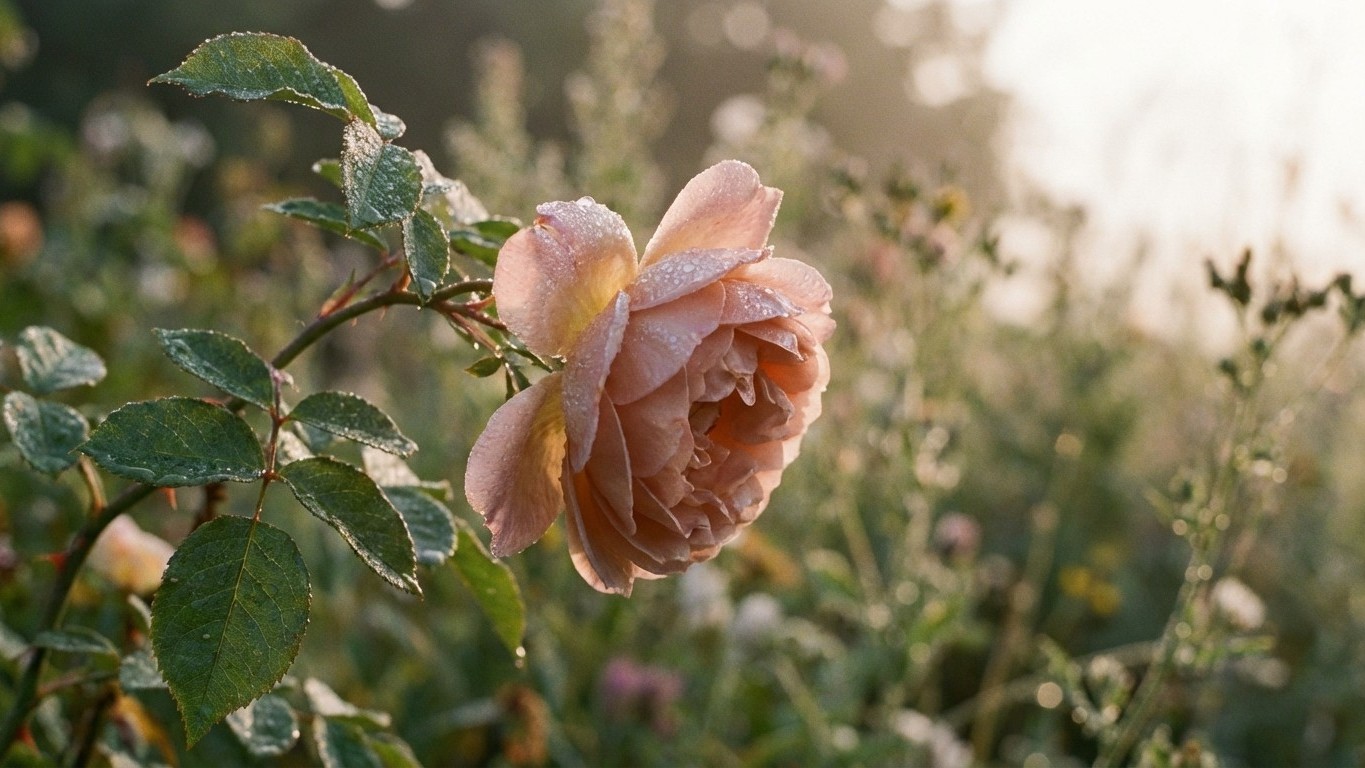

Black spot is among the most common rose diseases in Michigan. Powdery mildew is also common, and downy mildew shows up in cool, wet stretches. All three are fungal or fungus-like, and all three depend on moisture and humidity, and a healthy rose rarely dies from any of them. The exception is rose rosette, a virus with no cure. Airflow, dry leaves, and a clean fall cleanup handle most of the rest. They also fit into the wider routine of growing roses in Michigan.
Which rose diseases Michigan’s climate brings
Why is black spot so common in Michigan?
Black spot is caused by a fungus that infects leaves that stay wet. Michigan summers run warm and humid, with regular thunderstorms and heavy morning dew, so that condition is easy to meet. Spores sit on fallen leaves and old canes, then splash up onto the lowest foliage during rain or overhead watering. The spots are round and black with feathery edges, and the leaf around them turns yellow before it drops. A bad case can strip a bush by late summer. A rose that loses its leaves year after year goes into winter with fewer reserves, and that matters in a state where USDA hardiness zones run from 4a to 6b. One of the most useful habits is to rake up and bag every fallen leaf, because the fungus survives on that litter and starts the next season from it.
What weather brings powdery and downy mildew?
Powdery mildew behaves differently. It does not need wet leaves, only humid air, so it thrives where days are warm and nights turn cool. Late summer and early fall in Michigan fit that pattern well. The first sign is a white, dusty coating on young leaves, shoot tips, and flower buds, often with leaves that curl or pucker. Roses in shade or against a wall, where air sits still, get it first.
Downy mildew is a separate organism that prefers cool and wet. It is less common than the other two but moves fast. It makes purplish-red to brown blotches with angular edges, sometimes with gray fuzz underneath, and leaves can yellow and fall within days. Cool, rainy spells in spring and fall are its window. Gray mold on buds and spent blooms follows the same cool, damp pattern. Canker diseases are a third group. They tend to enter through canes injured by a hard winter, which is one more reason to keep foliage diseases from weakening the plant.
When each one shows up here
When do roses get sick in spring and early summer?
The calendar starts with the last frost, which falls around April 30 in the Detroit area and in early to mid May across most of the Lower Peninsula, according to MSU Extension. Roses leaf out around then, and the first problems are the cool-weather ones. A rainy, chilly May is when downy mildew blotches and gray mold on early buds appear. Dry, sunny springs often pass without either.
Black spot usually shows in June, once warm weather settles in. Look at the oldest leaves, low on the plant and closest to the soil, because that is where splashing spores land first. A few spotted leaves in June become a bush with yellow, dropping lower foliage by July if the leaves keep getting wet. Rose rosette growth is easiest to spot on the spring and early summer flush, when new shoots come out abnormally red and thick.
When do mildew and leaf drop peak?
Powdery mildew builds from midsummer into September. Watch new shoots and buds. They come up puckered and reddish with a white dusting, and the dust spreads to the leaves behind them. As nights cool toward fall, it gets worse, not better. Black spot keeps climbing the plant through July and August, and by September many untreated roses have bare lower canes.
Frost ends the season for the leaf diseases. In zone 6a, MSU Extension’s Michigan Garden Calendar puts the first fall frost between October 6 and October 21. Northern Michigan and the Upper Peninsula run colder and see frost earlier, and southern Lower Peninsula areas near the lakeshore can run later. Frost kills the leaves but not the spores, which wait on fallen debris and canes. A fall cleanup is one of the most useful things you can do for next year’s roses.
What this changes about spacing and watering
How far apart should roses be to prevent disease?
Fungal leaf diseases need still, damp air. Remove that and they lose most of their grip, so spacing and watering are a big part of the defence. Give hybrid teas and floribundas room between plants so air can move. Shrub roses need more room, and big climbers and large old-fashioned shrubs need even more. Keep every rose off a wall or fence so air can move behind it. Crowding is how a gardener turns a susceptible rose into a mildew factory, and a rose packed in among perennials gets the same stagnant air as one pressed against a house.
Sun matters too. Aim for plenty of sun, with morning light if possible, because early sun burns off dew before fungal spores can get established. Open up the center of each bush when you prune, so air passes through the canes. The details are on the page for when to prune roses in Michigan. Variety choice also counts, and the list in Roses That Hold Up in Michigan covers which ones shrug off leaf spots better than others.
What time of day should you water roses?
Water in the morning, so the sun and breeze dry any splashes. Evening watering leaves leaves damp all night, which is the exact condition black spot and downy mildew need. Deliver the water at the base of the plant with a soaker hose, a drip line, or a watering wand, and soak the root zone deeply instead of wetting the foliage. Water deeply and check the soil before watering again, with more during hot, dry spells.
If overhead sprinklers are the only option, run them at dawn so the foliage dries quickly. A layer of shredded bark mulch cuts soil splash, which is how black spot gets from the ground to the leaves. Keep the mulch a few inches away from the canes so it does not hold moisture against the stems.
Rose rosette: the one that means digging the plant up
Rose rosette is a virus carried by a microscopic mite that drifts on the wind from plant to plant. Treat it as a real risk in Michigan. It has spread through much of the eastern and central United States, and wild multiflora rose, an invasive shrub common along fields and fencerows in the southern part of the state, can host it. Your county extension office can tell you where confirmed cases sit near you.
The symptoms are distinctive. Shoots grow in dense, bushy clusters called witches’ brooms. Canes turn unusually thick and soft, with far more thorns than normal. Leaves come out small, distorted, and deep red, and flowers are deformed. Normal new growth is red too, but it greens up as it matures. Rosette growth stays red, thick, and crowded. Herbicide drift can look similar, with cupped and twisted leaves, but it usually does not produce the witches’ broom or the heavy thorns.
No spray cures it. Cutting off the affected shoots does not help, because the virus is already throughout the plant, and the mites move on to neighbors in the meantime. The only fix is to dig out the whole plant, roots included, since leftover root pieces can resprout and carry the virus. Bag the plant and put it in the trash, not the compost pile. Remove any wild multiflora rose nearby too, so it cannot act as a reservoir. Do not replant a rose in the same spot until you are confident every root is out of the ground.
Checking this against your own county
Michigan spans USDA hardiness zones 4a to 6b, so the timing above shifts from the Detroit area to the northern Lower Peninsula and the Upper Peninsula. Michigan State University Extension runs county offices and a plant diagnostic service that can confirm what is on your leaves and tell you where rose rosette has been found nearby. If a rose looks wrong and you are not sure why, bring a sample or clear photos to your county office before you spray anything or dig anything up. A correct diagnosis can save a healthy plant or a season of wasted fungicide.
Common questions
Will black spot kill my rose?
Rarely on its own. It strips the leaves, and a bush that loses most of its foliage several years running becomes weak and prone to winter dieback. Cleaning up fallen leaves, improving airflow, and watering at the base usually keep it manageable.
How do I tell downy mildew from black spot?
Black spot makes round black spots with fringed edges, mostly on older lower leaves in warm, wet summer weather. Downy mildew makes angular purple-red to brown patches, often with gray fuzz underneath, mostly in cool, wet weather, and the leaves drop quickly. If you cannot tell, take a leaf to your county extension office.
Do I need to spray fungicide every year?
Often not, if the roses are well spaced, watered in the morning, and cleaned up each fall. If black spot returns every summer, a fungicide labeled for roses can help. It works best when started as leaves open in spring and repeated on the label schedule. It protects new leaves but does not cure existing spots.
Can I compost diseased rose leaves?
Home piles rarely get hot enough to kill the spores, so bag the leaves for the trash or use a municipal program that composts at high heat. Never compost a plant that may have rose rosette.