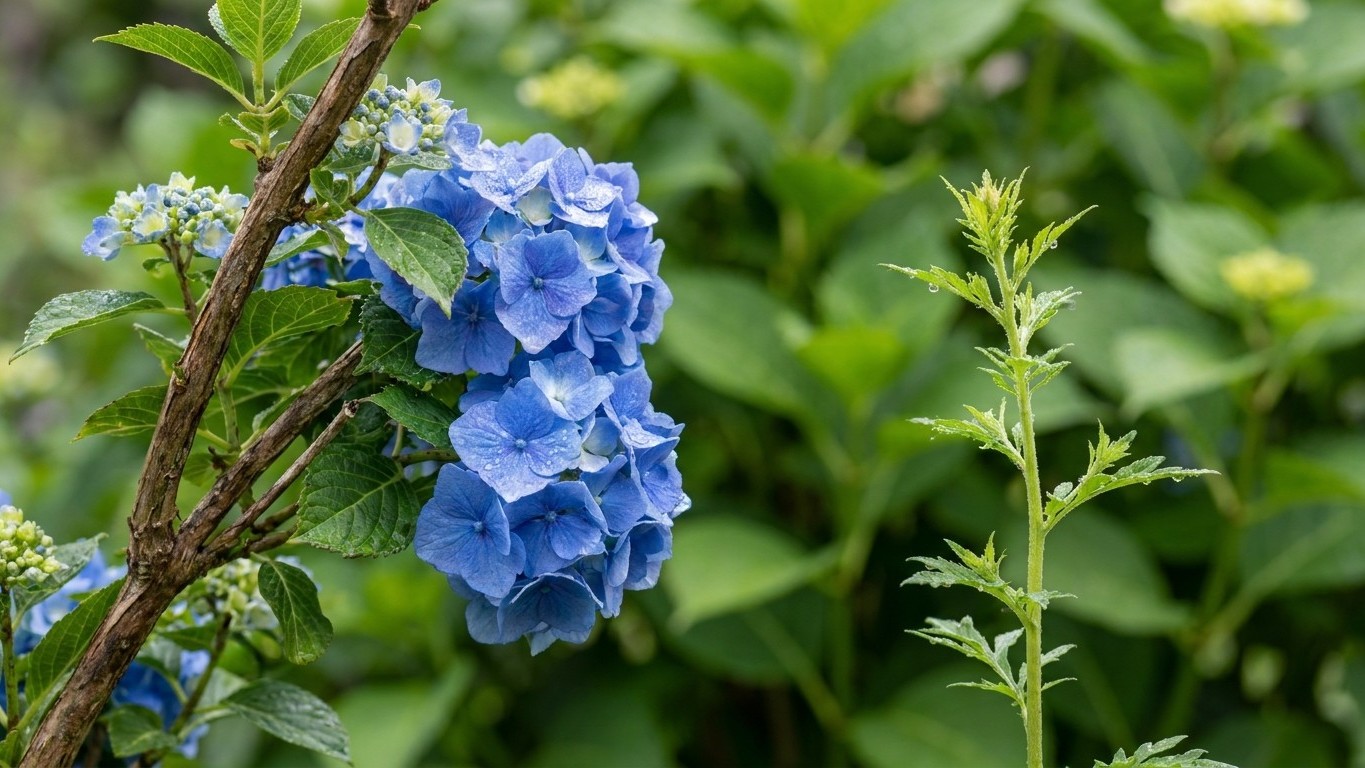

Hydrangeas can get through a Northwest Territories winter, but only with help. Mulch the crown deeply once the ground freezes, let snow pile over the base, and cage or wrap any stems left standing above the snow line. Hold off pruning until spring. Gardeners in Canadian hardiness zone 1b should expect most types to die back to the snow line, which is why shrubs that bloom on new wood do best. A potted plant moved into a cold, sheltered space is the fallback.
What this comes down to in Northwest Territories

At Yellowknife, the average last spring frost is May 25 and the average first fall frost is September 18. The reference station has about 116 frost-free days between those two dates, and that short season is what a hydrangea has to grow in, set buds in, and harden its wood in before winter arrives. Both dates are midpoints. In one year out of two, spring frost falls later than May 25, and in one year out of two, fall frost comes before September 18.
Yellowknife sits in Canadian hardiness zone 1b. That is a Canadian rating built on seven climate variables, and it does not convert to a USDA zone. Hydrangeas are normally sold for much milder winters, so even the hardiest ones are working at the edge of their range here. The goal is not to keep every stem alive. It is to keep the buds and crown alive so the plant can rebuild each summer.
Why does snow matter more than mulch?
Snow is excellent insulation for a northern garden. Wood buried under a deep, steady snowpack stays close to the temperature of the soil, while stems sticking out above it face the full cold and the wind. That is why dieback tends to stop at the snow line. A sheltered bed beside a house or a solid fence, where drifts build up, protects far better than an open yard where wind sweeps the ground bare. Mulch and covers are there to make up for snow that is thin or uneven.
How a hydrangea blooms decides how much a lost stem costs you:
| Type | Blooms on | What winter dieback does |
|---|---|---|
| Panicle | New wood | Plant regrows from the base and can still flower |
| Smooth (Annabelle type) | New wood | Plant regrows from the base and can still flower |
| Bigleaf | Mostly old wood | Killed stems mean no flowers that summer |
| Oakleaf | Old wood | Killed stems mean no flowers that summer |
What does the frost window say about winter preparation?
Winter prep starts in midsummer, not at the first frost. A shrub that is still pushing soft green growth in September goes into freeze-up with tender tips that die back farther than necessary. The same short window affects spring. The last frost can come after buds break, and a hard night in late May or early June can burn new leaves on a plant that came through winter fine.
Working it out for your own garden
You can work out your own schedule from two dates: the average first fall frost and the date the ground freezes at your place. Take the September 18 midpoint and count back about seven to eight weeks. That gives a range from late July to early August. This is when you stop fertilizing and stop pruning, so the plant slows down and its stems turn from green to brown and firm. If your community runs weeks behind Yellowknife, treat the range as a window and check with your regional Industry, Tourism and Investment office or a local garden group.
Watering comes next. Soak the root zone deeply through early fall, then keep going until the ground locks up. Dry soil going into a freeze leaves roots stressed all winter. Do not mulch at the first frost. Wait until the top of the soil has frozen hard enough that a trowel barely dents it, then pile on shredded leaves or straw around the crown of a young shrub. Mulch laid down early gives mice and voles a warm place to nest and chew bark through the winter.
Once the leaves have dropped, build a cage of stakes and burlap or hardware cloth around the shrub and fill it loosely with dry leaves. Skip plastic, which traps moisture and heats up on sunny days. Where you have no snow cover, a cage also keeps wind from pulling moisture out of the stems.
Here is a worked example of how the old-wood and new-wood difference plays out. A bigleaf hydrangea sets its flower buds the previous fall. If the stems die to the snow line, the buds die with them. The plant regrows leaves from the base and the next flowers will not come until the following summer, if the new wood survives that winter. A panicle type regrows from the base, flowers on that new growth, and has the whole span between the May 25 and September 18 midpoints to do it. A shrub that blooms only on old wood in zone 1b is more or less a leaf plant unless you protect every stem or grow it in a pot.
In spring, count forward from May 25. Half of all years run later, so take covers off in stages. Open the cage and pull back the mulch around the end of May, then remove the cage in early June. Keep frost cloth handy through the same window. To find out what survived, scratch a stem lightly with a thumbnail. Green underneath means live wood, and brown and dry means cut it back. Wait until the plant has leafed out before pruning, because buds sometimes show up lower on stems that looked dead.
What changes across the territory
Yellowknife is the reference point here, and the Northwest Territories covers a huge range. Great Slave Lake takes the edge off the extremes near its shores. Spring warms slowly and fall frost often comes a little later near the water. Gardeners in the southern Mackenzie Valley may have a different season than Yellowknife, so check with your regional Industry, Tourism and Investment office or a local garden group. Further north, toward Inuvik and the Arctic coast, the season is shorter, and those districts can run weeks behind the reference station.
Soil matters as much as latitude. Across much of the territory the ground is underlain by permafrost, and a bed in a low, shaded spot thaws late and stays cold. Raised beds, south-facing walls, and rocky outcrops that soak up sun all warm sooner than open ground. Snow behaves just as unevenly. Wind-blown tundra and exposed shorelines lose their cover, while gardens in the trees or behind a building collect drifts. Two neighbors can face very different winters depending on where the snow lands, so watch where it settles in your yard before choosing a spot for a shrub.
The mistakes this territory punishes
The first is mulching too early. A pile of leaves on unfrozen ground after a warm October spell holds heat and shelter for rodents, and the crown can rot. Wait for the hard freeze. The second is feeding late. Fertilizer late in the season pushes soft shoots that cannot harden before freeze-up. Stop feeding well before freeze-up, and if the plant looks hungry, feed it next spring.
The third is pruning in fall. Cutting back an old-wood bloomer removes buds that were already set, and open cuts invite dieback. Leave the stems standing for snow to cover and prune after leaf-out. Fourth is wrapping in plastic or leaving burlap tight against the stems on a sunny day in late winter. Bright sun on a wrapped stem can wake buds early, and a cold snap in spring then kills them. Use a loose cage with air space, and take it off in stages.
The fifth is planting a bigleaf or oakleaf hydrangea in an exposed yard and expecting flowers. Without steady snow cover, the stems that carry next summer’s buds will not survive. Choose a sheltered bed against a wall or fence, plant a new-wood bloomer, or keep the shrub in a container that can be moved indoors. The sixth is leaving a potted hydrangea outside. A pot freezes from all sides, so move it into a cold but sheltered place such as an unheated crawl space before the soil freezes solid, and check it now and then for dryness.
Checking this against your community
Yellowknife’s averages are a starting point and do not describe every garden in the territory. The Northwest Territories has no counties, so the nearest equivalent is your regional office. The Department of Industry, Tourism and Investment publishes agriculture services that can point you to local growing advice, and community garden groups usually know which yards hold snow and which blow bare. For the rest of the growing picture, see our guide to growing hydrangeas in Northwest Territories.
Common questions
Do hydrangeas survive winter in Yellowknife?
Many do, with protection. The roots and crown usually come through when mulched and under snow, and the stems above the snow line often die. Types that bloom on new wood bounce back and flower. Old-wood bloomers need the stems to survive to flower, which is much harder in Canadian zone 1b.
When should I put winter protection on?
Wait until the leaves have dropped and the top of the soil has frozen hard. That is usually well after the first frost, whose average at the reference station is September 18. Putting covers on earlier invites rot and rodents.
When do I take protection off in spring?
Start loosening mulch and opening the cage around the end of May, since May 25 is the average last frost and half of years run later. Remove the cage in early June, and keep frost cloth ready for a cold night after the leaves open.
Can I grow a hydrangea in a pot and bring it in?
Yes, and it is a reliable way to keep an old-wood bloomer flowering. Move the pot, after the leaves drop, into a cold, sheltered space that stays above hard freezing, such as an unheated crawl space. Water it lightly now and then so the roots do not dry out, and bring it out gradually after the last frost window.