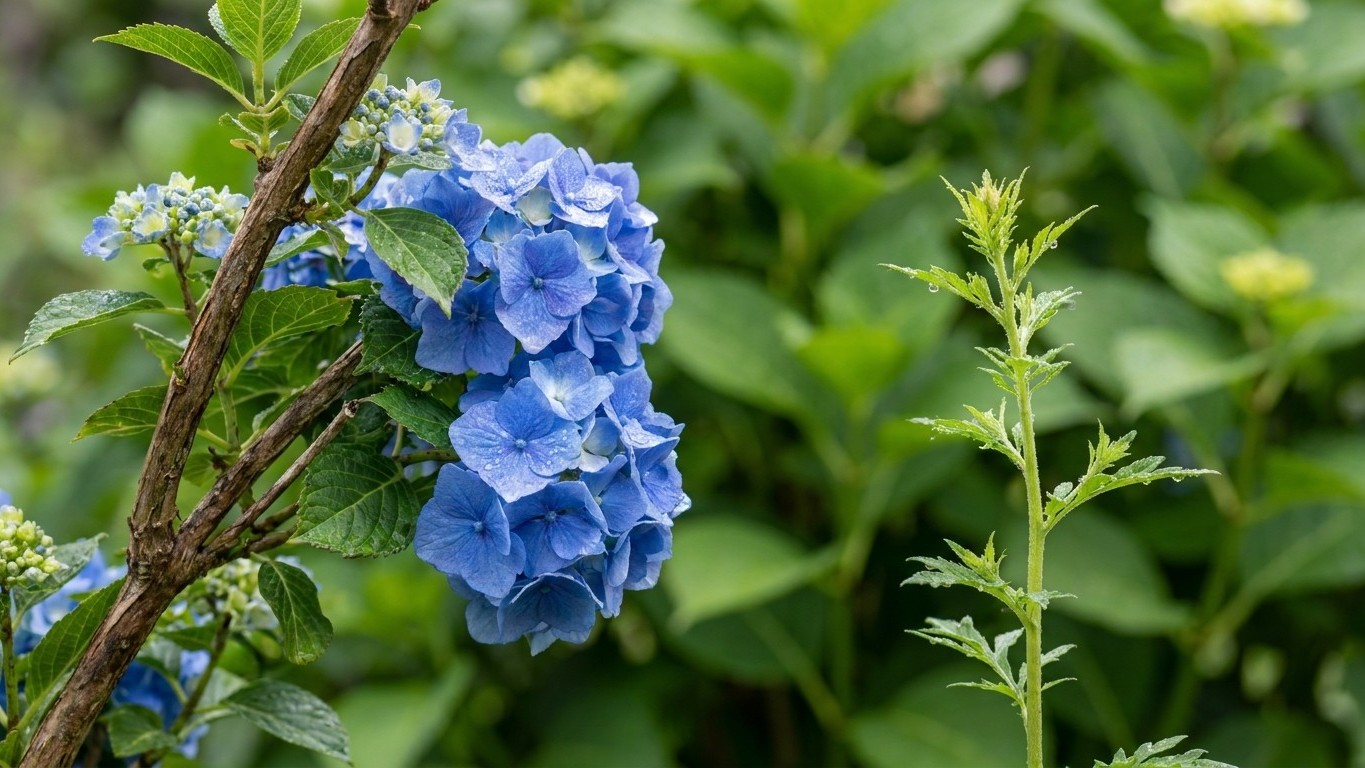

Ohio gardeners prune hydrangeas on one of two calendars. Which one applies depends on whether the shrub carries its flowers on old wood or new wood. Panicle and smooth hydrangeas get cut in late winter, before the leaves open. Bigleaf and oakleaf hydrangeas get cut right after the flowers fade, in summer. Cut an old-wood bloomer (bigleaf or oakleaf) at the wrong time and you give up a season of blooms.
What this comes down to in Ohio

Around Columbus, the usual reference point for central Ohio (zone 6b on USDA’s 2023 map), the average last spring frost falls from late April to early May, and the average first fall frost in mid to late October. These are approximate averages and vary by station. Those two windows frame the pruning calendar: new-wood bloomers are cut in late winter before buds break, and old-wood bloomers are cut in summer within a few weeks of flowering. That leaves the shrub time to set next year’s buds before fall frost arrives. The Columbus area gets roughly five to six months between the average last spring frost and the average first fall frost.
The reasoning is about where the flower buds sit. A hydrangea that blooms on old wood formed its flower buds the previous late summer and fall. They ride through winter on last year’s stems. Cut those stems in fall, winter or spring and the flowers go in the trash with the prunings. A hydrangea that blooms on new wood waits until spring to grow the stems that will carry the flowers, so a hard cut in late winter costs nothing.
When do you prune panicle and smooth hydrangeas in Ohio?
Panicle hydrangeas (the cone-shaped, white-to-pink bloomers) and smooth hydrangeas (the big white snowball types) flower on new growth. Prune them from late winter into early spring, once the deepest cold has passed, ideally before the buds swell. Waiting until leaf buds are visibly fat is fine. Waiting until full leaf-out wastes the early growth the plant has already made. These two groups tolerate a cut back by one third, or by half on a smooth hydrangea you want kept low.
When do you prune bigleaf and oakleaf hydrangeas in Ohio?
Bigleaf hydrangeas (the mopheads and lacecaps) and oakleaf hydrangeas set flower buds in late summer on the stems that grew that year. Prune them within a few weeks after the flowers fade, which in most Ohio gardens means midsummer. After that, leave them alone. The buds for next year are already forming as days shorten, well before the October frost window opens. Oakleaf types need very little: remove spent flowers if you want, and take out the occasional dead or crossing branch.
What about reblooming bigleaf hydrangeas?
Rebloomers flower on both old and new wood, which makes them more forgiving. They still produce their best, earliest flush on old stems, so treat them like any bigleaf: light pruning right after the first bloom. Cold winters and late frosts hit bigleaf types hardest in Ohio, a point covered in which hydrangea types survive Ohio winters.
Working it out for your own garden
A calendar date helps less than a method you can reuse in a cold year or a warm one. The method has three steps: identify the wood, anchor to the frost window, and check the buds.
How do you tell whether your hydrangea blooms on old or new wood?
Start with your records, or with memory. If the shrub flowered after a hard winter that killed its stems to the ground, it blooms on new wood. If it flowered only when the stems survived, it blooms on old wood. Without that history, go by type: cone-shaped flowers on a tall shrub mean panicle; round white flowers on a lanky shrub that flops open mean smooth; big mop or lace heads in pink or blue mean bigleaf; leaves shaped like oak leaves mean oakleaf. If the label is lost and the shrub has never bloomed, hold off any heavy cut until after it flowers once.
How do you count backward from the frost window?
For new-wood shrubs, the target is the last cold stretch before bud break. Since the last spring frost lands from late April to early May, a cut in early April sits roughly three to four weeks ahead of that window. That is early enough to give the new stems a full season and late enough that you are not pruning in a January thaw. Frost that comes after the cut will nip the tips of new growth on a panicle or smooth hydrangea, but the plant simply pushes more shoots.
Old-wood shrubs run on the opposite clock. Count forward from the end of bloom to the first fall frost window in mid to late October. A cut made as the flowers fade in midsummer leaves about three months of growing time for new stems to form buds. A cut made in late summer or fall leaves too little, and it removes buds already formed.
Pruning changes the shape and flowering of the shrub, but not the flower color. Color follows soil chemistry, which is covered in soil pH and hydrangea color in Ohio.
What changes across the state
Ohio spans zones 5b to 7a on the USDA Plant Hardiness Zone Map (2023), a measure built on one variable, the average annual extreme minimum temperature. The frost dates above belong to the Columbus reference point. Gardeners elsewhere in the state should shift their thinking, not their method.
Lake Erie is a major factor. Along the lakeshore, the water holds cold into spring, so buds open later than inland. That delay can protect old-wood flower buds from an early warm spell followed by a freeze. The same lake brings heavy lake-effect snow to the northeast, and a deep snow blanket insulates the lower stems of bigleaf hydrangeas through winter.
Southern Ohio, along the Ohio River, runs warmer. Buds break earlier and the growing season stretches, so pruning windows open a little sooner in spring and midsummer cuts can come a little earlier. The tradeoff is that early bud break exposes tender growth to a late frost, which happens often enough to matter in the southern counties.
Elevation and open ground also count. A few of the coldest, most exposed sites can sit in zone 5b, where winter kills more old-wood stems back to the ground. A bigleaf hydrangea there may bloom lightly or not at all, no matter when you prune. Low spots where cold air pools behave like a colder zone than the yard around them. For panicle and smooth hydrangeas, this variation matters little for timing, since they bloom on new growth and recover from winter damage in one season.
The mistakes this state punishes

Ohio’s mix of mild spells and hard late freezes makes certain pruning habits expensive. These are habits that can cost you flowers.
- Tidying bigleaf and oakleaf hydrangeas in fall or early spring. The flower buds are on the stems you are cutting. Leave the framework alone and remove only what is clearly dead.
- Cutting on the first warm day in late winter. A February thaw tempts gardeners to prune, then buds on a half-woken shrub meet a hard freeze. Wait until the worst cold has passed.
- Cutting “dead” stems in March. Bigleaf hydrangeas leaf out late. A stem that looks lifeless in March is often alive, so wait until leaves open and cut back to the first live buds.
- Pruning old-wood shrubs late in summer. Buds for next year are already forming, and the October frost window is close. A late cut leaves nothing to flower.
The fix in every case is the same. Match the cut to the bloom wood, and let the shrub show you what survived winter before you remove anything you cannot put back.
Checking this against your county
The dates above come from one reference point, and a state-wide figure is a starting point rather than an instruction for your yard. Your county office of Ohio State University Extension can tell you how your local frost dates and winter lows compare, and which of your shrubs are likely to have come through last winter intact. For the broader picture of site, soil and care, see the state guide to growing hydrangeas in Ohio.
Common questions
Can I prune hydrangeas in the fall in Ohio?
Panicle and smooth hydrangeas tolerate it, though late winter is the better time, since the old stems and flower heads protect the plant and add winter interest. Bigleaf and oakleaf hydrangeas should not be cut in fall. Their flower buds are already set on the stems.
Why did my hydrangea leaf out but not bloom?
A bigleaf hydrangea that grows leaves but no flowers usually lost its flower buds to a winter freeze, a late spring frost, or a pruning cut. Panicle and smooth hydrangeas that fail to bloom are more often shaded, over-fertilized with nitrogen, or cut so hard the plant spent the season rebuilding.
How far back can I cut a panicle hydrangea?
Taking off about one third of last year’s growth keeps a sturdy shape and large flowers. A deeper cut gives fewer but bigger blooms on stems that may flop. Removing dead, weak and crossing stems each year is enough for most shrubs.
Should I deadhead hydrangeas?
On bigleaf types, snip spent flowers back to the first pair of healthy buds in summer, soon after bloom fades. On panicle and smooth types, flower heads can stay through winter and come off with the late-winter cut. Oakleaf hydrangeas need deadheading only if you dislike the look of the faded flowers.