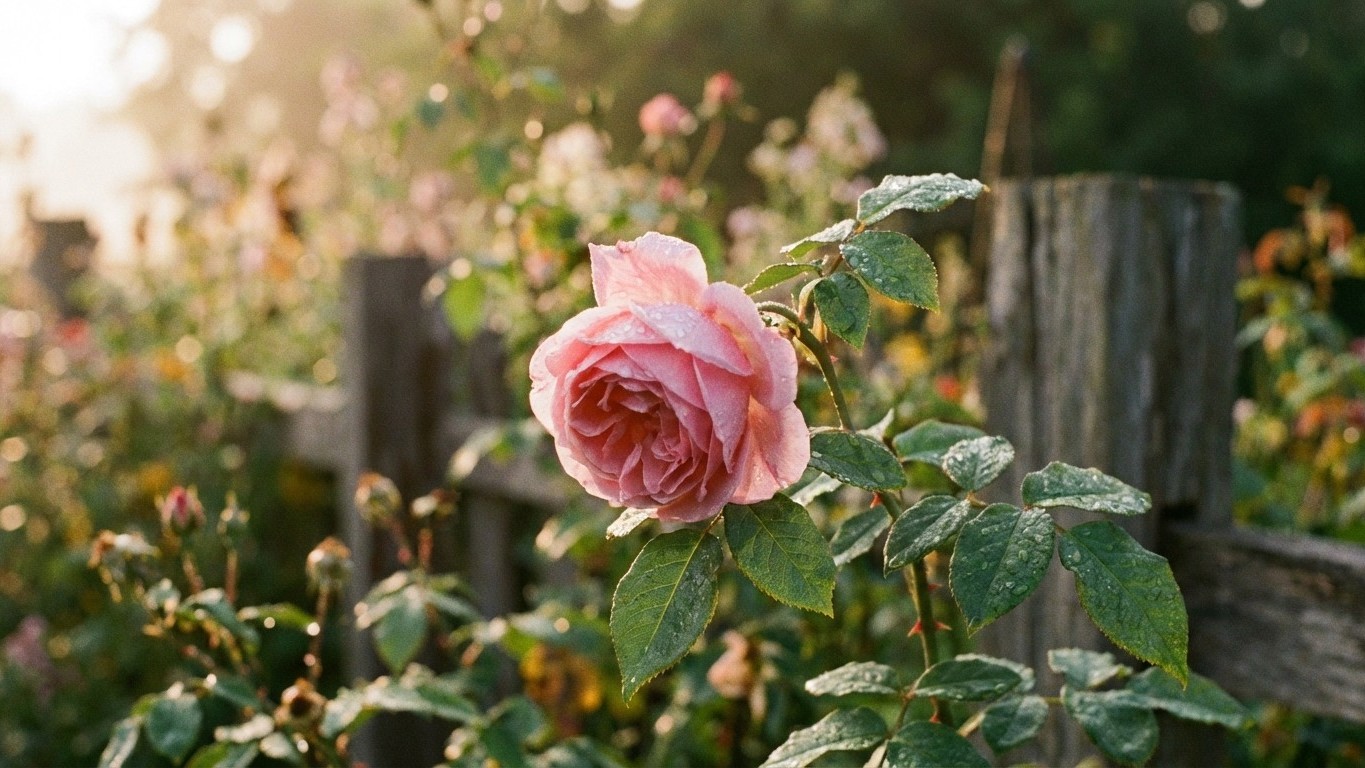

Ohio gardeners can count on rugosa roses, Explorer series climbers, and tough landscape shrubs like Knock Out to come through winter with little help. Hybrid teas and other grafted roses are the ones that get lost. The state sits in USDA zones 5b to 7a, mostly 6a and 6b, which sounds mild until a January thaw followed by a hard freeze splits the canes on a plant sold as hardy. Matching the rose to the cold decides whether you prune in spring or replant.
Which roses survive a Ohio winter
What does the Ohio hardiness zone mean for roses?
The USDA Plant Hardiness Zone Map puts Ohio at 5b-7a, with most of the state in 6a or 6b, the coldest pockets in the northern half, and the warmest pockets along the Ohio River and the Lake Erie shore. That range rests on one number, the average annual extreme minimum temperature. It tells you how low the coldest night usually gets. It says nothing about wind, snow cover, or how often the ground freezes and thaws, and all three decide whether a cane lives. Your own yard may fall on either side of the range, and a lake-shore lot, a hilltop, and a river bottom can each behave differently.
Timing matters too. For zone 6a, Ohio State University Extension lists the last spring frost in its Ohio Gardening Calendar as May 5 to May 15, and the first fall frost as October 5 to October 15. Both are ranges, so watch the forecast closely as each one approaches. A mild October pushes soft new growth that the first freeze then kills. A warm March wakes the buds early, and an April freeze burns the tips.
Which rose types clear the cold end of the range?
Rugosa roses and their hybrids are the safest bet. The parent species grows wild on northern seacoasts in Asia, and it shrugs off winters colder than anything Ohio delivers. The Explorer series was bred in Canada for much harsher climates, so these roses get through 5b with room to spare. Both groups bloom on cold-hardy wood, which means you rarely lose the whole plant to a bad January.
Landscape shrub roses sit in the middle. Many old garden classes, such as Gallicas and Albas, also handle Ohio winters well, though they bloom once a year. Modern repeat-blooming shrubs are generally reliable here, and some lose cane tips in the coldest winters before pushing new growth from lower down.
Hybrid teas are the types that need help. Most are rated for zone 6 or warmer, which puts them right at the edge in much of Ohio and past it in the colder parts. In zone 5b, plan on protecting them every fall, and expect some canes to die back even then. Grandifloras and floribundas follow the same rule. The cold limit is built into how these roses were bred, since they were selected for flower form and not for toughness.
Named roses that hold up here
Which tough roses are easy to buy?
Knock Out is one of the most widely planted landscape roses in the country, and it earns that spot in Ohio. It is rated for zone 5, so it clears the cold end of the state, and it blooms from late spring until frost. In the hardest winters it can lose cane tips, which is cosmetic damage and not a death sentence. It also has a strong reputation for resisting black spot, the leaf disease that wrecks many other roses in humid Ohio summers.
Therese Bugnet is a hybrid rugosa with fragrant, loosely double pink flowers and reddish canes that stand out against snow. It tolerates far colder winters than Ohio offers and typically reaches five or six feet. Hansa, another rugosa, carries double, magenta-purple flowers with a strong clove scent, followed by large orange-red hips in fall. Both are extremely cold-hardy, so Ohio winters barely register.
New Dawn is a pale pink climber, rated for zone 5, and one of the most dependable climbers in the state. In 5b, the upper canes may freeze back in a hard winter, but it rebuilds quickly. William Baffin, an Explorer climber with clusters of deep pink flowers, stays hardier still. Both can handle a fence, an arbor, or a south-facing wall.
| Rose | Type | What it handles in Ohio |
|---|---|---|
| Knock Out | Repeat-blooming shrub | Rated for zone 5; may lose cane tips in the harshest winters |
| Therese Bugnet | Hybrid rugosa | Far hardier than Ohio requires, with no protection |
| Hansa | Rugosa | Far hardier than Ohio requires, with no protection |
| New Dawn | Climber | Rated for zone 5; upper canes can freeze back in cold winters |
| William Baffin | Explorer climber | Very hardy, without special winter care |
When a rose such as Knock Out or New Dawn looks dead in March, resist the urge to prune right away. Wait until the buds swell so you can see where the live wood begins, then cut just above a healthy bud. Cutting too early can remove canes that would have leafed out.
Sold here, but not for this zone
Which roses on the garden center shelf need winter work?
Garden centers buy nationally, so the shelf in Ohio looks like the shelf in Georgia. The biggest group of mismatches is hybrid teas. Classics such as Peace and Mister Lincoln are sold everywhere, and both can live in Ohio, but like most hybrid teas they are marginal here and usually need yearly protection, and they often lose canes. Grafted floribundas and grandifloras fall into the same category.
Tender southern types show up too. Tea roses, Noisettes, and China-derived roses were bred for mild winters, and in Ohio they will usually die to the ground or fail outright. A plant tag that reads zone 7 or higher is a clear warning, and in the colder half of the state a zone 6 tag deserves caution.
Then there are the roses nobody means to plant outdoors. Potted miniature roses from the grocery store, and the forced florist roses sold around Valentine’s Day and Mother’s Day, were grown in greenhouses for quick bloom. They have soft growth and weak roots, and most will not winter in the ground. Some will, but treat it as an experiment.
Timing causes its own trouble. Garden centers stock leafed-out roses in March and April, weeks before the last spring frost of May 5 to May 15 in zone 6a. If you buy early, keep the plant somewhere cool and sheltered until the danger passes, because a freeze can burn new leaves.
If you love hybrid teas, you can still grow them. After the ground starts to freeze in late fall, mound soil or mulch about a foot high over the base of each plant. That covers the graft union and the lower canes, which is the wood you need alive for spring. Skip the step, and a hard freeze can kill the canes and, in the worst winters, the whole plant.
What to check on the label before buying
What does the grade on a rose label mean?
Bareroot roses are sold by grade. Grade No. 1 is the top, with the most and thickest canes, and 1½ and No. 2 are smaller. The higher grade matters in a cold state because a plant with thicker canes and a bigger root system carries more reserves into winter. Potted roses rarely show a grade, so judge them by cane thickness and a firm, well-filled pot.
Why does own-root matter more the colder it gets?
A grafted rose has a top variety joined to a separate rootstock, and the join shows as a swollen knob near the soil line, called the graft union. If a hard winter kills the canes above that knob, whatever sprouts below it is the rootstock, which usually produces a different, often poor rose. Own-root roses grow on their own roots, so even if the canes die back to the ground, the new shoots are the variety you bought.
Colder winters mean more dieback, so the odds of losing the top grow with every drop in temperature. In zone 5b, own-root is close to a requirement for anything marginal. In warmer parts of the state it is a benefit, not a necessity. Look for the words “own root” on the tag, and if the label does not say, check the base of the plant for a graft knob. No knob and a smooth transition into the roots usually means own-root.
Checking this against your own county
The zone range and frost windows describe the state broadly, and your yard may sit on a different side of them. Ohio State University Extension has an office in every county, with staff who know the local winters, soils, and which roses have survived in your area. Call or stop by your county extension office before you buy anything marginal, and ask which roses have come through the past several winters in your neighborhood. For care once the plant is in the ground, see growing roses in Ohio.
Common questions
Are Knock Out roses hardy in Ohio?
Yes. Knock Out is rated for zone 5, which covers the cold end of Ohio. In the harshest winters it may lose cane tips, but it regrows from lower down and still blooms the same season.
Can I grow hybrid tea roses in northern Ohio?
You can, with work. Most are rated for zone 6 or warmer, so in colder parts of the state you need to mound soil or mulch over the base each fall and expect some cane loss. Own-root plants are a safer choice than grafted ones.
Will a grocery store rose survive outside?
Rarely. Potted miniatures and forced gift roses are grown for quick bloom indoors and have weak roots and soft growth. If you plant one, give it a sheltered spot and mulch it well, but do not count on it returning.
What is the difference between zone 5b and 6b for roses?
Zone 5b is the colder end of Ohio’s range, and 6b is one of its warmer zones (a few pockets reach 7a). The shift matters most for marginal roses such as hybrid teas and some climbers, which may need protection in 5b and fare better in 6b. Rugosas and Explorers do well in both.