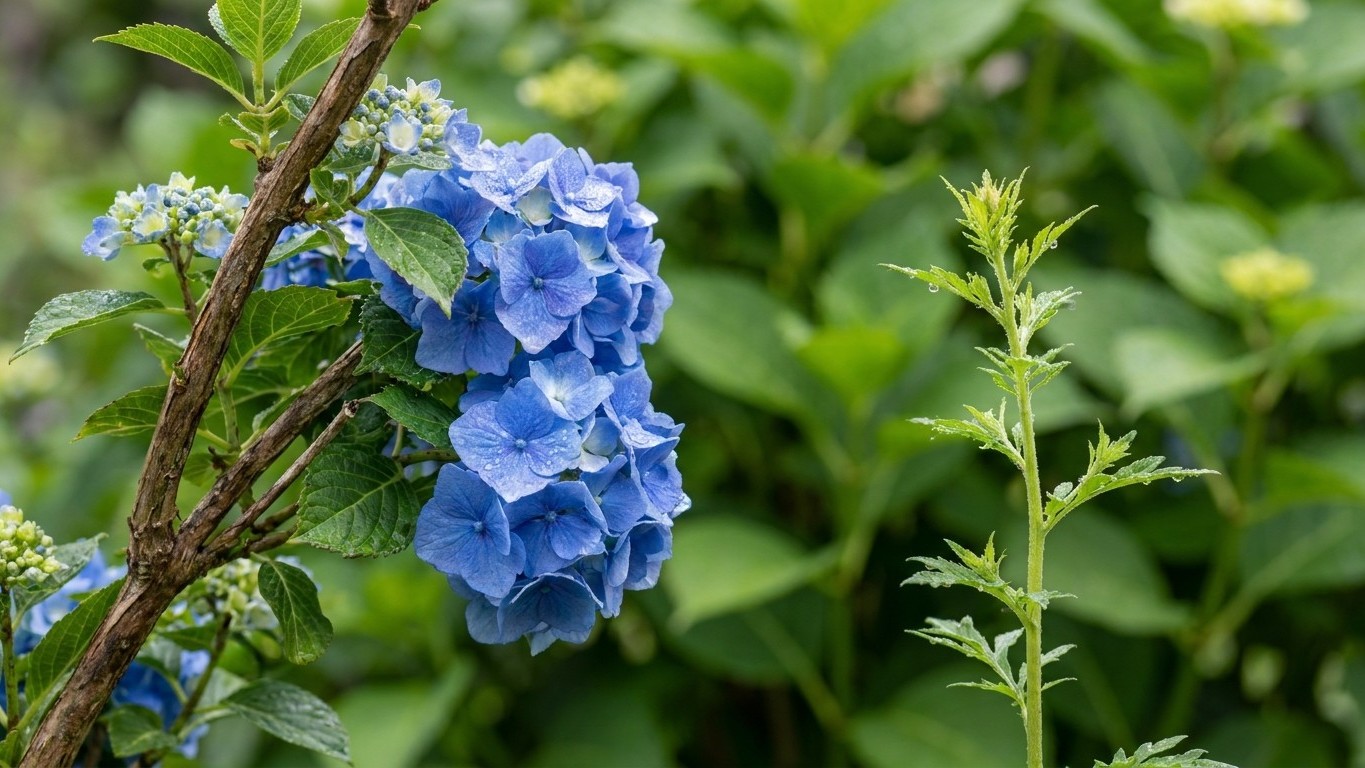

Prune hydrangeas that bloom on new wood (panicle and smooth types) in late winter, and prune those that bloom on old wood (bigleaf, oakleaf, mountain) right after the flowers fade. Near Portland, that puts the first group’s cut in February or March and the second group’s in July or August. Reverse the order and a healthy shrub can sit through a whole summer with almost no flowers. Shaping and size control follow the same calendar.
What this comes down to in Oregon

Around Portland, the reference city, the last spring freeze falls between March 6 and March 21 and the first fall freeze between November 11 and November 27, based on the 30-70% probability band for 32F in the NOAA NCEI U.S. Climate Normals. Those two windows frame the pruning calendar. New-wood hydrangeas get cut in late winter, close to the March window. Old-wood hydrangeas get cut soon after they bloom, long before November.
The reason is where the flower buds sit. Bigleaf, oakleaf and mountain hydrangeas form next year’s buds on stems that grew this year, starting in late summer. A cut in fall, winter or spring removes those buds. Panicle and smooth hydrangeas do the opposite: they grow new shoots in spring and flower at the tips of that fresh growth, so a late-winter cut only sets the stage for the shoots to come.
| Type | Flowers on | Best time to prune | How much |
|---|---|---|---|
| Panicle | New wood | Late winter, before leaves open | Up to about one third of the height |
| Smooth | New wood | Late winter, before leaves open | Can be cut back hard, to a low framework |
| Bigleaf (mophead, lacecap) | Old wood, and some on new | Soon after petals fade | Remove spent blooms and a few of the oldest stems |
| Oakleaf | Old wood | Soon after petals fade | Light shaping only |
| Mountain | Old wood | Soon after petals fade | Light shaping only |
Reblooming bigleaf types are the gray area. They flower on old wood and on new growth, so a mistimed cut costs the first flush of flowers but not all of them. Treat them as old-wood plants anyway and keep cuts light.
Working it out for your own garden
Start with the type, because the type sets the rule. If the label is gone, look at the leaves and the flowers. Cone-shaped blooms on a plant with ordinary oval leaves point to a panicle. Round white snowballs on a plant that often dies back to the ground in winter point to a smooth type. Big rounded or flat clusters on thick, glossy-leaved stems usually mean bigleaf. Leaves shaped like oak leaves mean oakleaf. If you are still unsure, don’t cut in spring. Wait to see where flowers appear, and write the answer on a plant tag.
How do you count the pruning date for a new-wood hydrangea?
Work from the last-frost window. For a panicle near Portland, the window runs March 6 to March 21. Prune ahead of it and you land somewhere between mid-February and early March. Because the flowers come from new shoots, a cut a little later is fine too, as long as it happens before the leaves fully open. Moving to a colder spot just means shifting the same arithmetic later: take that area’s last-frost window and subtract the same two to three weeks.
How do you count the pruning date for an old-wood hydrangea?
Work from bloom time, then check it against fall. A bigleaf in the Portland area usually finishes flowering in summer. Cut within a few weeks of that, trimming spent heads back to the first pair of healthy buds below them. The first fall freeze comes between November 11 and November 27, and the better habit is to finish old-wood pruning well before then. The better habit is to be done in July or August. A cut in October or November takes off buds that are already formed and exposes new cuts to frost.
Dead stems are the exception to every calendar. They can come off any time you spot them, though on a bigleaf it is safer to wait until spring growth shows which stems are truly dead. For more on hardiness and which stems survive winter, see which hydrangea types survive in colder parts of the state.
What changes across the state
Oregon is not one climate. The Cascades split it into a mild, wet west and a dry, cold interior, and Portland sits on the west side. The USDA Plant Hardiness Zone system, which is built on one variable (the average annual extreme minimum temperature), runs from 5a to 10a across the state on the current 2023 map. That is a wide spread, and a hydrangea calendar can’t follow it.
West of the Cascades, in the Willamette Valley and along the coast, winters are mild enough that old-wood hydrangeas usually keep their flower buds through the cold months. Warm spells in late winter can bring on early growth, though, which is the reason to wait for the spring frost window to pass before doing anything to a bigleaf. On the coast, wind and cool summers push bloom later, so the post-bloom cut shifts later as well.
Higher elevations in the Cascades and the high desert of central and eastern Oregon see a much shorter season. The last freeze comes well after the Portland window and the first fall freeze arrives well before it. There, bigleaf stems often freeze back to the ground in winter. The usual approach is to wait until spring growth is moving, then cut off only the dead wood. Panicle and smooth hydrangeas shrug this off since they bloom on new growth, which is why they are the safer pick in the colder zones. Late-winter pruning is also later in those areas: wait for the worst of the cold to ease, then cut.
Color is a separate question from pruning. In bigleaf and mountain types, soil chemistry controls it, and the details are in the piece on soil pH and hydrangea color.
The mistakes this state punishes

Pruning problems in Oregon often come down to timing against the weather. These are common errors that cost bloom:
- Cutting a bigleaf in late winter. A mild spell in February makes spring pruning feel natural, but it removes the buds that make the flowers. Wait until after bloom.
- Pruning old-wood types in fall. Cuts made late in the season take off finished buds and may leave fresh wounds just before the first freeze window of November 11 to November 27.
- Trusting a warm week. New growth that pushes out early can be burned by a late freeze within the March 6 to March 21 window. If a bigleaf has leafed out early, hold off on cutting and let the frost risk pass.
- Pulling out stems that look dead in winter. Bigleaf stems often look lifeless until late spring, then leaf out from the lower buds. Use the scratch test and be patient.
- Cutting an oakleaf or mountain hydrangea hard. These types need only light shaping, and a heavy cut can cost you flowers.
The fix is the same for all five: identify the type first, then pick the date by the type’s bloom wood and your local frost window.
Checking this against your county
A Portland-based frost window is a starting point, not an instruction. Your own yard may sit weeks ahead of or behind it, depending on elevation, slope and how close you are to the coast or the Columbia. Your county office of Oregon State University Extension can tell you the local frost pattern and pruning advice for your area. For the basics of siting, planting and care, see the main guide to growing hydrangeas in Oregon.
Common questions
Can you prune hydrangeas in fall in Oregon?
Only to remove spent flower heads or obviously broken stems. A real cut in fall takes off next year’s buds on bigleaf, oakleaf and mountain types, and the first freeze at the Portland reference station arrives between November 11 and November 27.
What happens if you prune a hydrangea at the wrong time?
The plant usually stays healthy but flowers poorly or not at all that year. Old-wood types lose buds already formed on last summer’s stems. Recovery takes a full season of growth, and the following year’s flowers return.
How do you know if a hydrangea stem is dead?
Scratch the bark with a thumbnail. Green tissue underneath means it is alive. A dry, brown, brittle stem that snaps cleanly is dead. On bigleaf types, wait until spring growth has started so you can see which stems leaf out.
When should you do a hard rejuvenation prune?
Smooth hydrangeas take it best, and older panicle hydrangeas can be renewed too, in late winter before growth starts. Old, overgrown bigleaf plants can be renewed gradually by removing a few of the oldest stems at the base after bloom, so the shrub keeps flowering while it renews.