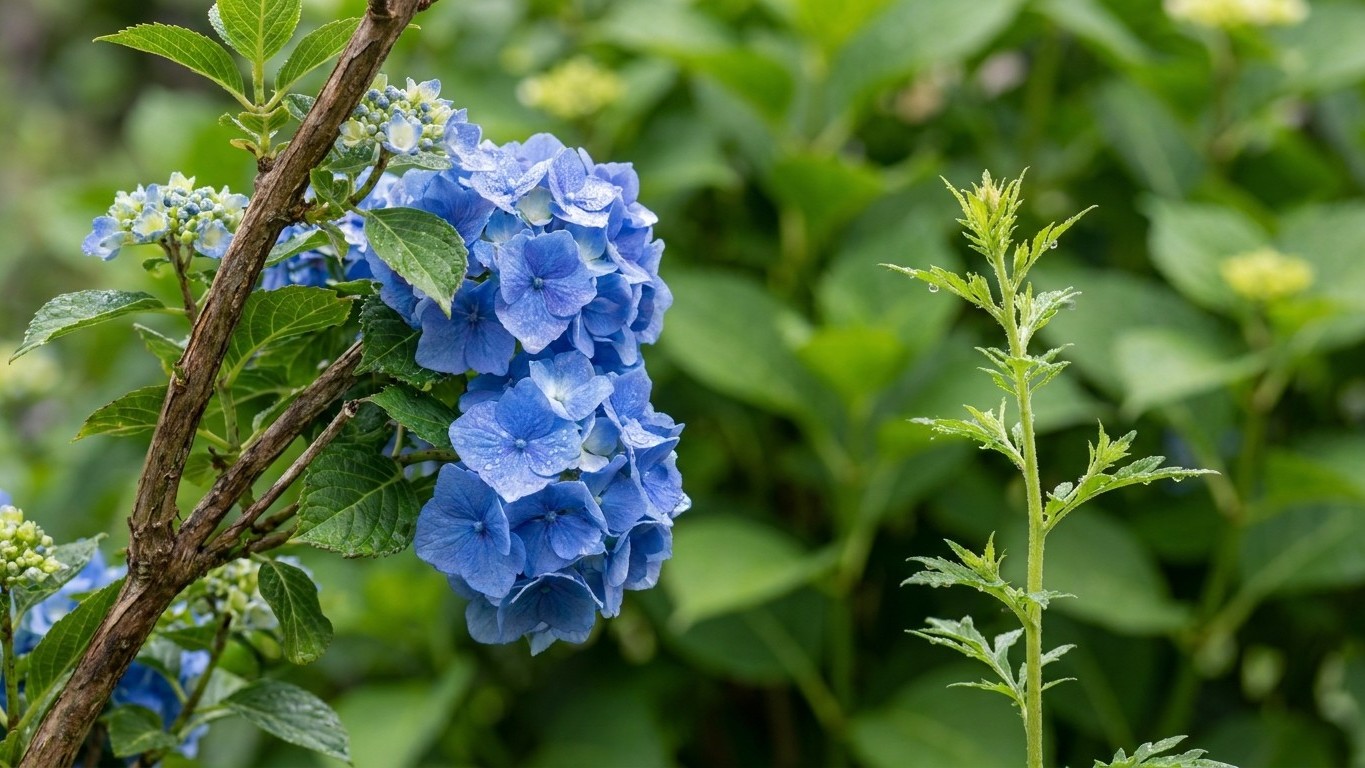

Hydrangea color follows soil chemistry. Pink flowers mean the roots are not taking up aluminum, usually because the soil is too close to neutral or because phosphorus is tying the aluminum up. Blue flowers need acidic soil and available aluminum. Bigleaf and mountain hydrangeas can be pushed from pink to blue by lowering soil pH and feeding aluminum sulfate, though it takes a full season or two.
What this comes down to in Oregon

Around Portland, the reference city for frost timing, the last spring frost falls between March 6 and March 21 (NOAA’s 1991-2020 climate normals, at the 30% and 10% chance levels for a later frost). That window sets the schedule for turning pink hydrangeas blue, because the first acidifying treatment goes on as new shoots leaf out, once that window closes. The first fall frost arrives between about November 10 and November 22 (the 10% and 30% chance levels in the same NOAA normals), so the growing season for the roots to take up aluminum runs from early spring to mid-November.
Portland sits west of the Cascades, and the rest of the state differs. The cause of pink flowers is mostly local soil and water, not region, and it is worth understanding before you buy a bag of anything.
Why do hydrangeas turn pink instead of blue?
The pigment in a bigleaf hydrangea sepal is the same in pink and blue plants. When aluminum is available to the roots and gets carried up into the flower, it binds to the pigment and shifts the color toward blue. Without it, the flowers stay pink or red.
Most soils hold plenty of aluminum. What changes is whether the plant can reach it. In acidic soil, with a pH of roughly 5.5 or lower, aluminum dissolves and the roots take it up. As the soil approaches neutral, around 6.5 and above, the aluminum locks into forms the plant cannot use.
Rain-leached soils west of the Cascades lean acidic, so blue is a natural outcome in many yards there. Gardens are rarely left natural, though. Lime spread on a nearby lawn washes into beds. Compost-heavy planting mixes and bagged potting soil often start near neutral. Concrete foundations and walkways leach alkalinity into the soil beside them. And “bloom booster” fertilizers high in phosphorus bind aluminum even where the pH is acceptable. East of the Cascades, naturally alkaline soil and hard irrigation water push toward pink without any help.
Which hydrangeas can actually change color?
Only bigleaf hydrangeas (Hydrangea macrophylla) and mountain hydrangeas (Hydrangea serrata) respond to soil chemistry. Panicle types, smooth types such as ‘Annabelle’, and oakleaf hydrangeas do not shift to blue. White varieties of any kind stay white, apart from the pink blush some develop as flowers age. A pink panicle hydrangea is simply pink, and no amount of aluminum sulfate will change it.
Working it out for your own garden
Start with a soil test, not a bag of amendment. A home kit gives a rough reading, and a lab test gives a better one (OSU Extension can point you to accredited soil testing labs). Test beside the plant, at the depth where the roots grow, and test a second spot if flowers on the same shrub come out in different colors.
Read the result against the flowers you already have:
| Flower color | What the soil is doing | What to do |
|---|---|---|
| Clear pink or red | pH near neutral or above, or phosphorus tying up aluminum | Acidify, add aluminum sulfate, switch to a low-phosphorus fertilizer |
| Purple or mixed pink and blue | Middle range, aluminum partly available | Continue gently in the same direction you want |
| Clear blue | Acidic soil, aluminum available | Keep the pH where it is and avoid lime |
Then set the timing. Apply the first treatment when shoots are leafing out, which in Portland means from the end of the March 6 to March 21 frost window through April. Water the soil well before and after, since dry roots are easily burned. Follow the label on the aluminum sulfate, because products differ in strength and a heavy dose damages roots. Repeat through the growing season, finishing well before the first fall frost window of about November 10 to November 22.
Pair the treatment with fertilizer lower in phosphorus and higher in potassium, and keep lime and wood ash away from the bed.
Will your hydrangea bloom at all after a cold winter?
Color work is wasted if the shrub does not flower. Take ‘Nikko Blue’, a bigleaf that blooms on old wood, meaning the flower buds form the previous summer and fall. Portland’s climate suits it in most winters. A hard freeze after the buds have started to swell, or a cold snap that kills the buds in an exposed spot, can leave you with healthy leaves and no flowers at all.
Compare that with ‘Endless Summer’, a bigleaf that blooms on both old and new wood. If winter takes the old-wood buds, it still sets flowers on the current season’s growth, and the color treatment still shows. The USDA Plant Hardiness Zone Map puts Oregon anywhere from zone 5a to 10a, so the zone for your own address matters more than any statewide label.
What changes across the state
Oregon is at least three climates. West of the Cascades, the Willamette Valley and the coast get mild winters and plenty of rain. Rain keeps soils acidic, and bigleaf hydrangeas often turn blue with little help. The coast adds fog and moderate temperatures, which suit bigleaf types well. Problems with pink there trace back to what you have added: lime, compost mixes, phosphorus fertilizer, or the soil next to concrete.
The Cascades bring elevation. Higher up, winters are colder and the season is shorter, so old-wood bigleafs risk losing buds and the question becomes whether to grow them at all. Hardy panicle types, which stay white to pink and do not change, often make more sense there.
East of the mountains is high desert, with far less rain, a much shorter season and colder winter lows. Soils are often alkaline, and so is much irrigation water, which keeps pulling the pH back up after you acidify it. Gardeners there who want blue flowers commonly grow bigleafs in containers filled with acidic mix, where pH is easy to control and the pot can be moved to shelter. Do not apply the Portland frost window to this part of the state. Use your local last frost date from your county extension office.
The mistakes this state punishes

The first mistake is treating on a warm-spell schedule. A mild stretch in late February pushes buds early, and a frost inside the March window can kill them. Acidifying cold, dormant soil does little, and stimulating growth early only adds exposure. Wait for real leaf-out, and keep a frost cloth handy for the days when the forecast dips.
The second is adding lime nearby. Gardeners west of the Cascades routinely lime lawns to counter moss, and that runoff reaches the bed. Keep lime off turf next to hydrangeas, or switch to a different moss strategy near the border.
The third is feeding bloom booster. A high-phosphorus fertilizer cancels your acidifying work even when the pH is right. Switch to a low-phosphorus, higher-potassium formula before you spend money on aluminum sulfate.
The fourth is cutting old-wood bigleafs in fall or late winter. The flower buds are already on last year’s stems, so pruning then removes the blooms. Remove only dead wood in spring, once you can see which stems leafed out.
The fifth is overdosing in dry conditions. East of the Cascades, a heavy hand with aluminum sulfate on dry soil burns roots. Water first, follow the label, and test again before repeating.
Checking this against your county
A statewide window is a starting point. Your county extension office knows local soil types, irrigation water quality and frost dates for your address. The Oregon State University Extension network can point you to soil testing and local Master Gardeners. For everything else about the shrub itself, see the guide to growing hydrangeas in Oregon.
Common questions
How long does it take to turn hydrangeas blue?
Plan on one full growing season, and often two. The flowers you see this year were already set in color by what the roots absorbed earlier, so the first noticeable change shows on the next round of blooms. A shift from pink to purple usually comes before blue.
Do coffee grounds turn hydrangeas blue?
Not reliably. Used grounds are close to neutral and add little acidity. They improve soil structure, but they are no substitute for a soil test and a measured aluminum sulfate treatment.
Can I turn blue hydrangeas back to pink?
Yes. Raise the soil pH with garden lime, switch to a higher-phosphorus fertilizer, and skip aluminum. The change is slow.
Why won’t my white hydrangea change color?
White varieties lack the pigment that aluminum acts on. Panicle, smooth and oakleaf types also ignore soil chemistry, so the only way to get a blue flower is to plant a bigleaf or mountain hydrangea that carries the pigment.