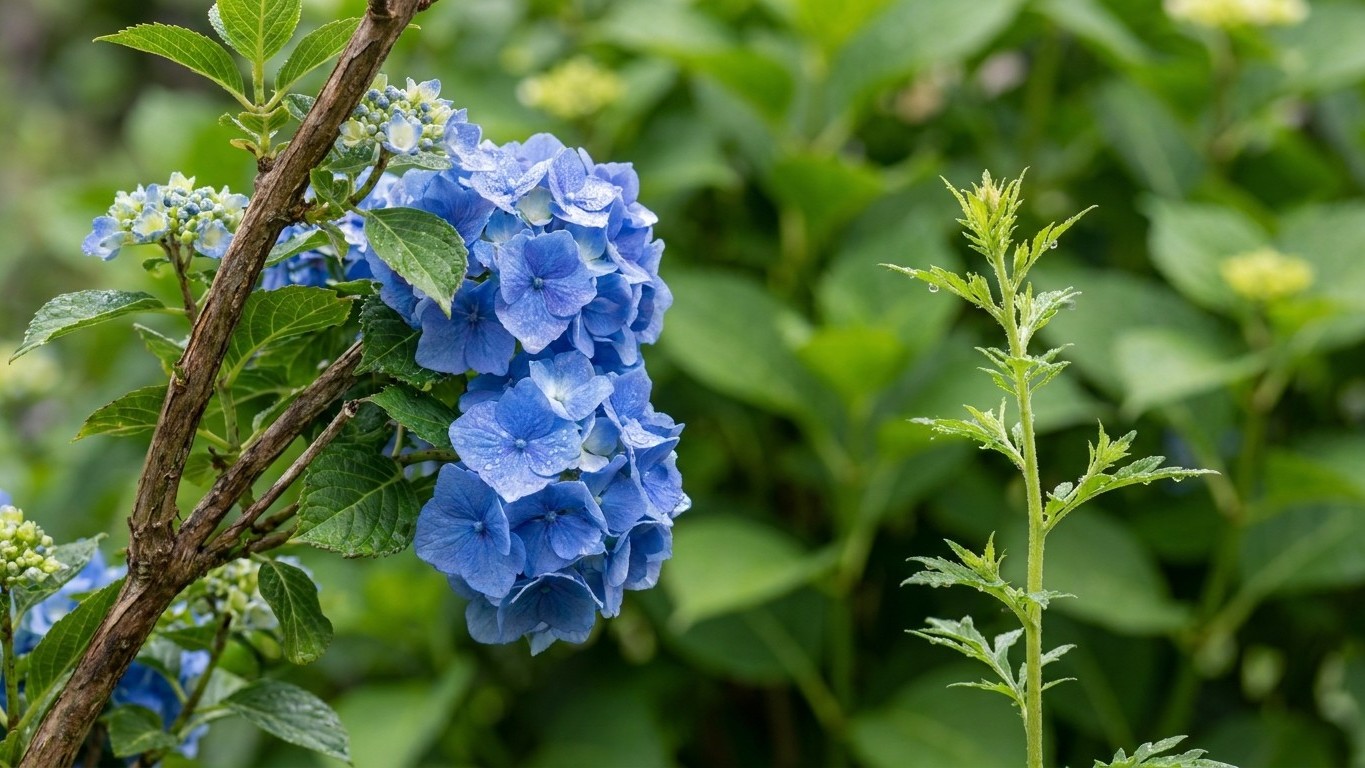

Almost every hydrangea sold in Oregon lives through a winter west of the Cascades. Cold seldom kills the shrub. It kills flower buds, and that decides which kinds actually bloom. Smooth and panicle hydrangeas flower on new wood and shrug off a hard winter. Bigleaf and oakleaf types set their buds the summer before, so one late freeze can leave a healthy plant with leaves and no flowers. East of the mountains, the safe list gets much shorter.
What this comes down to in Oregon

In Portland, the reference city, the last spring frost falls between March 6 and March 21, and the first fall frost between November 11 and November 27. That is a long season, so nearly any hydrangea can finish its growth and bloom before fall frost, and the real sorting happens at the flower bud, not the calendar. Those dates come from NOAA NCEI U.S. Climate Normals and are approximate; exact frost dates vary by station and by the probability level chosen.
The USDA Plant Hardiness Zone Map places Oregon anywhere from about 5a to 10a (2023 map). That system rests on a single variable, the average annual extreme minimum temperature. It tells you how cold the worst night gets, and nothing about when spring frost ends or how long summer lasts. Portland sits west of the Cascades. Central and eastern Oregon are high desert with a far shorter season, so the Portland window does not carry over to Bend, Pendleton or Burns.
The six cultivars below run from the ones that need the least season and have the least exposed buds to the ones that need the most.
Annabelle
A smooth hydrangea (Hydrangea arborescens) hardy in zones 3 to 9. Its big white flower heads open in early summer on new wood. A hard winter can freeze the stems to the ground and it still flowers that year, so it works everywhere in the state, including the high desert.
Quick Fire
A panicle hydrangea, one of the earliest in its group to open; check your local hardiness zone with your county extension office. Blooms start white, then age to pink and red, and they form on new wood. The early start helps in places where summer is short and cold nights arrive sooner.
Limelight
Another panicle type, flowering on new wood; check your local hardiness zone with your county extension office. The cones open lime green in midsummer, then turn white and finally pink as fall comes on. Stiff stems and cold tolerance make it a fit for valley gardens and colder sites alike.
Endless Summer
A bigleaf hydrangea (Hydrangea macrophylla); check your local hardiness zone with your county extension office. Flowers are blue in acidic soil and pink in alkaline soil, and it blooms on both old and new wood. If a freeze takes the old buds, the new growth still produces flowers later in summer. It does well west of the Cascades and is riskier in the high desert.
Snow Queen
An oakleaf hydrangea (Hydrangea quercifolia), with white cones that age to pink; check your local hardiness zone with your county extension office. It flowers on old wood, though its buds tend to take cold better than most bigleaf buds. The leaves turn burgundy in fall. It suits milder valley gardens, ideally with some shelter from wind.
Nikko Blue
A classic bigleaf, blue in acidic soil, flowering on old wood only; check your local hardiness zone with your county extension office. Every bud forms the previous summer and fall, so a hard winter or a late freeze can leave it with foliage and no flowers. It does best in the mild Willamette Valley and near the coast.
Working it out for your own garden
A list of names goes stale the first time you move or a winter runs cold. The method below works anywhere, and it needs only three numbers: your own frost window, the cultivar’s bloom month, and whether it flowers on old or new wood.
How do you check that a hydrangea will bloom before the first fall frost?
Start from the first fall frost and count backward. In Portland that frost arrives between November 11 and November 27. Take Limelight, which opens in July. A shrub set out once the last spring frost window has passed, in late March or April, grows on before the first cones appear. Those cones then stay on the plant well before the first fall frost range begins. The cultivar clears the line with a wide margin.
Run the same count with your own county’s dates. If the gap between the bloom month and the first fall frost shrinks to a few weeks, pick a plant that opens earlier, such as Quick Fire, or one that blooms on new wood and keeps producing.
Where does a longer-season hydrangea fall short?
Take Nikko Blue. Season length is not the problem west of the Cascades, since it has all the time it needs. What fails is the bud. The flower buds form on last year’s stems in late summer and fall. A deep freeze in winter, or a frost after the buds swell in spring, kills them. The shrub then leafs out normally and never flowers.
So the line falls differently for each group. New-wood types hold up as long as the plant gets enough warm weeks to grow. Old-wood types need the buds themselves to get through winter and early spring.
How can you tell whether the buds survived?
Wait until the leaves start to emerge. Scratch a bit of bark on a stem with a thumbnail. Green underneath means live wood. Plump, firm buds along the stem usually mean flowers are coming. Brown, shriveled buds will not open, and cutting the stem back to the first healthy pair of buds gives the plant a clean start.
What changes across the state
Oregon is several climates stacked in one outline. The Cascades split it into a wet, mild west and a dry, cold east. The Portland dates describe the Willamette Valley floor. They do not describe the coast, the mountains or the high desert, and each of those moves the answer in a different direction.
| Part of the state | What winter and spring do | What holds up best |
|---|---|---|
| Willamette Valley and Portland area | Mild winters, occasional hard freeze, spring warm spells that can be followed by frost | Nearly everything listed above |
| Coast | Mild winters, cool summers, wind and salt spray | Bigleaf and oakleaf types, with shelter from wind |
| Southern Oregon valleys | Hotter summers and colder winter nights than the coast | Panicle and smooth types, bigleaf with afternoon shade |
| Cascade foothills and higher elevations | Longer cold, later spring, deeper snow | Annabelle, Quick Fire, Limelight |
| Central and eastern high desert | Cold nights, late spring frosts, early fall freezes | New-wood types only |
Does elevation change which hydrangeas survive?
Yes. In general, higher elevation shortens the season and pushes spring later. Snow cover helps, since it insulates the crown and lower buds, but it does nothing for buds that stick up above the snow line. On the east side, a warm afternoon in March can wake a bigleaf, and a freeze that night finishes the job. Distance from the coast matters too. Marine air smooths out the temperature swings near the ocean, while inland sites swing harder in both directions.
The mistakes this state punishes

Trusting a warm spell. A mild stretch in February can wake a shrub weeks before the Portland frost window closes between March 6 and March 21. New leaves and swollen buds on bigleaf types are the first to burn when the cold returns. Hold off on pruning and fertilizer until that window has passed, and keep frost cloth or an old bedsheet handy for the night a freeze is forecast.
Planting an old-wood cultivar where winter reaches the bud is the second costly choice. Nikko Blue is sold in garden centers across the state, including places where it will give leaves and few flowers. East of the Cascades, choose Annabelle, Quick Fire or Limelight and treat bigleaf as a container plant that moves into a garage for winter.
Pruning at the wrong time costs flowers in all the old-wood types. Cutting bigleaf or oakleaf stems in fall or winter removes the buds that were already formed. Remove only dead wood after the leaves emerge, and save hard cuts for the new-wood types, which can be pruned in late winter.
Feeding late is a quieter error. A heavy dose of nitrogen in late summer pushes soft growth that has no time to harden before the first fall frost, which falls between November 11 and November 27 in Portland and sooner in the high desert. Stop feeding by midsummer, and mulch the crown after the leaves drop.
Checking this against your county
The Portland window is a starting point. Your own garden may sit weeks away from it, especially on a hillside, in a frost pocket or east of the mountains. Your county office of Oregon State University Extension can tell you the local frost dates and which cultivars have held up in your area. For the basics of soil, light and watering, see the guide to growing hydrangeas in Oregon.
Common questions
Do hydrangeas die back in an Oregon winter?
They drop their leaves, and smooth and panicle types may lose some stems in a hard freeze. The roots survive and new-wood types regrow and flower the same year. Bigleaf and oakleaf types keep their woody stems, which carry next summer’s buds.
Why did my bigleaf hydrangea leaf out but never bloom?
The flower buds probably died in a freeze, or were cut off when the shrub was pruned in fall or winter. Bigleaf types bloom on stems formed the year before. If this keeps happening, switch to a reblooming type such as Endless Summer or a new-wood cultivar like Limelight.
Which hydrangeas are safest east of the Cascades?
New-wood types are the safest, because a late frost cannot wipe out a bloom that has not formed yet. Annabelle, Quick Fire and Limelight are the usual choices. Ask your county extension office which have done well near you.
Should I cover hydrangeas before the first fall frost?
Covering is rarely needed in fall. Mulch the crown once the leaves drop, and save frost cloth for a freeze that follows a warm spell in spring, when buds and new leaves are exposed.