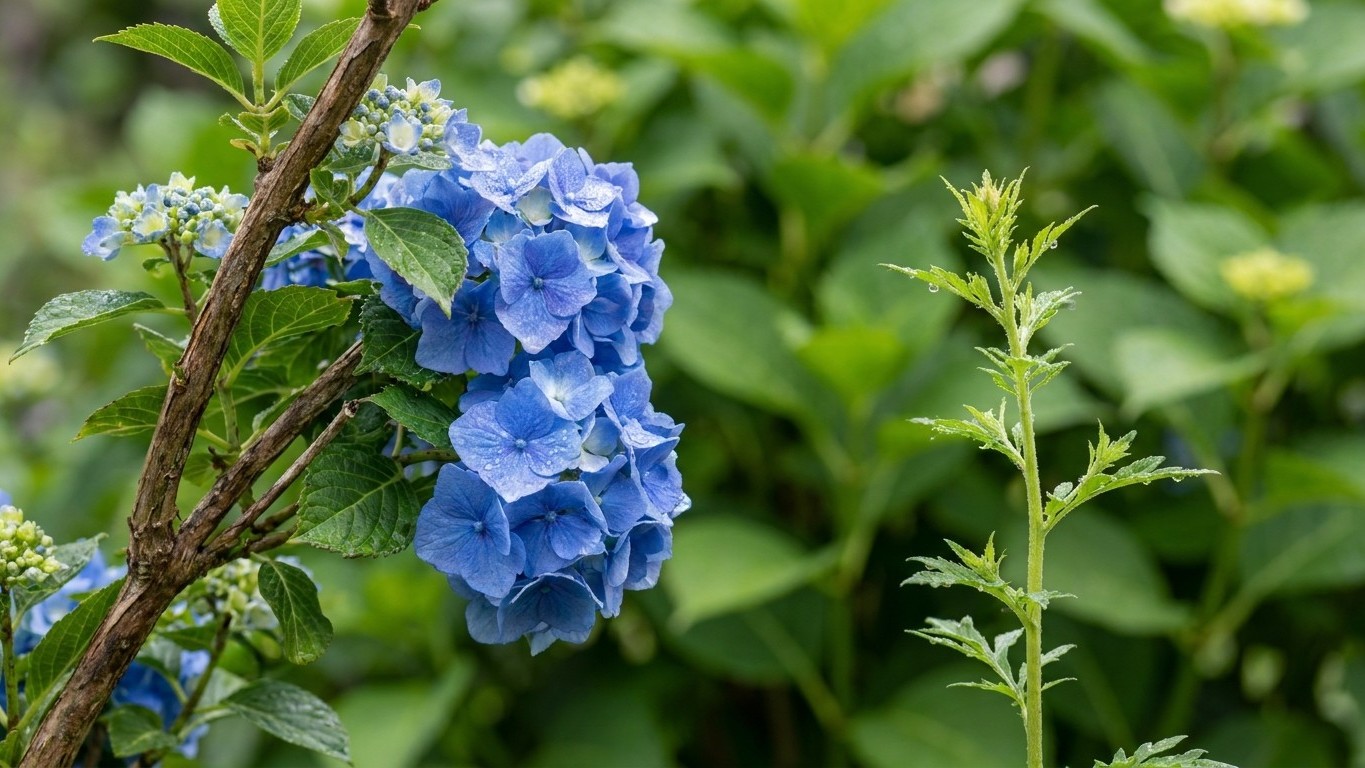

Two groups of hydrangeas get through a Saskatchewan winter and still flower: smooth hydrangeas (Hydrangea arborescens) and panicle hydrangeas (Hydrangea paniculata). Both set flower buds on growth made in the current season, so a winter that kills the stems back to the ground costs them very little. Bigleaf hydrangeas are the ones that let gardeners down. The roots usually live, but buds formed the summer before often die above the snow line, and the shrub leafs out with no flowers.
What this comes down to in Saskatchewan

At Saskatoon, the reference station for these numbers, the average last spring frost falls on May 18 and the average first fall frost on September 18, which leaves about 123 frost-free days. The city sits in Canadian hardiness zone 3a. A hydrangea that flowers on new wood fits inside that window, while one that depends on buds carried through winter does not.
Both frost dates are midpoints. In one year out of two, the last spring frost comes after May 18, and in one year out of two the first fall frost comes before September 18. The zone figure also needs care. It belongs to the Canadian system, which weighs seven climate variables, and it does not convert simply to a USDA zone. Nursery tags usually print USDA zones, so a tag that reads zone 3 is a starting point and little more.
The mechanism is simple. A shrub that blooms on new wood can lose every stem in January and still flower the following July, because the flowers grow on shoots that have not yet been exposed to winter. A shrub that blooms on old wood has to bring its flower buds through the cold intact. Under zone 3a conditions, the part of a bigleaf stem that sticks out above the snow rarely does. The seven cultivars below run from the shortest season needed to the longest, so you can see where the line falls.
Annabelle
A smooth hydrangea with large white mophead flowers on new wood. It opens earlier than most panicles, from early summer onward, and it dies back and regrows readily. That makes it a very safe bet in a short season. The big heads can flop after heavy rain.
Incrediball
Another smooth hydrangea, with white flowers on new wood. It carries the same dependable timing as Annabelle on sturdier stems that hold the blooms up. It suits gardeners who like Annabelle but are tired of staking.
Quick Fire
A panicle hydrangea, blooming on new wood. White flowers open early for a panicle and age to pink and deep rose. Its head start over later panicles makes it a good panicle choice for a short summer.
Bobo
A compact panicle with white flowers on new wood. It blooms in midsummer on a small, tidy shrub. It works well near a foundation or in a large container sunk into a bed, where snow cover protects the crown.
Limelight
A panicle hydrangea with lime-green flowers that fade to white and then take on pink. It blooms on new wood from midsummer on. It is hardy and common in prairie yards, though it needs a bit more of the season than the first three.
Pinky Winky
A panicle with two-tone flower cones, pink at the base and white at the tip, on new wood. The color change takes time to develop, so it wants a full, warm summer. In a cool year or a short one, expect fewer pink tones before frost.
Endless Summer
A bigleaf hydrangea, blue or pink depending on soil acidity. It is sold as a reblooming type that flowers on both old and new wood. In zone 3a conditions, the old-wood buds are usually lost, and the new-wood flowers come late. It is the one on this list to treat as a gamble.
Working it out for your own garden
A method outlasts any list of names, because it still works after a move or after a winter that breaks the pattern. Two calculations carry most of the weight: when to plant and whether a variety has time to bloom.
How early can you plant hydrangeas in Saskatchewan?
Start from the mean last spring frost of May 18. Because half of years run later, set out leafed-out shrubs from around that date into early June, and expect a cold night or two inside that stretch. Then count from the other end. A container shrub wants time for root growth before the soil cools for winter. Subtract six to eight weeks from the mean first fall frost of September 18 and you land between late July and early August. In an early-frost year, pull that back another week or two. A shrub planted after that range goes into its first winter with thin roots.
Will a named hydrangea bloom before the fall frost?
Take Quick Fire. It is a panicle that flowers on new wood and is listed from USDA zone 3. Planted in late May or early June, it has well over three months of growth ahead of the mean first frost. Its flowers open in midsummer, weeks before September. The first year the bloom will be light, and winter may kill the tops, but spring growth carries new flowers. In most years it should bloom dependably.
Now Endless Summer. It forms its old-wood buds in late summer and carries them through winter. A zone 3a winter usually kills the stems above the snow line, and the buds with them. The shrub then regrows from the base and may flower on new wood, but late. With frost near mid-September, those flowers may arrive just before frost or not at all. In a winter with deep, early snow, buds buried under it can survive, which is why some gardeners get a bloom and others never do.
How do you tell winter damage from other problems?
Scratch a stem with a thumbnail. Green underneath means it is alive. Brown or dry and brittle wood means the stem is dead. Hydrangeas leaf out late, so wait before cutting anything. If a bigleaf is growing leaves but no flower buds, the buds most likely died in winter (hard spring pruning can have the same effect). If healthy shrubs develop chewed or spotted leaves in summer, that is a different problem. Winter injury shows at leaf-out, on whole stems at once. Summer problems start on green leaves and spread over weeks. Bring a leaf sample to a local agriculture office if you cannot tell.
What changes across the province
Saskatchewan is not one climate, and the frost window at Saskatoon cannot be applied across the province. Northern districts toward the forest edge and upland areas run weeks behind that station. In those places a variety that blooms in midsummer is a safer choice than one that needs August warmth to color up.
The southern grasslands are generally warmer and have a longer season, but they are drier and windier. Wind dries exposed stems in late winter and strips snow off open ground, so a south-country garden can lose more wood than the frost dates suggest. Elevation works the other way. Higher ground traps cold air less than a valley bottom but gets harsher wind, and either one shifts the dates by days or weeks.
Inside a single yard the differences can be as large. A spot on the south or east side of a house, out of the prevailing wind, with snow piling up around it each winter, behaves like a milder zone. A shrub in an open front lawn behaves like a colder one. Snow is excellent insulation for hydrangeas, and wherever it collects, stems and buds survive better. Choose the site with that in mind.
The mistakes this province punishes
Planting into cold soil after a warm spell is the classic one. A string of mild days in April makes a gardener want to start, and then frost returns. Wait for the last spring frost window to pass, and hold new plants in a sheltered spot if the weather turns.
Choosing a long-season variety comes next. A panicle that opens late, or any bigleaf, needs more summer than most of the province offers. Pick cultivars that bloom early on new wood, such as Annabelle, Incrediball or Quick Fire, and treat anything else as an experiment.
Planting late is another. A shrub set out in September has too little time to root. If a late planting cannot be avoided, mulch it well and keep it watered until the ground freezes.
Pruning at the wrong time is a fourth. Smooth and panicle hydrangeas are best cut back in spring, once you can see what is dead, and leaving the stems standing through winter helps hold snow around the crown. A bigleaf cut hard in spring loses whatever buds survived.
Feeding late costs gardeners too. Fertilizer late in the season pushes soft growth that cold kills, so stop feeding by then. Water deeply once more before freeze-up, because shrubs go into winter dry in a dry fall and dry stems suffer most.
Checking this against your district
A frost date from one station is a starting point for your own yard. Saskatchewan is organized by rural municipalities rather than counties, so your local agriculture office is the place to ask what your district’s frost window and winter losses look like. The Saskatchewan Ministry of Agriculture can direct you to the right contact. For the rest of the growing details, from soil to pruning, see the guide to growing hydrangeas in Saskatchewan.
Common questions
Can bigleaf hydrangeas survive a Saskatchewan winter?
The plant often survives, because the roots are protected under the soil and snow. The flowers are the problem. Buds on old stems are frequently killed above the snow line, so a bigleaf may live for years and rarely bloom. Planting it in a sheltered spot where snow collects improves the odds.
Is Saskatoon’s zone 3a the same as USDA zone 3a?
No. Saskatoon’s zone 3a is a Canadian hardiness zone, built from seven climate variables, while the USDA system uses one. Natural Resources Canada states that there are no simple conversions between the two. Use USDA ratings on plant tags as a hint, and let local nurseries and neighbors confirm.
Will my hydrangea come back if every stem dies over winter?
Smooth and panicle hydrangeas usually will, because they regrow from the base and bloom on the new stems. Wait until early June, scratch the bark to check for green, and cut off what is dead. A bigleaf can regrow too, but its flowers may not appear that year.
Which hydrangea is the most reliable choice for a short season?
A smooth hydrangea such as Annabelle or Incrediball is a safe choice, since it blooms on new wood early in summer. Quick Fire is a good early panicle for the same reason. Both give the frost less chance to catch the flowers.