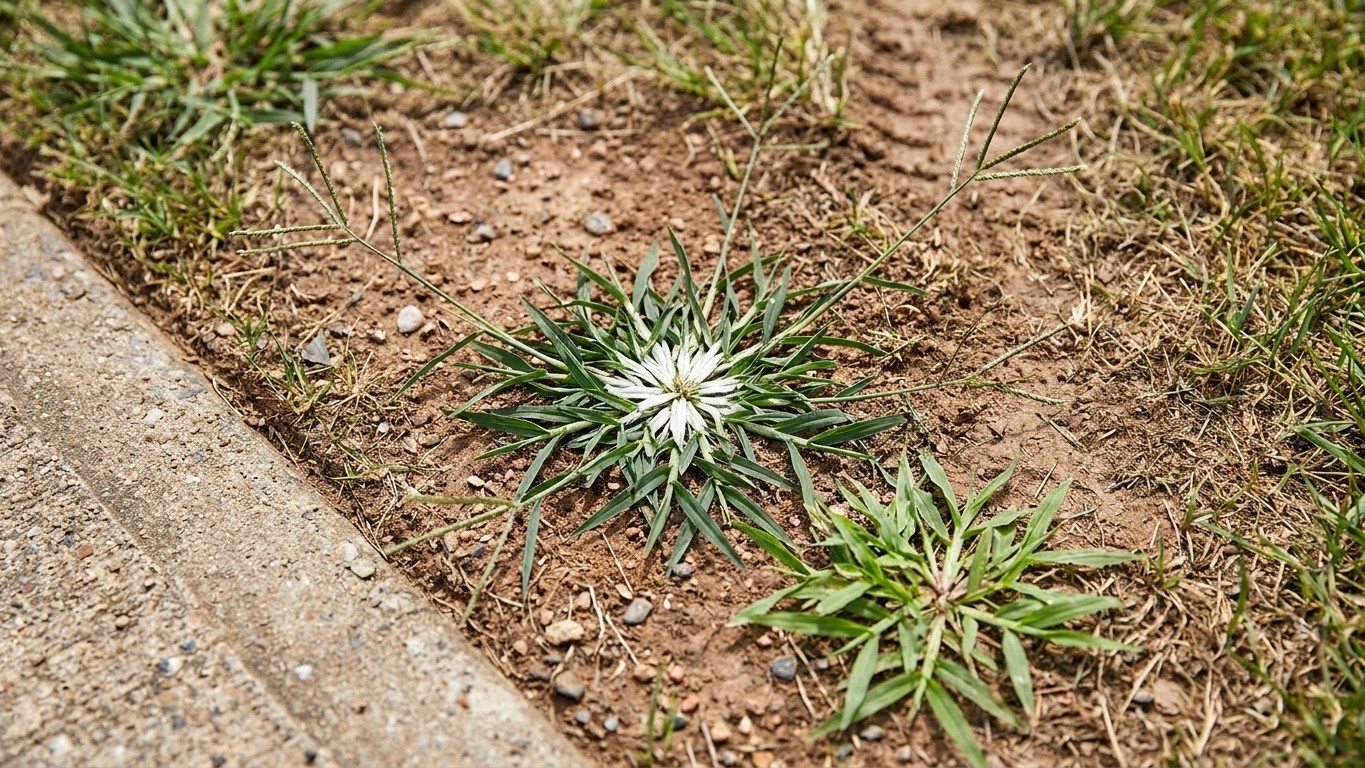

Mow a Nevada lawn at the height that fits its grass. Bermudagrass, zoysiagrass and seashore paspalum take 1 to 2 inches. Carpetgrass and centipedegrass take 1.5 to 2 inches. St. Augustinegrass takes 2.5 to 4 inches, and bahiagrass takes 3 to 4 inches. These are warm-season grasses. In Nevada, bermudagrass, zoysiagrass and seashore paspalum are the ones most often grown for long, dry, hot summers. Carpetgrass, centipedegrass, St. Augustinegrass and bahiagrass are southeastern species that are uncommon here. Cool-season grasses such as tall fescue and Kentucky bluegrass are also widely grown, especially around Reno. Two lawns cut at the wrong height for their species can both fail.
The mowing height for Nevada lawns
Grass blades are the lawn’s solar panels, and the height you cut decides how much of that panel stays standing. Taller turf shades the soil, which slows evaporation and keeps the surface cooler. It also supports deeper roots. Shorter turf makes a denser, tidier carpet, but only for species built to be cut low. A grass that spreads by low runners handles a 1-inch cut. A coarse, upright grass does not.
What mowing height works for each warm-season grass?
The gap between species is wide, which is why the inches matter more than any general rule of thumb.
| Grass | Mowing height |
|---|---|
| Bermudagrass | 1 to 2 inches |
| Zoysiagrass | 1 to 2 inches |
| Seashore paspalum | 1 to 2 inches |
| Carpetgrass | 1.5 to 2 inches |
| Centipedegrass | 1.5 to 2 inches |
| St. Augustinegrass | 2.5 to 4 inches |
| Bahiagrass | 3 to 4 inches |
Mow bahiagrass at 1 inch and you have scalped it. Mow bermudagrass at 3 inches and it turns stemmy and loose, with a soft, matted feel underfoot. If you are not sure what you have, look at the blades and runners, or ask your county extension office to identify a sample.
Why do cool-season grasses struggle in Nevada?
Cool-season grasses such as tall fescue and Kentucky bluegrass grow best in mild weather. They slow down in sustained heat, thin out, and brown without constant water. In the hottest, driest parts of the state, summer rain adds almost nothing to what the lawn needs. Warm-season species keep growing when temperatures climb, which is why the heights above apply to warm-season lawns in the low desert. Cool-season lawns are still common, especially around Reno and Carson City and in shaded Las Vegas yards. Where you have them, commonly cited heights are about 2.5 to 3.5 inches for Kentucky bluegrass and 3 to 4 inches for tall fescue. Confirm with your local extension office.
Elevation changes the picture. A lawn in the Reno and Carson City area sees a much shorter growing season than one in the Las Vegas valley. Even so, the cutting height follows the species, and the season only changes how many weeks you get to mow. For a comparison, How High to Mow a Lawn in Wyoming shows how a cold, high-elevation state handles it, and How High to Mow a Lawn in Tennessee covers many of the same warm-season species where summers are humid.
Raising the deck when the heat comes
When summer arrives, move the deck to the top of your grass’s range. A bermudagrass lawn that was happy at 1 inch in May does better at 2 inches by July. St. Augustinegrass belongs at 4 inches, and so does bahiagrass. The extra leaf blade shades the soil surface, and a cooler surface loses less water.
The weather data explains why this matters. Across June, July and August, the Las Vegas reference station averages about 0.7 inches of rain, out of 4.2 inches for the whole year. June is the driest month at 0.04 inches. July brings 0.38 inches and August 0.32 inches. These are 1991-2020 normals from NOAA, a record of what the region can usually expect and not a forecast for any one summer. A slope, a rain shadow or a city block can shift them.
The practical fix is cheap: set a rain gauge on your own plot. A few weeks of readings will tell you more than any regional average. Pair that with a screwdriver test. If it slides easily into the soil, the root zone is moist. If you have to lean on it, the lawn needs water.
A few habits help when temperatures peak:
- Keep mower blades sharp, since a dull blade shreds the leaf tips and the grass loses more moisture through the wounds.
- Skip mowing a lawn that is visibly wilting or stressed, and water it first.
- Leave the clippings on the lawn, where they return moisture and nutrients to the soil.
The general timing and technique are laid out in Mowing a Lawn, which is useful background for any climate.
The one-third rule, and why it is not arbitrary
Never remove more than one third of the blade height in a single mowing. This is a widely repeated rule in lawn care, and it has a reason behind it. The leaves make the food that feeds the roots. Cut off too much at once and the plant has to pull stored energy from its roots to regrow its leaves, which weakens it right when heat is already straining it.
The rule turns into simple numbers. If you want a 2-inch lawn, mow when the grass reaches 3 inches. For a 1-inch target, cut when it reaches 1.5 inches. For St. Augustinegrass kept at 4 inches, mow when it reaches about 6 inches. Let the grass tell you when to mow, and not the calendar.
Growth also changes with the season. In heat and drought, the lawn grows slowly, and a weekly schedule can have you cutting grass that has barely grown. Check the height first. If it has not reached the one-third mark, wait.
If a lawn gets away from you, say after a vacation or a rainy spell, do not chop it straight back to the correct height. Take off a third, wait a few days, then take another third. Repeat until you reach the target. Scalping an overgrown lawn in one pass exposes stems the grass was not hardened for, and it can leave bare, brown patches that take weeks to fill in.
The first and last cut of the year
Warm-season grasses wake up when the soil warms, and that date moves a lot across the state. Lawns in the Las Vegas valley green up early. Lawns in the northern and higher parts of the state green up much later. For Las Vegas airport, NOAA’s 1991-2020 normals put a typical last spring 32°F freeze around the start of February and a typical first fall freeze in early December (NOAA NCEI normals). That station sits in an urban heat island, so these dates are at the mild end and do not describe the state. Reno, Carson City and anywhere at elevation frost months earlier in fall and months later in spring.
For the first mow, watch the grass and not the date. Wait until the lawn is actively green and growing and has reached the height where the one-third rule lets you cut. Then mow at your species height, and keep to it.
The last cut works the same way in reverse. Keep mowing for as long as the grass is growing. As nights cool and growth slows, the interval between mowings stretches out. When the lawn stops growing and goes dormant and tan, you can put the mower away. Do not drop the deck low for winter in the hope of a head start next spring, because cutting deep right before dormancy removes leaf area the grass needs to build the reserves it stores in its runners, rhizomes and roots.
Local timing is best checked with your county’s University of Nevada, Reno Extension office, which knows the frost dates and green-up windows for your elevation and valley.
Common questions
What is the best mowing height for a Nevada lawn?
It depends on the species. Bermudagrass, zoysiagrass and seashore paspalum run 1 to 2 inches. Carpetgrass and centipedegrass run 1.5 to 2 inches. St. Augustinegrass takes 2.5 to 4 inches, and bahiagrass takes 3 to 4 inches. In peak summer, use the top of your range.
Does Reno need a different mowing height than Las Vegas?
The height is set by the grass, so the same species gets the same range in both places. What differs is the season, and often the grass itself: Reno-area lawns are more often cool-season species, which have their own heights. Reno and Carson City have a much later spring green-up and an earlier fall dormancy, so you will mow fewer weeks per year.
How often should I mow in summer?
Mow when the grass is about one and a half times your target height, so you remove no more than a third. For a 2-inch lawn that is 3 inches. In peak growth it might be every few days for a lawn cut at 1 inch, and every week or so for a taller one. In hot, dry spells, growth slows and the interval stretches.
Should I bag the clippings?
Leave them on the lawn in most cases. Short clippings break down quickly and return moisture and nutrients to the soil. Bag them only when the grass was cut well past the one-third rule and the clippings lie in clumps, or when a disease is present.