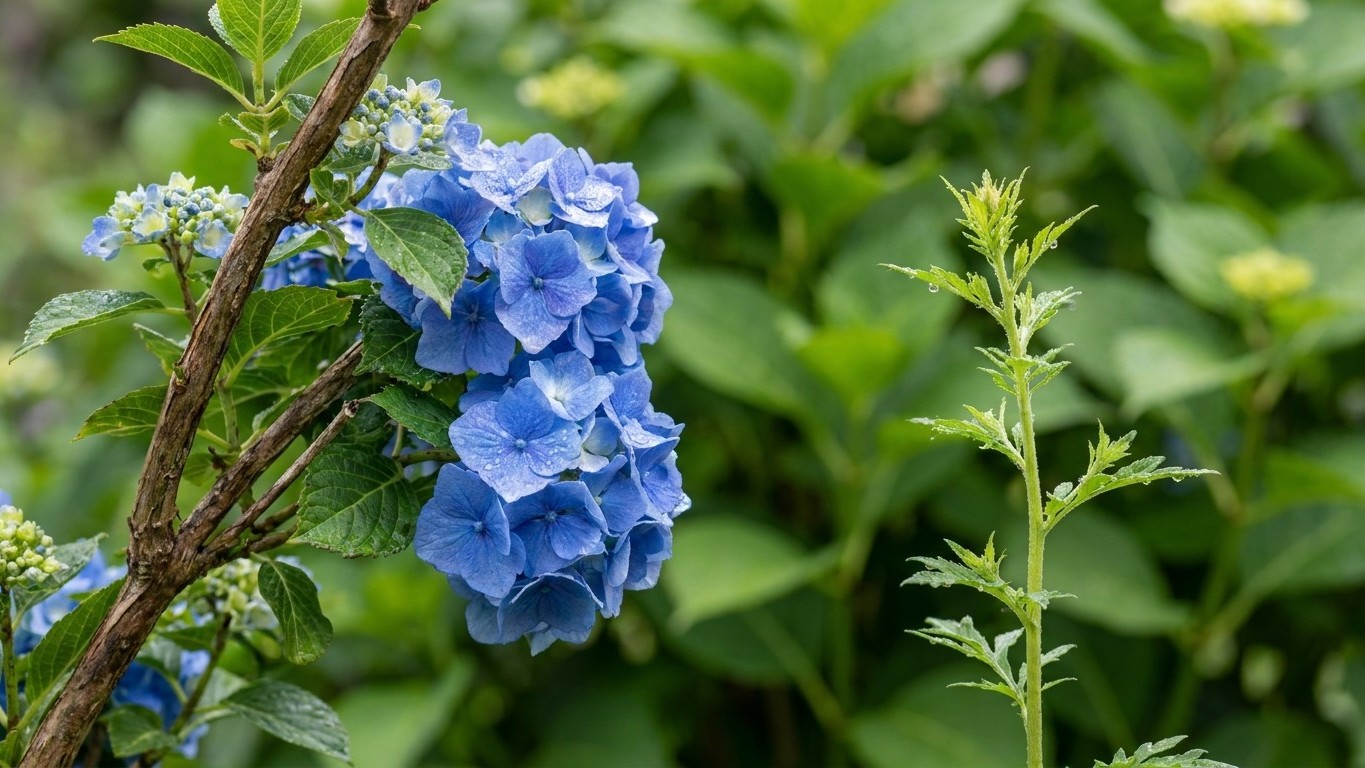

Panicle and smooth hydrangeas come through a South Dakota winter and bloom the next summer. Bigleaf hydrangeas often do not bloom after a hard winter, because their flower buds sit on last year’s stems. The USDA Plant Hardiness Zone Map puts the state in zones 4a to 5b, so a shrub’s flowering habit matters more than the promise on its plant tag. Choose one that flowers on stems grown this season, and a killing winter costs you some height and little else.
What this comes down to in South Dakota
At Sioux Falls, the reference city for these dates, the average last spring frost falls between April 29 and May 9 and the first fall frost between September 24 and October 4. That is a little under five months of growing weather. Only hydrangeas that build their flowers on new growth finish a bloom cycle inside it and shrug off a winter that sits at the cold end of USDA zones 4a to 5b. The cultivars below run from the shortest season to the longest, using the zone ranges that nurseries and breeders list.
Quick Fire
A panicle hydrangea rated for zones 3 to 8. Its white flowers open earlier than most panicles and age to pink and red, and it blooms on new wood. Early opening means the show is well along before a late-September frost, which makes it a safe pick for short-season gardens.
Bobo
A dwarf panicle hydrangea, zones 3 to 8, with white blooms that fade to pink on new wood. It stays under about 3 feet tall, so it tucks under snow cover and out of the wind. It suits small beds and foundation plantings.
Annabelle
A smooth hydrangea (Hydrangea arborescens), zones 3 to 9, with white flowers that open lime green. It blooms on new wood, so even if winter kills the stems to the ground, it regrows and still flowers. The large heads tend to flop after heavy rain.
Incrediball
Also a smooth hydrangea, zones 3 to 8, white, flowering on new wood. Its hardiness nearly matches Annabelle’s, but the stems are stiffer and hold the big blooms upright. It is a good fix for gardeners who liked Annabelle until the first thunderstorm.
Limelight
A panicle hydrangea, zones 3 to 9, with lime-green blooms that turn cream and then pink as the season goes on. It flowers on new wood from midsummer into fall. It takes a full summer to put on size, so plant it early in the season.
Vanilla Strawberry
A panicle hydrangea, zones 3 to 8, whose white flowers shift to pink and then deep red. It blooms on new wood, and the color change comes late. In a short, cool summer, or in a northern garden with an early frost, the red stage may arrive late or stay incomplete.
Endless Summer
A bigleaf hydrangea, zones 4 to 9, blue or pink depending on soil acidity. It sets flowers on both old and new wood. In zones 4a to 5b, winter often kills the old-wood buds, and the new-wood flowers open late in the season. It is the long-season end of this list and a gamble in most of the state.
Working it out for your own garden
Three questions sort any hydrangea you meet at a garden center. What zone range does the tag give, and does it cover your coldest winters? Does the plant bloom on old wood, new wood, or both? And does it start flowering early enough to finish before your first fall frost?
How do you check a cultivar against your season?
Take Limelight. Its zone range of 3 to 9 covers the cold end of South Dakota, and it blooms on new wood, so winter dieback does not erase the flowers. Plant a container-grown shrub in mid-May, a week or so past the April 29 to May 9 spring frost window at Sioux Falls, and it has the entire summer to grow. It opens in midsummer, which leaves a good stretch of bloom before the earliest frost in the window. It passes on all three questions.
Fall planting works by subtraction. Count back about six weeks from the first fall frost so the roots can settle before the ground freezes. If your garden is rural, subtract another week or two, since farm and acreage plantings usually see frost earlier than the airport does.
Now Endless Summer. Its tag says zone 4, so in the coldest parts of the state it sits at or below its rating, and even in the milder zones it gets by only when the winter is mild or the plant is sheltered. The old-wood buds are the problem. If a cold snap kills them, the shrub leafs out from lower on the stem and flowers only on new growth, which opens late and leaves little time before frost. The same shrub can bloom heavily one summer and not at all the next, and that is where the line falls for bigleaf types here.
How can you tell if a hydrangea survived winter?
Wait. Hydrangeas leaf out late, and a bare stick in early May is not a dead one. By the end of May, scratch the bark of a stem with a thumbnail. Green underneath means the stem is alive. Brown and dry means it is dead. Cut dead wood back to the first live bud, or to the ground if every stem is gone, and let the plant regrow. A panicle or smooth hydrangea recovers from that and still flowers. A bigleaf will probably skip the year’s flowers.
What changes across the state
South Dakota stretches a long way, and the numbers shift with it. Sioux Falls sits in the southeast, where winters are generally milder than elsewhere in the state and towns trap some warmth. Move north and the cold end of the zone range takes over. Spring frost lingers longer, fall frost comes sooner, and the winter minimums reach the point where bigleaf hydrangeas are unreliable even with protection. The warmest zones in the 4a to 5b range lie toward the south and southeast, with some mild pockets in the Black Hills foothills.
Going west brings elevation and open plains. Higher ground, including the Black Hills, shortens the season at both ends, so the early bloomers at the top of the cultivar list matter more there. Sheltered valleys can be gentler than the ridges around them, and the difference between a canyon and a hilltop can be larger than the difference between two towns.
Wind is the quiet factor on the open prairie. It strips snow cover, which is the insulation that protects the crown, and it dries out exposed stems all winter. A hydrangea on the north or west side of a bare lawn sees a harsher season than one on the south side of a house or inside a windbreak. Rural gardens can see the last spring frost a week or two later than the airport figure, and the first fall frost a week or two earlier. Add the two shifts together and the real window can be several weeks narrower than the reference city suggests. Shift your choices toward the short-season end of the list as the window narrows.
The mistakes this state punishes
One common mistake is planting after a warm spell. A warm spell in April feels like permission, but the soil is still cold, and a frost at Sioux Falls can still arrive after May 9. New leaves that open early get frozen, and the plant spends its first summer recovering. Wait for the window to close, then keep a sheet or an old blanket handy for a surprise cold night.
The second is buying for the catalog photo. A long-season cultivar such as Vanilla Strawberry or Endless Summer looks wonderful in a warm-climate listing, but in a short northern summer the color change or the flowering may never finish. Match the cultivar to your frost window, and when in doubt, take the earlier bloomer.
The third is pruning at the wrong time. Panicle and smooth hydrangeas flower on new wood and can be cut back in late winter or early spring. Bigleaf types carry buds on last year’s stems, so a spring haircut removes the flowers. The details are in When to Prune Hydrangeas in South Dakota.
The last two are about feeding and mulch. Late-summer fertilizer pushes soft new growth that frost kills before it hardens. Skipping mulch in the first winter leaves young roots exposed to freeze-thaw cycles. After the ground begins to freeze, spread shredded bark or leaves several inches deep over the root zone of any new planting.
Checking this against your county
The dates and zones above start at one airport weather station and a state-wide map, and your own yard may sit weeks away from either. Your county office of South Dakota State University Extension can tell you what your local frost dates look like and which hydrangeas have survived in nearby gardens. For the basics of planting and care, see growing hydrangeas in South Dakota.
Common questions
Will Annabelle hydrangea survive a South Dakota winter?
Yes. It is rated for zones 3 to 9 and blooms on new wood. Hard winters can kill the stems to the ground, but it regrows in spring and flowers the same summer.
Can I grow a blue bigleaf hydrangea in South Dakota?
You can try, but expect some years with leaves and no flowers, since cold often kills the old-wood buds. Many prairie soils are alkaline, which also pushes the color toward pink. A potted bigleaf kept in an unheated garage over winter has a better chance of blooming.
Do hydrangeas need winter protection here?
Established panicle and smooth hydrangeas need very little. New plants benefit from several inches of mulch over the roots in their first winter. Bigleaf types gain the most from extra protection, such as a wire cage filled with dry leaves.
Why has my hydrangea not leafed out by mid-May?
Hydrangeas wake up late. Wait until the end of May, then scratch a stem with a thumbnail. Green wood underneath means the plant is alive and will leaf out. Brown, dry wood means that stem is dead and should be cut back.