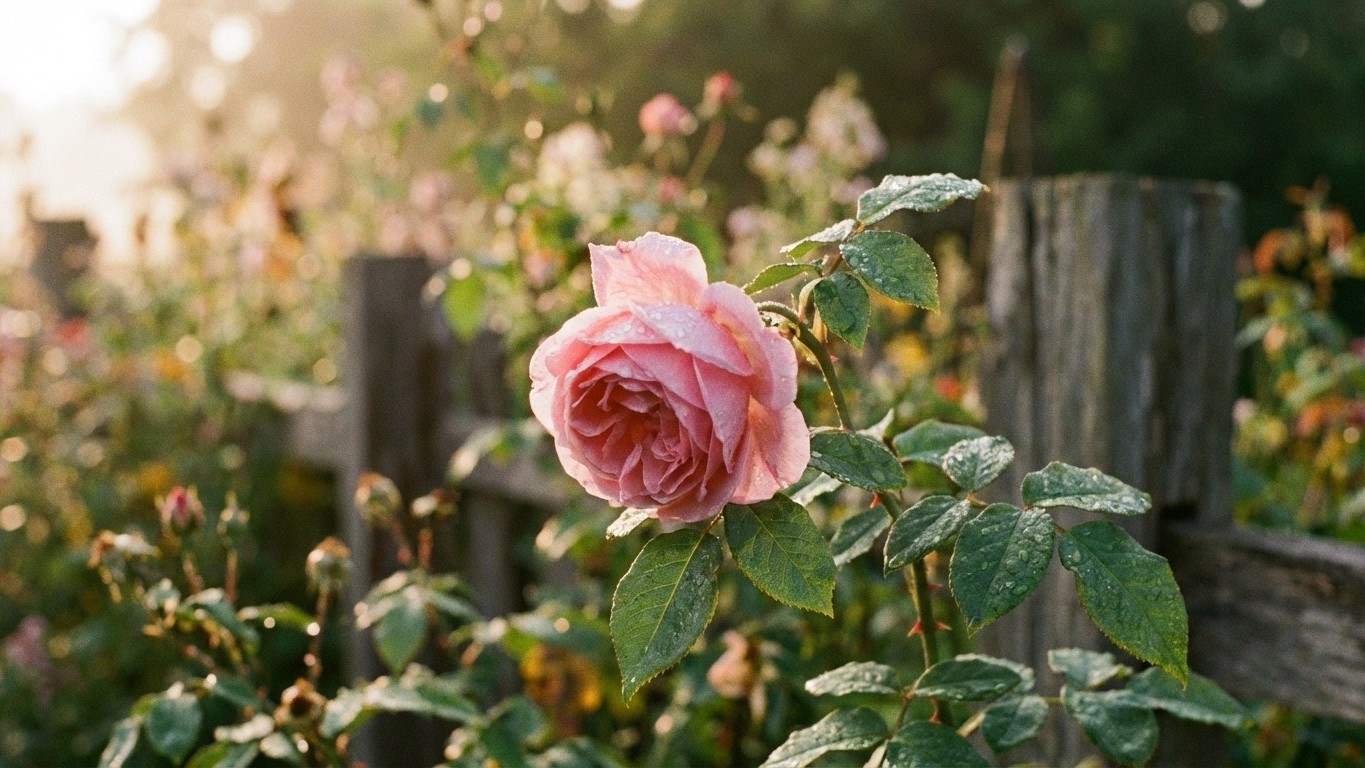

Shrub roses bred for cold, including rugosas, the Explorer series and Knock Out, come through West Virginia winters with little fuss. The old climber New Dawn holds up too. Hybrid teas, grandifloras and many imports from the national garden-center rack are a different matter. They survive only with mounded soil, a sheltered spot and some luck. Here is how the zones sort the two groups, which named roses are safe buys, and what to read on the tag before you pay.
Which roses survive a West Virginia winter
The USDA Plant Hardiness Zone Map places West Virginia across zones 5b to 7a. The USDA system rests on a single variable, the average annual extreme minimum temperature, so a zone describes the coldest night in a typical winter. The high ridges and mountain valleys sit toward the 5b end. The lower river valleys run warmer, toward 7a. Which end of that range your yard falls in decides how much winter work your roses need.
Which rose types handle the cold end of the range?
Rugosas clear it easily. They are tough, thorny shrubs, so even the coldest West Virginia pockets are well within their comfort. The Explorer series, bred in Canada for brutal winters, holds the same standing. So do most species roses and the old once-blooming Gallicas and albas. Modern shrub roses such as Knock Out cover the whole state but leave little margin at the top of the mountains.
Hybrid teas are the group that needs help. Most are comfortable in warmer parts of the state. Below that, the canes often die back in winter, sometimes to the graft union, and the plant restarts from there each spring. That can still be a blooming rose by midsummer, but it is a smaller one than the catalog photo promised.
Does frost timing matter as much as the zone?
It matters for how roses prepare for winter. At Charleston, a river valley, the middle band of 32°F freeze probability runs from April 9 to April 23 in spring and from October 18 to November 1 in fall, based on NOAA NCEI climate normals. Higher elevations freeze noticeably earlier in fall, and mountain gardens can see their first hard freeze well before the valley does. A rose that keeps pushing soft new growth into that window loses it, which is one reason heavy late feeding backfires.
The zone number also says nothing about soil. Cold-hardy roses sitting in wet clay, which is common across the state’s hollows and hillsides, struggle in winter regardless of what the tag says. Sloped ground that drains well does more for a marginal rose than an extra layer of mulch.
Named roses that hold up here
The safest buys share a few traits. They are grown on their own roots, they have a track record in the Appalachian region, and they are rated hardy to at least the zone where they will be planted, ideally colder. These five meet that standard, and a sixth is worth a look if you want something more modern.
Which shrub roses handle the coldest counties?
Therese Bugnet is a rugosa hybrid with fragrant, double, pale pink flowers on tall, slightly arching canes. A West Virginia winter barely registers for it. It blooms heavily in late spring and then keeps up lighter flowering for much of the season, and it takes poor soil well.
Hansa is another rugosa, with fragrant double flowers in a deep magenta-purple and big orange-red hips in fall. It is equally hardy. Hansa spreads by suckers and fills in a hedge row quickly, so give it room. Both rugosas have leathery, wrinkled leaves that shrug off a lot of the summer humidity that wears down other roses here.
Knock Out is a high-volume seller for a reason. It repeats bloom from spring to hard frost and needs no deadheading. In the coldest counties, expect some tip dieback in a hard winter. It rarely kills the plant, but prune out the dead wood once the buds swell so the new growth comes from healthy canes.
From the Explorer series, William Baffin and John Cabot are widely sold climbers and tall shrubs. Both bloom in clusters and grow well on a fence or pillar without winter wrapping. They bloom mostly in a main flush, with less repeat than Knock Out.
Is there a repeat-blooming climber that works?
New Dawn is a standard answer. It carries blush-pink, lightly fragrant flowers through summer on vigorous canes. In an exposed spot at the cold end, the tips of the longest canes may burn back, so a south or west wall helps. In the lower valleys it has no trouble, and it handles partial shade better than most climbers.
Sold here, but not for this zone
Garden centers and big-box stores buy from national distributors, and the stock on a West Virginia shelf is often the same as in Georgia or California. Some of it belongs in a warmer climate. A rose can be healthy, handsome and for sale in April and still be a poor bet for a mountain winter.
Hybrid teas lead that list. Peace-style classics, grandifloras and many floribundas are almost always grafted onto a rootstock, and in zone 5 or the colder part of zone 6 they dieback most winters. Some English-style shrub roses are borderline in the same way. Some tolerate zone 5, and many do not, and the tag does not always make that clear.
The clearly unsuitable ones are rarer but turn up. Lady Banks, Noisette roses and many tea roses need warmer winters, so even the lower valleys are a stretch. Miniature roses sold in pots around Valentine’s Day and Mother’s Day are a separate trap. They are forced in greenhouses for the holiday and rarely adapt when moved into the garden, though a few survive.
What does winter work look like for a grafted rose?
It is simple but has to happen every year. After the ground starts to freeze, mound soil or shredded bark over the graft union so the bud union stays insulated from the worst cold snaps. Many gardeners add a wrap of burlap or a rose collar on top. Plant these roses against a south-facing foundation or fence, where they get reflected heat and some wind protection. If that sounds like more upkeep than you want, choose one of the named shrub roses above instead.
What to check on the label before buying
Three details on the tag tell you more than the photo does. The first is grade. Bare-root roses are sold as Grade 1, 1½ or 2, and Grade 1 is the top: the thickest canes and the most of them. A Grade 2 may cost less, but it has a harder time establishing, and a stressed young plant handles its first winter poorly.
The second is the zone rating on the tag. Look for the coldest zone the grower claims, and compare it to your own site. If you live in a high-elevation county, aim for a rating at least a zone colder than your map zone, because tags are written for average conditions and the exposed ridge in your yard may not be average.
The third is whether the rose is grafted or grown on its own roots, and it matters more the colder your site is. A grafted rose is a named variety joined to a hardier or more vigorous rootstock. When winter kills the canes above the union, what regrows from below is the rootstock itself, which often means a thorny, single-flowered plant that looks nothing like the one you paid for. An own-root rose regrows as the same variety as long as the roots survive, however far down the cold cuts the canes. In a state where zone 5 winters occur at higher elevations, pick own-root plants whenever the tag offers the choice. Many nurseries that sell by mail list “own root” in the variety description, and it is worth asking if the tag is silent.
Checking this against your own county
Elevation and local terrain change what a rose faces across short distances, and a statewide zone range cannot capture that. West Virginia University Extension has an office in every county, with staff who know local conditions and which roses have done well nearby. Before you buy, ask which zone your elevation falls in and which varieties locals have had success with.
For planting and care once you have chosen, see the broader guide to growing roses in West Virginia.
Common questions
Can I grow hybrid teas in West Virginia?
Yes, especially in the warmer river valleys. Plan on mounding soil over the graft union every winter. In zone 5 areas, expect the canes to die back often and the plant to bloom later and smaller than in a warmer climate.
Is Knock Out hardy enough for West Virginia?
It covers the state. In the coldest counties, tips of the canes may die in a hard winter. The plant usually regrows from the lower canes, so remove the dead wood in spring.
What is the hardiest rose for the mountains?
Among the hardiest are rugosas such as Hansa and Therese Bugnet, and Explorer roses such as William Baffin and John Cabot. All are rated well beyond the coldest winters the state produces.
Do hardy roses need winter protection every year?
Rugosas and Explorer roses usually need none once established. Knock Out and New Dawn can use a light layer of mulch in the first winter after planting at high elevations. Grafted roses such as hybrid teas need mounding every year.