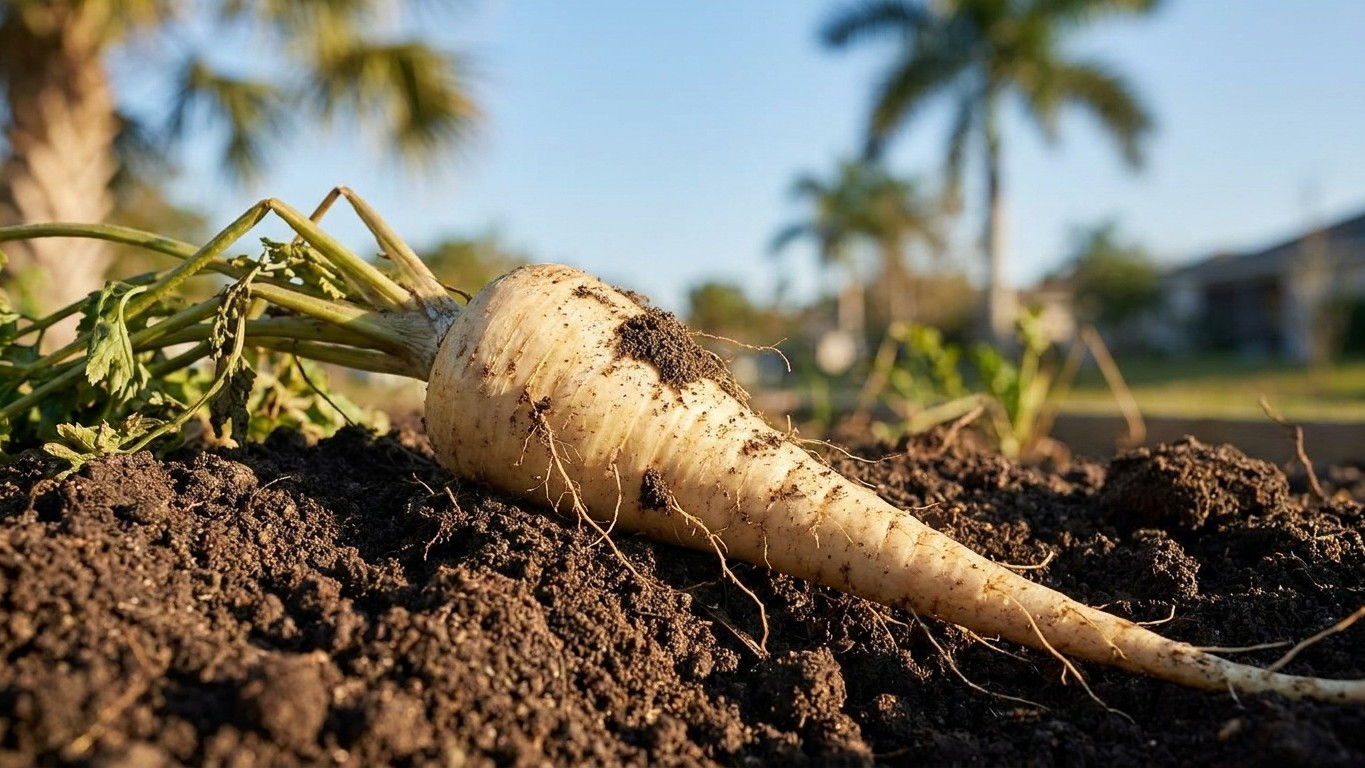

Lift parsnips in West Virginia after the first hard frosts, from mid to late November in the valleys, and keep digging through winter whenever the ground is workable. Finish before spring growth starts. Once the roots are out, they can keep 4 to 6 months, but only at 32 to 34°F with very high humidity held steady. A kitchen rarely manages that, and one common habit turns the roots bitter even in a cold fridge.
The short answer
The question that decides everything here is whether the ground delivers several frosty weeks, because cold is what converts a parsnip’s stored starch into sugar. The mean daily minimum of the coldest month at the Charleston reference station is 26.1°F. That is the mean daily minimum of the coldest month, so watch for frozen ground and damaged foliage on the coldest nights, and higher ground runs colder. A parsnip grown in West Virginia will sweeten as well as grow, provided it stays in the soil through those weeks. Utah State University Extension says parsnips taste best after several weeks of cool, frosty weather, and that is the target. The full growing picture is in Growing Parsnips in West Virginia, and the sugar chemistry is covered in Will Parsnips Sweeten in West Virginia?
The hardiness zone number tells you little here. A comfortable zone says the plant survives winter, and sweetness depends on how many frosty days the roots sit through. Count frosts, not zone digits.
When should you lift parsnips in West Virginia?
The mean first fall frost at Charleston falls between October 18 and November 1 (NOAA NCEI 1991-2020 Climate Normals). Give the roots several weeks after that date before you dig, which puts the first real harvest in mid to late November for a valley garden. Higher elevations freeze earlier in fall, so their roots collect cold weeks sooner and can be lifted sooner.
From there, dig as you need them. A thick mulch of straw or shredded leaves keeps the soil from locking up in a hard freeze. The mean last spring frost lands between April 9 and April 23, and the roots should be out of the ground before they push new leaves. Roots that start regrowing turn tough and woody.
How long do parsnips keep after lifting?
USDA Agricultural Handbook 66 puts it at 4 to 6 months at 32 to 34°F with 98% relative humidity (The Commercial Storage of Fruits, Vegetables, and Florist and Nursery Stocks). That is a long keeper by any standard, and the figure assumes those conditions hold steady. Almost no house does that. A home fridge is cold enough, but its air is drier than the handbook’s target, so wrap the roots loosely in a damp cloth or a perforated bag and check them monthly.
Cold itself is no danger, since parsnips are not chilling sensitive. The real threat is ethylene. Parsnips give off almost none, but low levels of the gas from nearby apples, pears or any ripening fruit cause bitterness, likely through a compound called xanthotoxin. Keep the roots in a separate drawer or a different cold spot. Top the leaves off after harvest, but do not cut into the crown.
Does the season fit?
Parsnips are sown in place, and the 100 to 120 days run from seeding. Walk through the calendar with the Charleston dates and you can see how much room there is. Valley gardens have plenty. Higher ground gets less.
- Sow 2 to 3 weeks before the last spring frost. With the mean last frost between April 9 and April 23, the sowing window runs from roughly late March into early April. Seed is slow and picky, so buy fresh seed each year, since old seed germinates poorly.
- Keep the bed evenly moist and resist digging into apparently bare soil. Nothing is wrong at day ten.
- Count 100 to 120 days from the sowing date. A late March to early April sowing reaches full size after a long season in the ground.
- Compare that with the fall. The mean first frost is October 18 to November 1, so the roots finish sizing up months ahead of it. The crop’s last stretch is simply waiting in the ground while the cold works on the starch.
- Check your own elevation. The season fits comfortably at valley level. It tightens on higher ground, where fall frost arrives earlier, so sow as soon as the soil can be worked there. Your county extension office can give local frost dates.
A sowing that slips into May still finishes before frost, but the roots will be smaller at the first freeze. Early sowing buys size.
What goes wrong here
Most failures with parsnips come from the ground and the calendar, and they are fixable. Forked roots have two separate causes, so diagnose which one you have before changing anything. Soil across the state ranges from loose river-bottom loam to stony clay on hillsides, so test the ground where the row will go instead of assuming.
- Forked roots from heavy or stony ground. A root that hits a stone or a compacted layer splits around it. Utah State University Extension recommends deep sandy soil and says heavy soil must be double dug. Dig one spade hole where the row will go. If it fights you or turns up stones, loosen the bed deeply and pick the stones out before sowing.
- Forked roots from overwatering. This one happens even in good soil. Keep the bed evenly moist until seedlings are up, then water deeply and less often, letting the surface dry between soakings.
- A season that runs out. Late sowing and cold hillside gardens leave small roots at the first freeze. Sow as early as the ground allows, and in higher country check local frost dates with your county extension office.
- Roots that never sweeten. A mild stretch with few frosty weeks gives a perfectly good root that tastes plain and starchy. Leave the crop in the ground longer, keep the mulch on, and taste a root weekly. Lift in late winter, before regrowth, if the frosts never came.
- Digging up bare soil. Mark the row and leave it alone, or you will pull the seed bed apart and re-sow for nothing.
- Bitter roots from storage. The fault is ethylene from fruit stored nearby. Move parsnips away from apples and ripening fruit, and top them without trimming into the crown.
Common questions
Can parsnips stay in the ground all winter in West Virginia?
Yes. The soil is the best storage you have, and the cold keeps improving the flavor. Mulch so you can still dig after a hard freeze, and pull the last roots before new leaves appear in spring.
How long do lifted parsnips really keep?
Handbook storage trials give 4 to 6 months at 32 to 34°F and 98% humidity. In a home fridge, expect less. Wrap the roots to hold moisture, keep them away from fruit, and check them often.
Why did my stored parsnips turn bitter?
Ethylene is the usual cause. Apples and other ripening fruit release it, and even low levels in a cold space make parsnips bitter. Store the roots apart from fruit.
What else damages parsnips while they wait in the ground?
Chewed roots and tunneled crowns point to animals or insects rather than weather. What Eats Parsnip in West Virginia, and When covers who is responsible and when to look.