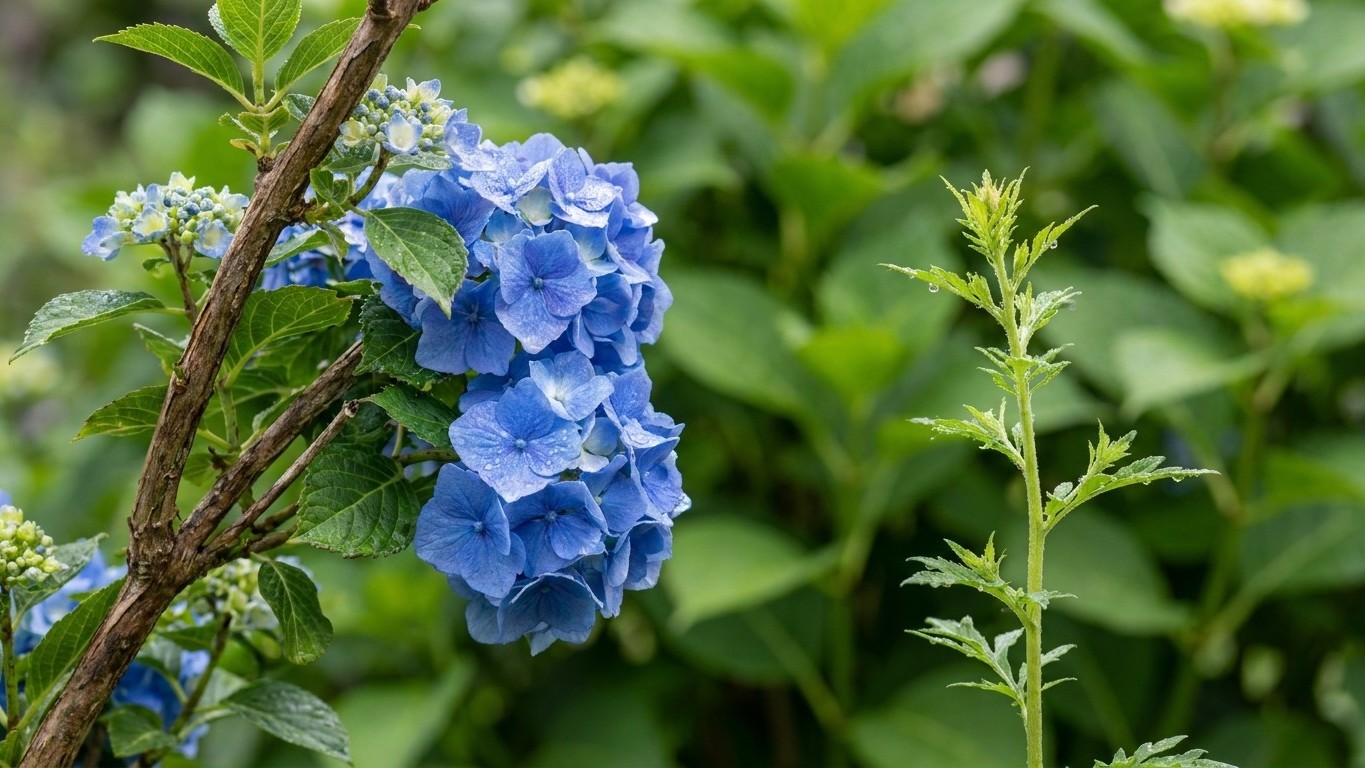

Hydrangeas that flower on last year’s stems get pruned right after the blooms fade, and the work should be done by the end of July. Those that flower on the current season’s growth get pruned in late winter, before the buds swell. Your plant’s type matters more than the calendar. Cut a bigleaf hydrangea in March and you remove the flower buds it set the previous summer. Skip pruning a panicle hydrangea and it still blooms, just on weaker, floppier stems.
What this comes down to in West Virginia

At Charleston, according to NOAA NCEI Climate Normals, the last spring freeze typically falls between April 9 and April 23, and the first fall freeze between October 18 and November 1. Prune new-wood hydrangeas in late winter, weeks before that spring window opens. Finish old-wood hydrangeas in summer, soon after they bloom, so the shrub has the whole fall growing season to build next year’s buds.
The reason is how each type makes flowers. Old-wood hydrangeas set their flower buds in late summer and carry them through winter on the stems, then open them the following June. Any cut between August and leaf-out removes some of those buds. New-wood hydrangeas build flower buds on shoots that grow in spring, so a late-winter cut only decides how many shoots there are and how sturdy they get.
Bigleaf hydrangeas (Hydrangea macrophylla) such as Nikko Blue, mountain hydrangeas (H. serrata) such as Bluebird, and oakleaf hydrangeas (H. quercifolia) such as Snow Queen all flower on stems grown the year before. Prune them within a few weeks after the flowers fade. Oakleafs need very little beyond removing spent cones and a few crowded stems.
Reblooming bigleafs like Endless Summer The Original flower on both old and new wood. If a hard winter or a late freeze kills the old-wood buds, they still produce flowers later in summer on new stems. They need only light trimming, and the work can wait until you can see which stems are alive.
Smooth hydrangeas (H. arborescens) such as Annabelle and Incrediball, and panicle hydrangeas (H. paniculata) such as Limelight and Quick Fire, bloom on the current season’s growth. All of them are hardy across the state’s full USDA zone range of 5a to 7a. Cut them in late winter while they are dormant. Panicles can lose height. Smooth types tolerate a hard cut down to a low framework of stems, which keeps the heavy flower heads from flopping.
Working it out for your own garden
Start by sorting your shrub into old wood or new wood. If the tag is long gone, look at the leafless stems in winter. Plump pairs of buds along last year’s stems on a bigleaf mean flower buds are already formed. A shrub that dies to the ground every winter and still flowers that summer is blooming on new wood.
Next, set the deadline. Take Nikko Blue, a bigleaf that typically flowers from June into July. Prune it as the blooms fade, and certainly by the end of July. From July 31 to the first fall freeze at Charleston is about 79 to 93 days, or roughly 11 to 13 weeks. That is the stretch the plant uses to set next year’s buds, so a cut in August or later eats into it. Now run the same shrub through a March pruning. Every stem you shorten carries buds that would have opened in June, so the plant leafs out fine and blooms little or not at all.
For a new-wood example, take Limelight. It blooms in summer on shoots that grow after the last spring freeze, so the deadline is the other end of the calendar. Finish cutting before the buds swell and show green tips, and check with your local extension office for the timing in your area. Prune in late February or March, on a day when the wood is not frozen solid, and the shrub will push strong new stems with room to spare.
To decide which stems to cut after a hard winter, use a scratch test. Scrape a small patch of bark with a thumbnail. Green underneath means the stem is alive, and tan or brown means it is dead. Bigleaf stems often leaf out late, so wait until leaves are open on the live parts before removing anything. Cut dead stems back to a healthy pair of buds or to the ground.
What changes across the state
Charleston sits in a river valley, and plenty of West Virginia does not. The USDA Plant Hardiness Zone Map, which rates a place by its average annual extreme minimum temperature, runs from 5a to 7a across the state. The warm end belongs to the low river valleys along the Ohio and Kanawha. The cold end belongs to the high Allegheny country in the east, where winter lows are sharper and spring arrives later.
For pruning, that gap moves the new-wood deadline more than the old-wood one. At higher elevations, buds break weeks after Charleston’s, so late-winter pruning can stretch later into spring. Watch the buds on the plant instead of the date, and stop when they swell and show green. The old-wood deadline moves the other way. Fall freezes come earlier on ridges, so finishing bigleaf pruning in July is a better rule than waiting for August.
Winter kill is the other difference. In the highlands and in low spots where cold air pools overnight, bigleaf flower buds are lost more often. Gardeners there tend to rely on panicle and smooth types, or on reblooming bigleafs, because those flower regardless of what the winter did to old stems. In the sheltered valleys and in lower parts of the Eastern Panhandle, old-wood bigleafs tend to carry their buds through more winters. Hillsides and hollows within a single county can still behave like different zones.
The mistakes this state punishes

A common and costly mistake is cutting old-wood hydrangeas in fall or early spring as part of general cleanup. It feels responsible, and it takes off the buds that would have flowered. Wait until after bloom in summer. If a bigleaf looks dead in March, leave it alone until leaves open, because stems that look lifeless often leaf out from the lower half.
Another is reacting to a warm spell. A warm spell in late winter or early spring tempts people to prune and uncover everything, then a freeze returns, which is common in West Virginia right up to the end of the April frost window. New growth that pushed after a cut is especially prone to blackening. Prune panicles and smooth hydrangeas while the shrubs are still fully dormant, and hold off on pulling mulch until the cold snaps stop coming.
Pruning new-wood types too late is a smaller loss but a real one. Once new shoots are growing, cutting them back resets growth, delays bloom, and can leave flowers lower and later than the shrub would have produced. And shearing a whole bush into a ball in summer, a common hedge-trimmer habit, removes many of the flower buds on an old-wood type and can leave sparse growth. Take out dead or crossing stems individually instead, and cut the oldest stems of a crowded bigleaf to the ground to renew it gradually.
Checking this against your county
A state-wide pruning window is a starting point. Your elevation and slope shift the dates, and your county extension agent knows how local winters have treated hydrangeas. West Virginia University Extension has an office in every county, and agents can look at a damaged shrub and tell you whether it is dead wood, frost damage, or the wrong cut at the wrong time. For general care, soil, and site selection, see the guide to growing hydrangeas in West Virginia.
Common questions
- Can I cut hydrangeas to the ground in late fall?
- Only smooth hydrangeas tolerate a cut that low, and late winter is the better time. Smooth types such as Annabelle bloom well after a hard cut, while panicles are normally cut back by only about a third. Bigleaf, mountain, and oakleaf hydrangeas lose their buds, and even reblooming bigleafs flower later and less when cut that low.
- How late can I prune a bigleaf hydrangea?
- Aim to finish by the end of July. Pruning after that cuts into the weeks the plant needs to set next year’s flower buds before the first fall freeze.
- My bigleaf hydrangea leafed out but never bloomed. Did pruning cause it?
- Pruning in fall, winter, or early spring is one cause. A winter or late spring freeze that killed the flower buds is the other. If the stems were never cut and the buds are blackened or missing, the freeze did it, and a reblooming type or a panicle hydrangea is the more reliable choice for that spot.
- Is it safe to deadhead hydrangeas in summer?
- On old-wood types, cut faded flower heads back to the first pair of plump buds right after bloom. On panicle and smooth types, deadheading is optional, because the dried heads can stay through winter and get removed with the late-winter cut.