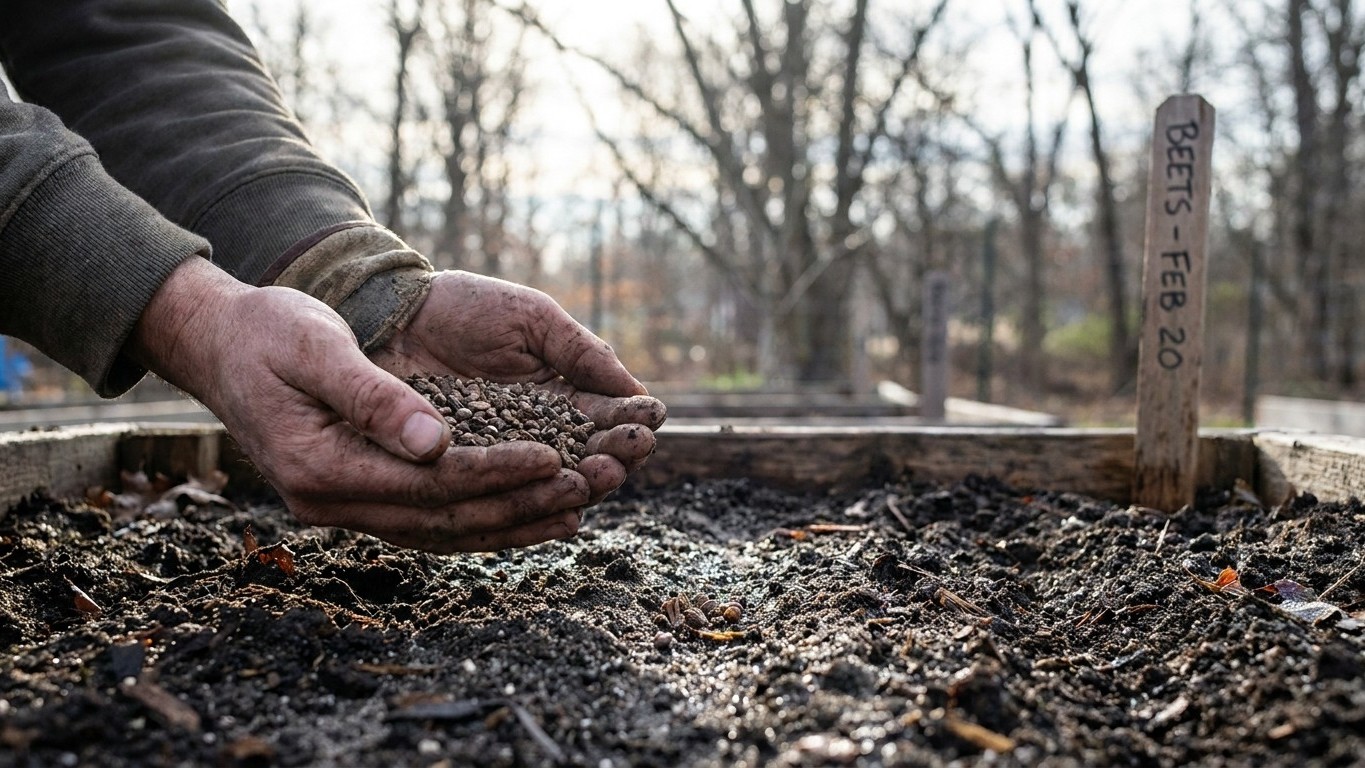

In most of Alabama, sow beet seed directly in the ground two to three weeks before the last spring frost, which the reference weather station places between March 19 and April 3. That puts seeding around late February to mid-March for much of the state, though your own county’s last frost date, and your own soil, will move that window. Beets need 60 to 80 days from seed to root, so timing the sowing, not just the seed packet, is what decides the harvest.
The short answer
Alabama’s official state soil, the Bama series, gives a useful starting picture of what a beet seed is dropping into across a lot of the state. It’s an Ultisol, meaning it’s old, heavily weathered, and leached of a lot of what plants want. The surface horizon runs about 67 percent sand, 14 percent clay, and 19 percent silt, with organic matter sitting around 0.8 percent and a surface pH near 5.3, which counts as strongly acid. It’s classified well drained.
For a beet, that combination cuts two ways. The sand content means water moves through fast, so the root zone doesn’t hold moisture the way a beet, which wants deep, sandy, well-drained soil rich in organic matter, actually prefers when it comes to the “rich in organic matter” part. Bama-type ground has the drainage right but the fertility wrong. The low organic matter and the acidity both point the same direction: this dirt needs feeding and buffering before beet seed goes in, not after. Utah State University Extension’s guidance for the crop calls for working in no more than 1 inch of composted organic matter per 100 square feet, which is a modest amendment, not a soil overhaul, and it’s the right scale for ground that’s naturally this sandy.
The other half of the timing question is heat, and here it’s worth being straight about what’s actually published for the reference station: a count of days per year above 90 F for that location isn’t part of the sourced figures on this page, so no number is given here. What matters for a beet grower is the mechanism, not a missing statistic: once summer heat above 85 F combines with any water stress, the root starts turning woody, regardless of the exact day count. That’s the real reason Alabama’s sowing math points toward getting seed in the ground while spring is still spring.
None of this replaces a soil test from your own garden. Alabama spans hundreds of mapped soil series, and the Bama series is a representative surface sample from across the state, not a reading from any particular yard. River bottoms run heavier and wetter, hill country can run stonier, and any lot a builder graded or filled will behave nothing like the natural profile above. Treat these numbers as a reason to test your own bed’s pH and organic matter, not as a substitute for doing it.
The six weeks that decide it here
Sowing two to three weeks ahead of the March 19 to April 3 last-frost window means a beet’s first six weeks after seeding land somewhere in Alabama’s early spring, roughly late winter into mid-spring depending on the county. That stretch is when the plant is most sensitive to going without water, because water stress during this early period is what triggers premature flowering, known as bolting, in beets. A bolted plant stops building a usable root and puts its energy into a flower stalk instead, which for a root crop is close to a total loss.
Alabama spring in that window doesn’t run one way. It swings. Cold fronts move through with heavy rain, then a week or more of dry, sunny, breezy days can follow before the next system arrives. That back-and-forth is the pattern gardeners across the state deal with every year, and it’s exactly the kind of instability that catches a bed of young beet seedlings off guard, particularly in the sandy, fast-draining ground described above, where a dry week drains the root zone faster than it would in heavier soil.
The practical upshot is that the bolting risk in Alabama sits squarely in this early spring stretch, not in the summer months that come later. A grower who sows on schedule but then lets a dry week in March or early April pass without supplemental water is doing more damage to the crop than one who sows a little later into slightly warmer ground but keeps the bed consistently moist from day one. Timing the sowing date correctly only pays off if the six weeks that follow get watched, because the calendar alone doesn’t protect against a dry spell landing on unestablished roots. Mulch helps here too, cutting down how fast that sandy surface layer loses moisture between rain events.
Watching the local forecast for a stretch of dry, windy days right after sowing matters more in this window than watching the thermometer, since the temperatures involved in bolting risk are moderate, not the summer heat that causes the separate problem of woodiness later on.
What goes wrong here
- Bolting from a dry spell in the first six weeks. Alabama’s swinging early spring can deliver a week or more without rain right after sowing, and in sandy, fast-draining ground like the Bama-type soil common across the state, that dry stretch drains the root zone quickly. The remedy is consistent watering from the day of sowing through at least the first six weeks, with mulch over the row to slow evaporation between waterings.
- Woody roots from summer heat combined with thirst. Once temperatures climb above 85 F, any accompanying water stress makes the root turn tough and fibrous. This is a separate failure from bolting and shows up later in the season, so a grower who sowed on time and kept early water steady still needs to keep watering through hot stretches as the root matures, not just at the start.
- Acidic, low-fertility soil holding germination back. A surface pH around 5.3 and organic matter near 0.8 percent, typical of the state’s representative soil, gives young beet seed little to work with. Working in up to 1 inch of composted organic matter per 100 square feet before sowing, per Utah State University Extension’s guidance, addresses both the fertility gap and helps buffer the acidity somewhat, though a soil test is the only way to know how much lime or amendment your specific bed actually needs.
- Fast drainage that outruns a casual watering schedule. Sandy soil that’s well drained by design won’t hold a Sunday watering through a hot, breezy week. Beds on this kind of ground often need more frequent, lighter watering rather than the deep-and-infrequent approach that works on heavier clay soils elsewhere in the state.
- Sowing by the calendar alone instead of the local frost date. The March 19 to April 3 window comes from a single reference station, and NOAA NCEI’s own data notes that suburban and rural sites typically see later last-spring frosts than an airport station records, sometimes by one to two weeks. Sowing two to three weeks ahead of an airport-based date without checking a local county extension office risks seed going in too early for a colder microclimate.
Common questions
How many days does it take to grow beets from seed in Alabama?
Beets typically need 60 to 80 days from direct seeding to harvest, according to Utah State University Extension. That count starts at sowing, since beets are grown from seed sown directly in the garden rather than from transplants, so the full 60-to-80-day clock has to fit inside the growing window a given sowing date allows.
Can I sow beets earlier than three weeks before the last frost in Alabama?
The two-to-three-week window ahead of the last frost is the guidance tied to the sourced frost dates on this page. Sowing meaningfully earlier pushes the crop’s most water-sensitive stretch into colder, less predictable weather, and increases the odds a late freeze in a colder microclimate catches young seedlings before they’re established.
Does Alabama’s soil type affect when I should sow beets?
It affects how you manage the bed more than the calendar date itself. Sandy, fast-draining soil like the state’s representative Bama series loses moisture quickly, which raises the stakes on keeping the bed watered through the first six weeks after sowing, regardless of which week you choose to sow in.
What’s the difference between bolting and woody roots in beets?
They’re two separate failures with two separate causes. Bolting happens when water stress hits the plant in its first six weeks, triggering premature flowering instead of root growth. Woodiness happens later, when heat above 85 F combines with water stress to toughen the root’s texture. Watering consistently across the whole season addresses both, but they aren’t the same problem and don’t have the same timing.