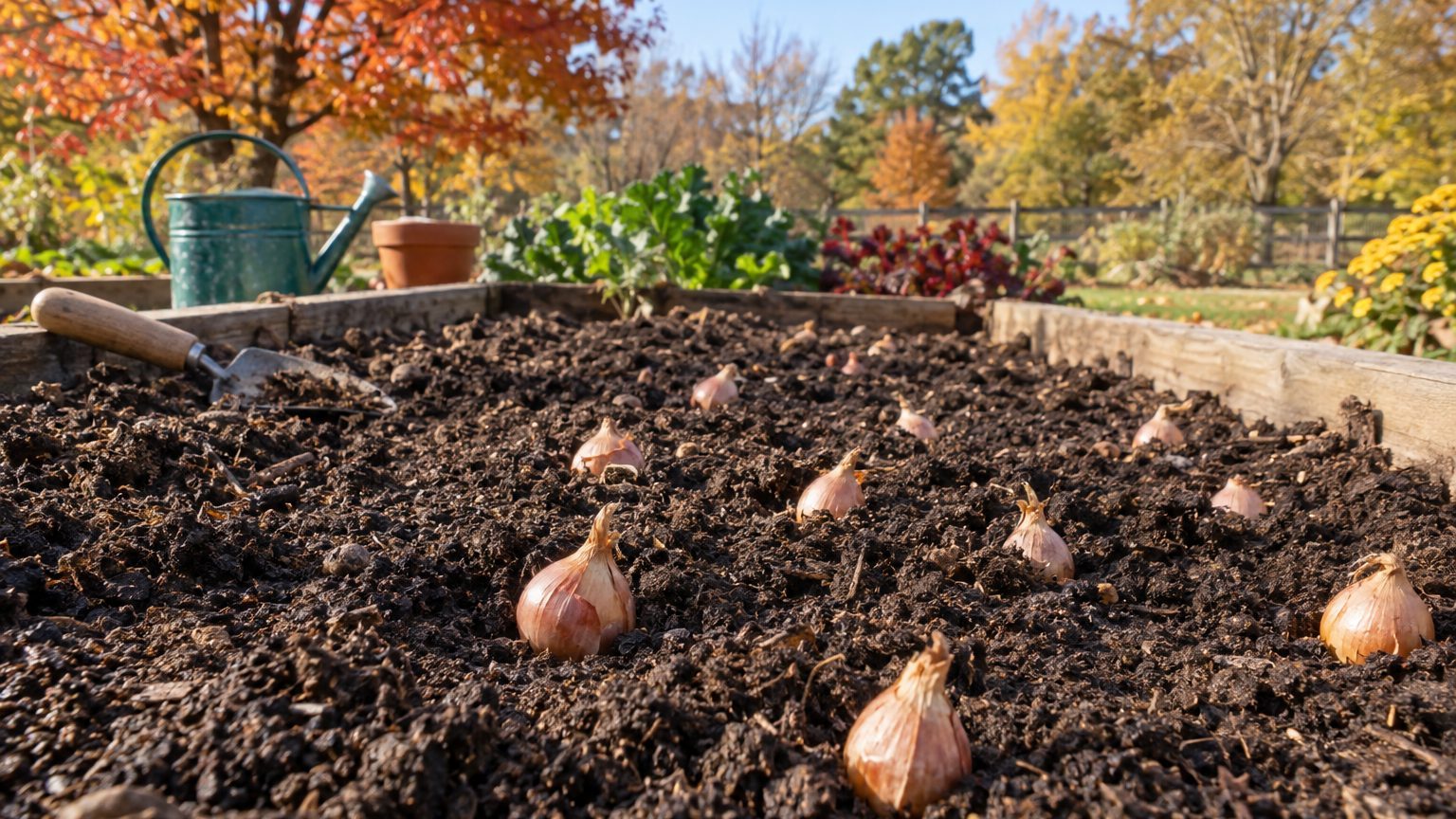

Plant shallots in Alabama in the fall, from October into early November, and treat late winter as the backup window. The fall slot lands just ahead of the first-frost window of November 2 to November 16 at the NOAA reference station. Spring planting after the last freeze is where most Alabama shallot crops go wrong, and the sections below explain why.
The short answer for Alabama
Fall planting, October into early November, gives shallots the longest possible stretch of cool weather to grow roots and leaves before the heat arrives. Late winter is the second-best choice, as soon as the soil can be worked. That covers most of Alabama, though the dates slide a little from the Tennessee line to the Gulf.
The frost dates behind this advice need a careful reading. NOAA’s 1991-2020 Climate Normals, at the reference weather station used for this page, put the last spring frost at March 19 to April 3 and the first fall frost at November 2 to November 16. These are not dates when frost stops or starts. They are the band in which the probability of a 32°F freeze sits between 30 and 70 percent. Before March 19 a freeze is still more likely than not. After April 3, it is less likely than not, but not impossible.
| Event | Reference station (NOAA 1991-2020) | Typical shift for your garden |
|---|---|---|
| Last spring frost | March 19 to April 3 | Suburban and rural sites often see it one to two weeks later, more at elevation |
| First fall frost | November 2 to November 16 | Suburban and rural sites often see it one to two weeks earlier, more at elevation |
Those figures come from an airport station. Airports are warmed by pavement and open ground, so a garden in a hollow or on a ridge is usually colder. Treat the table as a reference city, not a state-wide guarantee.
Why fall beats spring
Shallots are hardy. The mean daily minimum of the coldest month at the Huntsville reference station is 33.1°F, barely above freezing on an average winter morning. Cold survival is not the limiting factor in Alabama. Heat is. A shallot planted in October builds a root system through the mild months, makes leaf growth in late winter, and sizes its bulb as spring days lengthen. A shallot planted in April has to do all of that while temperatures climb.
What the late-winter window looks like
If fall got away from you, plant as soon as the soil is workable, well before the March 19 to April 3 window closes. Light freezes will not hurt a established shallot, so there is no reason to wait for the last frost to pass. Waiting is what costs you bulb size.
For variety choices that suit these windows, see The Best Shallots to Grow in Alabama. For the full picture of soil, spacing and harvest, start with Growing Shallots in Alabama.
What will not work here
Planting in April or May will not work. Shallots form bulbs in response to lengthening days and warming weather, and Alabama’s spring warms fast. A set planted after the last-frost window has closed has only a few weeks of cool conditions to build leaves before bulbing begins. Fewer leaves mean smaller bulbs. Gardeners who plant in late spring often get clusters of small, thin-skinned shallots that barely resemble the catalog photo.
Waiting for a frost-free guarantee will not work either. The frost window above runs about two weeks, and a rural garden can run one to two weeks behind it. If you hold off until you feel certain, you may be planting in the middle of April at the earliest. Shallots do not need that caution, since they handle light freezes in the ground.
Planting too early in the fall causes a different problem. Alabama’s fall can stay warm well into October, and sets put in during a hot spell may sprout top growth too quickly. Top growth that is far ahead of the roots is more exposed to a hard freeze and wastes the set’s stored energy. This is why the window starts in October rather than September.
Close spacing is the quieter failure in a humid state. Alabama summers and springs bring heavy humidity, and crowded foliage stays wet longer. Wet, crowded shallots invite fungal disease and bulb rot, especially as the tops begin to die back. Give each set room, plant in raised or well-drained beds, and avoid heavy mulch pressed against the bulb as the crop matures. Clay soils that hold water through winter and spring are a common trap, so amending with compost or building a bed is worth the effort.
Weekly overhead watering is the third habit that fails. Late winter and spring rain is frequent in Alabama, so sprinkling on a schedule can keep soil soggy. Water only when the top inch or so of soil is dry, and stop as the tops begin to yellow so the bulbs can cure.
Last, expecting the airport’s dates to match your yard will not work. The page’s frost figures are one station’s numbers. A garden at elevation, or in open rural country where cold air pools, can sit well outside them.
What changes across Alabama
Alabama is not one garden. The USDA Plant Hardiness Zone Map 2023 puts the state across zones 7a to 9a, which is a spread of several zones from north to south. There is no single answer for the whole state, and nobody should treat one date as correct from the Tennessee border to the Gulf Coast. Note also that the zone system rests on one variable only, the average annual extreme minimum temperature, so it says nothing about summer heat, humidity or rainfall, all of which matter for shallots.
For a reader in the northern part of the state, or at higher elevation, the practical shift is toward the early side of the fall window. Cold arrives sooner, so October planting is the better target and early November is cutting it close. Late winter planting should wait until the soil has thawed and dried enough to work, which comes later than on the coast. Because rural and elevated sites often see the last spring frost one to two weeks after the reference figures, expect the late-winter planting window to move accordingly.
For a reader farther south, the opposite pressure applies. Warm weather arrives earlier, so the growing season for shallots ends earlier. That makes fall planting even more important, and it makes a late-winter planting a smaller gamble than a spring one. Humidity is also higher in the south, which raises the stakes on spacing, drainage and airflow.
To find your own zone, do not guess from a neighbor or from the state’s reputation. Look up your address on the official USDA Plant Hardiness Zone Map, which lets you search by ZIP code. Then use that zone as a rough guide to which end of the October to early November window to favor, and treat the frost table above as a starting point rather than a rule.
Where to check this for your own county
The Alabama Cooperative Extension System is the place to go next. It is the state’s land-grant extension service, with offices across the counties, and its staff know local soils, rainfall and pest pressure in ways no state-level page can.
Two things to look for there. The first is the local planting calendar for onions and related crops, which will give a more precise window for your county than the state-wide guidance here. The second is the list of varieties trialled in your area. A variety that does well in one part of Alabama may sulk in another, and extension trials are the most reliable record of which ones actually handled local heat and humidity.
If the website does not list shallots specifically, call or visit your county extension office and ask. Shallots are close relatives of onions, so onion guidance is often the nearest published match, but ask staff whether shallots behave differently locally.
Be plain about what this page is. It is the state-level view, built on one reference station’s frost normals and a statewide zone range. A county recommendation beats it every time, because a county recommendation reflects local frost records, local soils and local trial results. This page does not have county-level shallot planting dates, and it will not pretend to.
Checking this against your own garden
Your own observations outrank every date above. Three are worth watching, and none needs equipment.
Soil warmth by feel. Push your hand into the bed in the morning. In October, soil that still feels warm like bathwater is a signal to wait a week or two. Soil that feels cool and slightly damp is ready. If you find that the bed warms and dries earlier than a neighbor’s, you have a warm microclimate, perhaps a south-facing slope or a spot near a wall. Plant toward the later end of the window there.
The first green shoots. After fall planting, notice how quickly green tips appear. Fast shoots in November mean your site is mild, and you may want to plant a little later next year. No shoots until late winter is normal, but if tops are tall before a hard freeze, you planted early.
The first frost on your own ground. Note the first morning you see frost on grass, a car roof or a rail. Compare it with the November 2 to November 16 window. If your frost comes a week or two earlier, you are likely in the colder pocket the NOAA caution describes, and your whole calendar should shift earlier in fall and later in spring.
Keep notes for a season or two. A scribbled date on a calendar will tell you more about your yard than any reference station.
Common questions
Can I plant shallots in Alabama in spring?
Yes, but late winter is the target, not April or May. Plant as soon as the soil is workable, before the March 19 to April 3 frost window closes. Later plantings tend to produce smaller bulbs.
Will a frost kill shallots I planted in fall?
Established shallots tolerate light freezes. The coldest-month mean daily minimum at the Huntsville reference station is 33.1°F, so winter cold is rarely the problem. Overly tall growth from planting too early is the bigger risk.
Are the frost dates on this page the same for my yard?
Probably not. They come from an airport station and show the band where the chance of a 32°F freeze is between 30 and 70 percent. Suburban and rural gardens often see the last spring frost later and the first fall frost earlier, by one to two weeks, and more at elevation.
Which hardiness zone is Alabama?
The USDA Plant Hardiness Zone Map 2023 shows 7a to 9a across the state, so there is no single answer. Look up your own address on the USDA map rather than assuming.