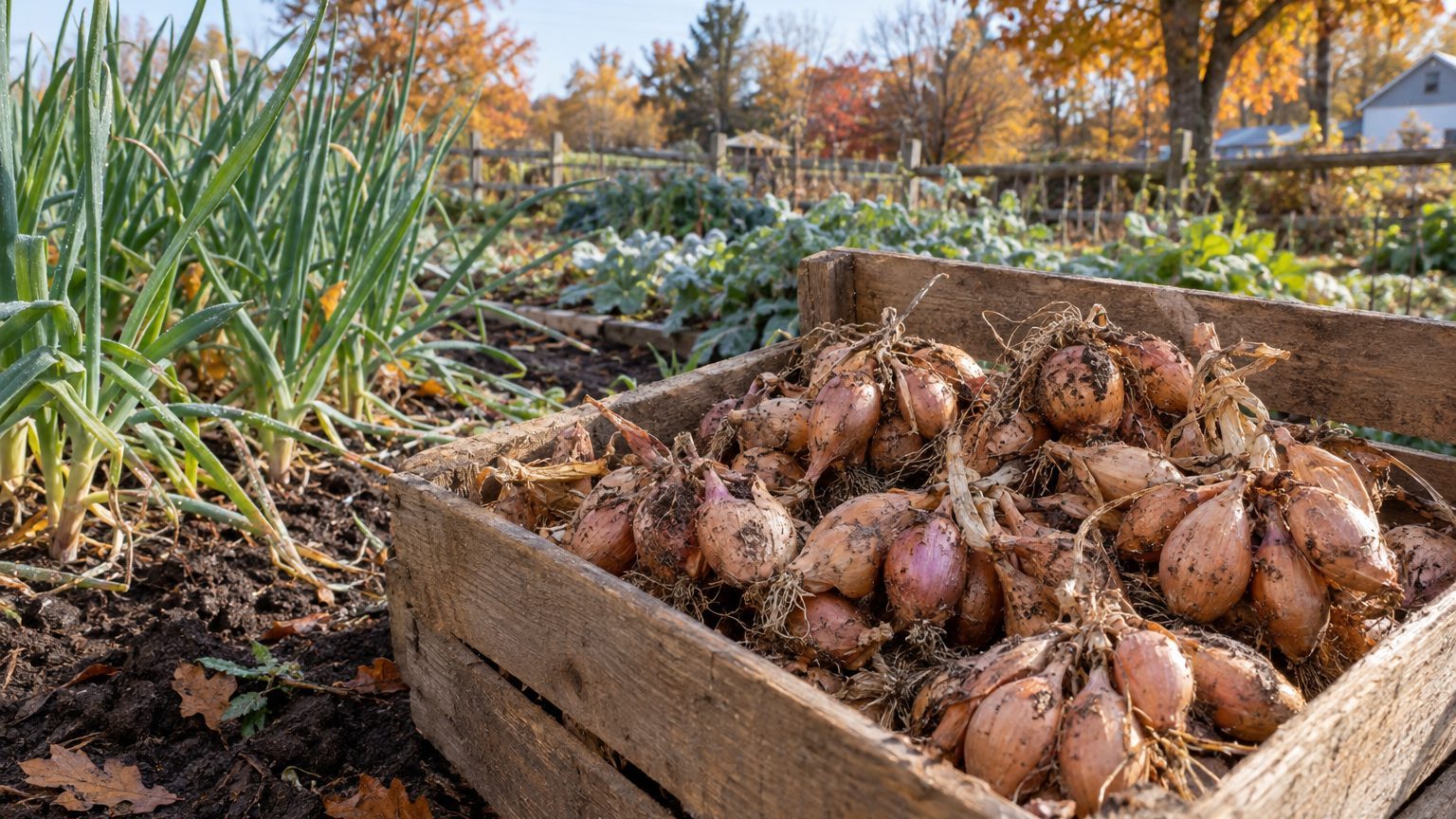

The best shallots for Alabama are multiplier types grown from sets and planted in fall, so they bulb up in spring and finish before the worst of summer. Seed-grown and spring-planted shallots are the weaker bets here. Frost dates, mild winters and humid summers explain most of that. The details shift between the Tennessee line and the Gulf Coast.
The short answer for Alabama
Choose multiplier shallots from sets, plant them in fall, and favor types sold as good keepers. Variety matters less in Alabama than planting window and type, because the season is the real constraint.
Why fall planting fits the numbers
NOAA’s 1991-2020 Climate Normals for the reference airport station put the last spring freeze (32°F) between March 19 and April 3, and the first fall freeze between November 2 and November 16. Those are bands, not deadlines. They mark the stretch where the chance of a 32°F freeze sits between 30% and 70%. Gardens outside town usually freeze later in spring and earlier in fall than an airport does, often by one to two weeks, and more at elevation.
Winter itself is gentle. The mean daily minimum of the coldest month at Huntsville is 33.1°F, which is the average overnight low in January, not a record. Shallots shrug off that kind of cold. A fall-planted set roots in cool soil, sits through winter with little top growth, and wakes up in March ready to size up as days lengthen. Spring-planted sets have to build leaves and bulbs in a much shorter window before heat arrives.
How the three types compare
| Type | When planted | Fit for Alabama | Main risk |
|---|---|---|---|
| Multiplier sets | Fall | Best choice | Rot in wet, poorly drained soil |
| Multiplier sets | Early spring | Workable, smaller bulbs | Too little leaf growth before bulbing starts |
| Seed-grown | Started indoors, set out in spring | Marginal | Needs the longest runway, which spring heat cuts short |
This page does not name cultivars, because it has no Alabama variety-trial data to back a specific pick. Your county extension office is the place to get that (more on that below).
What will not work here
Anything that needs a long, cool spring will struggle. The last-freeze band of March 19 to April 3 means a spring planter or transplanter can’t start until late March at the earliest, and later in suburban or rural gardens. Warm weather follows quickly, and shallots start bulbing in response to lengthening days regardless of how much foliage they have built. A plant that bulbs on a small canopy gives a small bulb.
Slow types and late planting
Seed-grown shallots are the clearest casualty. They start from a tiny seedling and need months to build size, and Alabama’s spring does not give them those months. Sets planted in April or later fail the same way, only faster. If fall slipped past you, an early-spring planting is still better than a late one, but expect modest bulbs.
Planting too early in fall is a smaller trap. Soil is still warm in early autumn, and sets pushed into it can throw up weak top growth before winter. The first fall freeze band of November 2 to November 16 is a useful marker to work back from, and the When to Plant Shallots in Alabama page covers the window in detail.
Humidity and watering
Humid air keeps foliage damp, and damp foliage invites fungal disease. Crowded plantings make it worse. Space bulbs about 6 inches apart so air moves between the rows, and resist the northern habit of packing them in. The page does not have Alabama rainfall or summer heat figures, so treat the humidity point as the general pattern rather than a measured number for your county.
A fixed weekly watering schedule is another mistake. Rain often does the job in winter and spring, and a bulb sitting in heavy clay after a wet week rots long before it dries out. Raised rows or beds help drainage. Storage matters too: cured shallots hung in a humid garage can sprout or mold within weeks, so find a dry, airy spot indoors.
What changes across Alabama
Alabama is not one garden. The USDA Plant Hardiness Zone Map (2023 edition, built on 1991-2020 normals) runs from 7a to 9a across the state. That is five half-zone steps: 7a, 7b, 8a, 8b and 9a. The zone is built on a single variable, the average annual extreme minimum temperature, so there is no single answer for the whole state. The airport figures above describe one reference city, and other parts of the state differ.
Readers in the north or at altitude sit at the colder end of that spread. Expect the last spring freeze to run later and the first fall freeze to arrive earlier than the reference dates, by more than a week or two on higher ground. Aim for the early part of the fall planting window so roots get established before hard cold, and add a light straw mulch over winter. Harvest will also come later than it does farther south.
Farther south, winters are milder and spring heat arrives earlier. Plant later in the fall window, and expect tops to yellow and fall over sooner in late spring. The rule of fall sets and early harvest holds everywhere, but the dates slide with latitude and elevation.
A hardiness zone says nothing about summer heat or humidity, which matter more for shallots here than winter lows do. To find your own zone, check the USDA map with your ZIP code instead of guessing from a neighbor’s garden or a seed packet.
Where to check this for your own county
The Alabama Cooperative Extension System is the state’s land-grant extension service, and it has county offices staffed by people who know local soil and weather. Start there before you buy sets.
Look for two things. The first is a local planting calendar for onions and shallots (the allium family), which gives dates tuned to your county instead of a state average. The second is any list of varieties that have been trialled near you. A variety that thrives in a Tennessee Valley trial may not suit the Gulf Coast, and a trial result beats any general recommendation.
A county recommendation beats a state one, and this page is the state one. It gives the reasoning and the broad type choice, and the county office gives the final dates and names. If your county office can also advise on soil testing or drainage, ask. Both affect rot risk more than most gardeners expect.
For the broader how-to, Growing Shallots in Alabama covers the full season from planting through harvest.
Checking this against your own garden
Your own observations outrank every date on this page. Three things are worth watching, and none needs a tool.
- Soil warmth by feel. Push a hand into the bed in the morning. If the soil feels cool rather than baked, fall planting time has arrived. A bed that stays warm longer than a neighbor’s is a warm microclimate, perhaps from a south-facing wall or sandy soil.
- The first true leaves. Note how quickly green shoots show after planting. Fast emergence means warm soil and a mild spot. A slow start suggests a cooler or wetter corner.
- Yellowing and falling tops. In late spring, the date the tops start to yellow and flop tells you when your garden’s season ends, and it is your best harvest cue.
Write the dates down for a year or two. The first frost on your lawn or car windshield, compared with the airport bands, will show how far your yard runs from the reference city.
Common questions
Can I grow shallots from seed in Alabama?
You can, but it is the weakest option. Seed-grown plants need the longest runway, and Alabama’s spring warmth shortens it. Sets planted in fall give bigger bulbs with less risk.
Are shallots hardy enough for Alabama winters?
Yes. The coldest month’s mean daily minimum at Huntsville is 33.1°F, and shallots tolerate frost. Winter cold is rarely the problem. Wet soil and humid summers are.
Can I plant shallots from the grocery store?
Sometimes they sprout, but results are less reliable than with sets sold for planting. Store bulbs may be old or treated to resist sprouting, and you will not know the type. Buy sets from a seller that names what it ships.
When do I harvest?
Harvest when the tops yellow and fall over in late spring. The exact date depends on your county and microclimate, so use your own garden’s signs and the extension calendar rather than a statewide date.