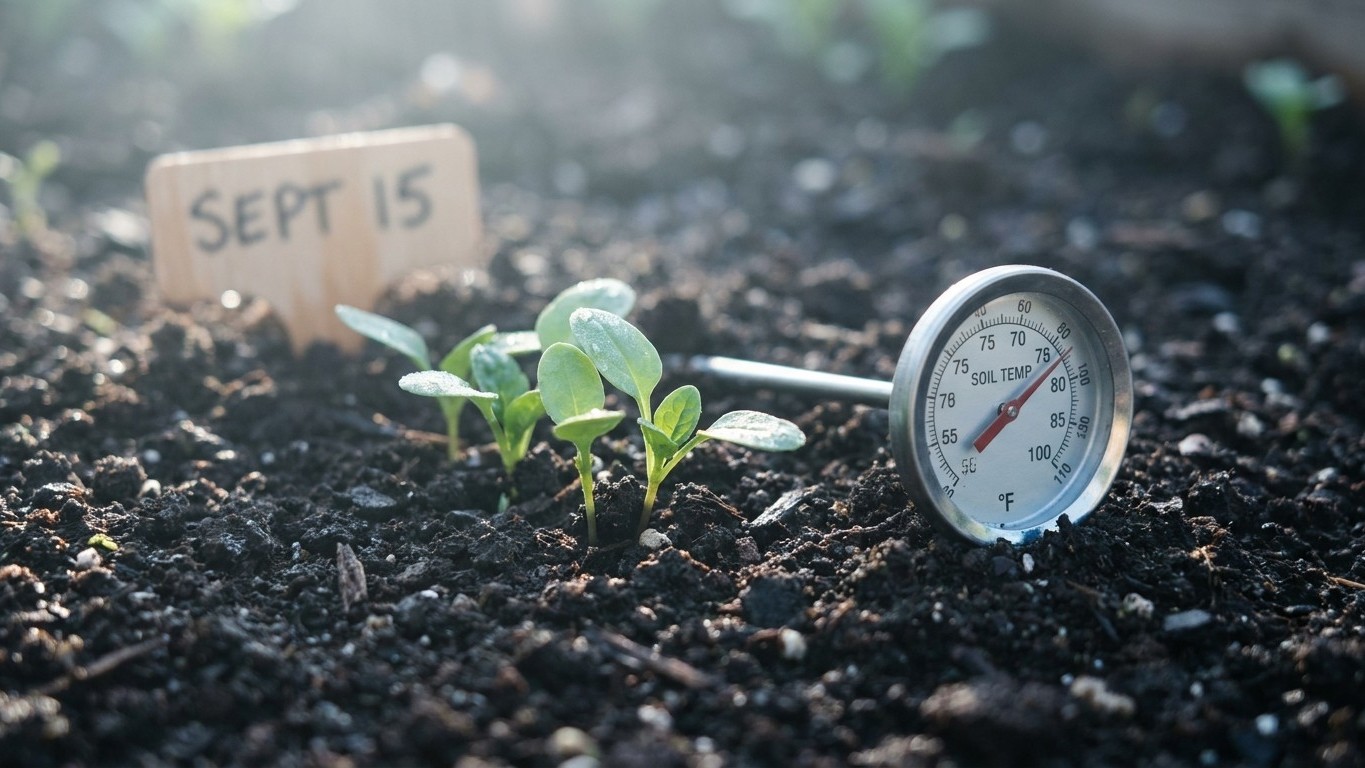

Alabama gardeners get one real shot at fall spinach: early to mid September, once the soil has cooled below 80 degrees F, counting back 50 to 75 days from a target harvest date ahead of the first fall frost. Spring sowing works too, but the window is short and closes fast once temperatures climb.
The short answer
On the longest day of the year, Huntsville sees 14 hours and 19 minutes of daylight. That number matters more than most gardeners realize, because spinach bolts during long days and warm temperatures together. A cool summer somewhere else might buy a leafy crop a few extra weeks before it flowers, but that trick doesn’t work here, and it wouldn’t work even if Alabama summers were mild. Long days alone are enough to push spinach toward seed. Alabama just adds the second half of the problem: heat.
The reference station at Huntsville averages 58.5 days a year at 90 degrees F or hotter. That’s not an average summer temperature, it’s a measure of heat load, the kind of stretch that stresses cool-season crops and shuts down germination in the soil. Spinach grows best where temperatures stay under 75 degrees F. Above that line, growth slows and the leaves turn bitter. Above 80 degrees F in the soil itself, germination drops off sharply. So the limit in Alabama isn’t one thing, it’s two things stacked on top of each other: day length pushes the plant toward bolting, and heat pushes it past its comfort zone at the same time the seed is trying to sprout.
That combination is why the calendar answer sounds narrow. In spring, you’re racing the arrival of long days and 90-degree afternoons. In fall, you’re waiting out soil that’s still baking from August before you can even get a seed to germinate, then racing the first frost before the plant has time to size up. Neither window is generous, and neither one forgives a week of delay.
The practical answer for autumn sowing is early September through the third week of September, adjusted a few days later if the ground is still noticeably warm to the touch or if the current stretch of afternoons is still hitting 90. Waiting for a mild snap after Labor Day is usually worth more than sowing by the calendar alone. Gardeners in north Alabama, where nights cool off sooner, often have an easier September than those in the southern part of the state, where warm soil lingers longer into fall.
None of this means fall spinach is a long shot in Alabama. It means the timing has to respect both halves of the problem at once, rather than treating it as a simple frost-date calculation the way you might with a crop that only cares about cold.
How long the spring window really is
Spinach seed goes into the ground 2 to 3 weeks before the last expected frost, while the soil is still cool and the days are still short enough that the plant isn’t yet under pressure to bolt. At the Huntsville reference station, the last spring frost falls somewhere between March 19 and April 3. That gives a starting point, but the window closes just as fast as it opens, because growth stops being good once temperatures climb past 75 degrees F, and Alabama springs don’t stay mild for long.
- Start point: sow 2 to 3 weeks before the last frost date, which puts seed in the ground sometime around late February to mid-March for most Alabama gardens, earlier in the southern part of the state and later near the Tennessee line.
- Usable growth period: from that sowing date, the plant has roughly until daytime highs settle above 75 degrees F on a regular basis, which in much of Alabama begins showing up by mid to late April.
- Real-world window: that leaves something in the neighborhood of six to eight weeks of genuinely good growing conditions before heat and lengthening days start working against the crop at the same time.
- Local check: because frost dates come from a single airport weather station, and suburban or rural gardens typically see their last spring frost later than the station by a week or two (more at elevation), it’s worth checking county-level frost data before locking in a sowing date.
Six to eight weeks sounds workable until you remember that spinach doesn’t need to reach full size to bolt. It just needs long enough days combined with warm enough soil, and Alabama supplies both earlier in the season than gardeners in cooler states. That’s the real reason the spring crop here gets treated as a bonus rather than the main event: it’s real, but it’s short, and a warm March can shrink it further without much warning.
The autumn crop, and when the soil lets you sow
Fall spinach in Alabama isn’t limited by cold. It’s limited by heat lingering in the soil long after the calendar says fall has arrived, and then by how little time is left once that heat finally breaks. Two separate obstacles, and both have to clear before the crop has a real chance.
Soil still too warm to germinate
Spinach seed germination drops once soil temperature climbs above 80 degrees F, and Alabama soil holds onto summer heat well past Labor Day, especially in full sun or in raised beds that warm faster than ground-level rows. This is the piece gardeners moving from cooler states tend to miss: the autumn sowing isn’t blocked by an early frost, it’s blocked by soil that simply hasn’t cooled down yet. Waiting for a run of cooler nights, and checking soil temperature directly rather than going by the date on the calendar, is the more reliable approach. In most of Alabama that point arrives sometime in early to mid September, later in the state’s warmer southern counties.
The frost that ends the season
At the Huntsville reference station, the first fall frost typically arrives between November 2 and November 16. Working backward from that date using the 50 to 75 days the source gives for a fall crop puts a realistic sowing date somewhere in the first three weeks of September, which lines up with when soil temperatures are finally cooling enough to germinate reliably. That overlap is narrow but real: soil cools enough to sow right around the same stretch when there’s still enough season left before frost shuts things down.
As with the spring dates, this frost window comes from a single airport station, and nearby suburban and rural gardens often see their first fall frost show up a week or two earlier than the station records, more at elevation. Gardeners further from the reference city, or in low-lying areas where cold settles first, should plan to sow toward the earlier end of that September range rather than the later end. The four spinach varieties commonly grown in home gardens (Bloomsdale, Melody, Teton, and Olympia) don’t come with published days-to-maturity figures from the source behind these numbers, so the 50-to-75-day planning window is the figure to work from regardless of which variety ends up in the ground.
Common questions
Can I sow spinach in Alabama in August?
Soil temperatures in most of Alabama are still well above the 80 degree F germination threshold in August, so seed sown that early typically struggles to sprout reliably. Waiting until soil cools, usually by early to mid September, gives more consistent results than sowing by calendar date alone.
Why does my spinach bolt even though Alabama summers aren’t that mild?
Bolting is triggered by long days and warm temperatures together, not by heat alone. Once day length stretches out in late spring, spinach starts moving toward flowering regardless of how hot or mild the season feels, which is why the plant can bolt even during a stretch of relatively comfortable weather.
Is fall or spring the better season for spinach in Alabama?
Fall generally offers a steadier stretch of cool weather once the soil finally drops below the germination threshold, since days are shortening rather than lengthening at that point. Spring works too, but the window is shorter and closes quickly once afternoon temperatures pass 75 degrees F.
Do frost dates apply the same way across the whole state?
No. The frost dates cited here come from a single airport weather station, and surrounding suburban and rural gardens typically see their last spring frost later and their first fall frost earlier, often by one to two weeks, with wider gaps at higher elevation. Treat these dates as a reference point and check county-level data for a more accurate local picture.