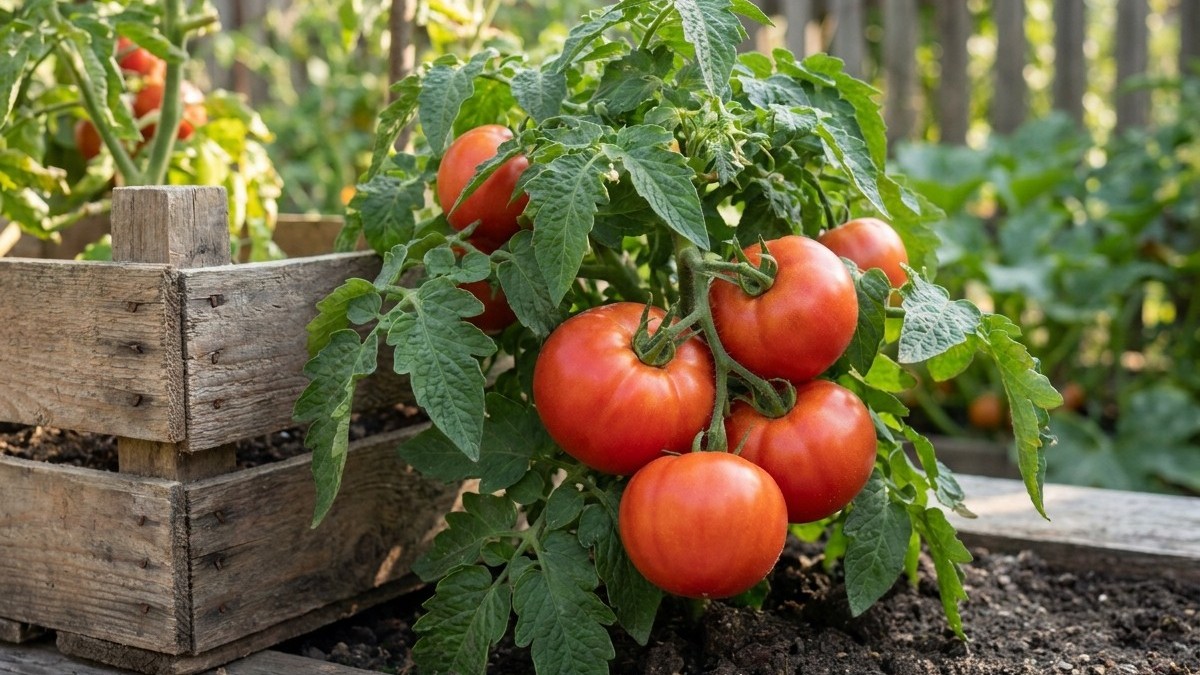

Pick tomatoes the moment the skin shows color break, that first blush of pink or yellow at the blossom end, and let them finish on the counter rather than the vine. In Alabama, the harder deadline is the first fall frost, which the reference station used for this guide places between November 2 and November 16. Anything still green on the plant when that date approaches needs to come off before the cold hits.
When to pick tomatoes in Alabama
Ripeness on the vine isn’t an on/off switch. It’s a slow color shift that starts at the blossom end (the bottom, opposite the stem) and moves upward. Growers call that first hint of color “breaker stage,” and it’s actually the ideal pick point for most home gardeners, not full red. Once a tomato hits breaker, the sugars and flavor compounds are already locked in. Everything after that is just pigment development, which happens just as well on a kitchen counter as it does hanging in the Alabama heat.
Waiting for full vine-ripened red sounds appealing, but it comes with tradeoffs. Fully red fruit left on the plant is a magnet for birds, squirrels, and stink bugs, and it’s more prone to splitting after a heavy rain. Picking at breaker stage protects the fruit from that damage while losing almost nothing in taste.
Why the frost window matters more than the calendar
Alabama spans USDA Hardiness Zones 7a through 9a, a range built entirely around one number: the average coldest temperature a location sees in a typical year. That’s a huge spread for a single state, and it means the growing season length varies a lot depending on where the garden sits. The reference station behind the frost figures in this guide puts the last spring frost between March 19 and April 3, and the first fall frost between November 2 and November 16. Those are averages built from three decades of data, not fixed dates, and they come from one airport weather station, not a statewide sensor network.
Rural and suburban gardens routinely run one to two weeks behind that airport reading in fall, meaning frost can show up earlier than the station average suggests, and one to two weeks behind it in spring, meaning last frost lingers later. Elevation stretches that gap further. A garden in the hills sees a shorter frost-free season than the same plant would get sitting at the reference station’s elevation, even if both are technically in the same zone band.
The practical upshot: once local nighttime forecasts start dipping into the 40s in October, start picking anything showing even a hint of color, and consider a full strip of the plant if a hard freeze is forecast within the frost window for your county. Your county Extension office, reachable through Alabama Cooperative Extension System, tracks local frost data than any statewide average can.
What to do with the green ones
Not every green tomato is created equal, and that distinction decides whether it’s worth saving. A mature green tomato has reached full size, the skin has turned from dull to slightly glossy, and the flesh inside is white-ish rather than translucent. Cut one open and you’ll see the gel around the seeds has formed, even though the color hasn’t shifted yet. That fruit will ripen just fine off the vine.
An immature green tomato is smaller, the skin is matte and hard, and slicing it open shows no gel around the seeds at all, just solid green flesh. These fruits won’t ripen properly no matter how they’re stored. They’ll usually just soften and rot instead of turning red. Sort your green pick into these two piles before deciding what to do with them.
Cooking green instead of waiting
Immature green tomatoes, and honestly plenty of mature green ones too, don’t have to wait around for color. Fried green tomatoes are the obvious use in the South, but they also work sliced into relish, pickled whole in a brine, or diced into a green tomato salsa verde. Cooking green tomatoes sidesteps the whole ripening question, and it’s the most reliable way to use up a frost-driven mass harvest without losing anything to rot on the counter.
For the fruit worth ripening, size sorting helps too. Larger mature green tomatoes tend to ripen faster than smaller ones from the same plant, since they usually formed earlier in the season and are further along in maturity even though the skin hasn’t shown it yet. Grouping by size when you bring in a frost-driven harvest lets you pull the ripest batch off the shelf first instead of guessing.
Ripening indoors, and how long they keep
Tomatoes ripen through ethylene gas, a natural plant hormone the fruit produces itself as it matures. Trapping that gas around the fruit speeds the process along, which is the whole logic behind the classic paper bag method. Place mature green or breaker-stage tomatoes in a paper bag, fold the top loosely, and store it somewhere between 65 and 75 degrees, out of direct sun. Adding a ripe banana or apple to the bag boosts the ethylene concentration further, since both fruits are heavy ethylene producers themselves.
Skip the plastic bag. It traps moisture along with the gas, and that moisture is exactly what mold needs to take hold before the fruit finishes ripening. A paper bag or a cardboard box with the lid loosely set on top breathes enough to avoid that problem while still holding ethylene close to the fruit.
Direct sunlight on a windowsill is another common mistake. It doesn’t speed ripening at all, it just heats the fruit unevenly and can actually damage the flesh on the sun-facing side. Ripening happens through temperature and ethylene, not light, so a dark pantry shelf works just as well as a sunny counter.
How long they actually last
Mature green tomatoes stored properly at room temperature will typically ripen over one to three weeks, depending on how far along they were at picking and how warm the storage spot runs. Check the bag every couple of days and pull out any tomato as soon as it colors up, since leaving it in with the others past that point just risks it going soft.
Once a tomato is fully ripe, refrigeration slows things down, but it comes at a cost. Cold storage below 55 degrees breaks down the enzymes responsible for flavor, which is why refrigerated tomatoes taste flat compared to counter-ripened ones. If you need to hold a ripe tomato more than a few days, refrigeration works, but expect a real difference in taste versus one eaten within a day or two of turning red on the counter.
What goes wrong here
The most common mistake at harvest time isn’t disease or pests, it’s timing. Picking too early, before breaker stage, means the fruit never develops full flavor even after it colors up, since some of that development genuinely only happens on the vine. Picking too late risks losing the fruit to splitting, especially after a heavy rain follows a dry stretch, when the plant pulls in water faster than the skin can stretch to accommodate it.
Chilling injury is a less obvious problem that shows up mostly with fruit picked right before a cold snap. Tomatoes stored below roughly 50 degrees, even briefly, develop pitting and lose their ability to ripen normally afterward. That’s a real risk during Alabama’s fall frost window, when gardeners rush a mass harvest ahead of a freeze and then leave the haul in an unheated garage or porch overnight. Bring frost-rescued tomatoes indoors to a genuinely warm spot, not just somewhere frost-free.
Overcrowding in the ripening bag or box is another quiet failure point. Tomatoes packed tightly bruise each other, and a bruised spot is where mold gets its first foothold. Spread the harvest in a single layer where possible, or at most two layers, and check the batch every couple of days for any fruit that’s gone soft or started weeping, pulling it out before it spreads spoilage to the rest.
Finally, a lot of gardeners assume a frost warning means every tomato must come off the plant, green or not. That’s not quite right. Immature green fruit without any gel formed around the seeds isn’t worth saving regardless of frost, since it won’t ripen either way. Focus the rescue effort on mature green and breaker-stage fruit, and don’t waste bag space, or worry, on tomatoes that were never going anywhere.
Common questions
Can I pick tomatoes right after a light rain?
It’s better to wait a day if possible. Fruit picked while the skin is still swollen with rainwater is more prone to splitting in storage. If frost is imminent, pick anyway, but handle the fruit gently and check it more often once it’s inside.
Do all green tomatoes eventually turn red indoors?
No. Only mature green tomatoes, the ones with gel already formed around the seeds inside, will ripen off the vine. Immature green fruit typically just softens and rots instead of coloring up.
Does putting tomatoes in the sun speed up ripening?
No, ripening is driven by temperature and ethylene gas, not light exposure. A windowsill can actually damage fruit through uneven heating. A dark, warm spot works just as well.
How do I know if frost will hit my garden before the first fall frost window mentioned for the reference station?
The station figures used here reflect one airport location, and rural or elevated gardens often see frost arrive earlier than that range suggests. Local county data through the Alabama Cooperative Extension System is a more reliable check than the statewide average alone.