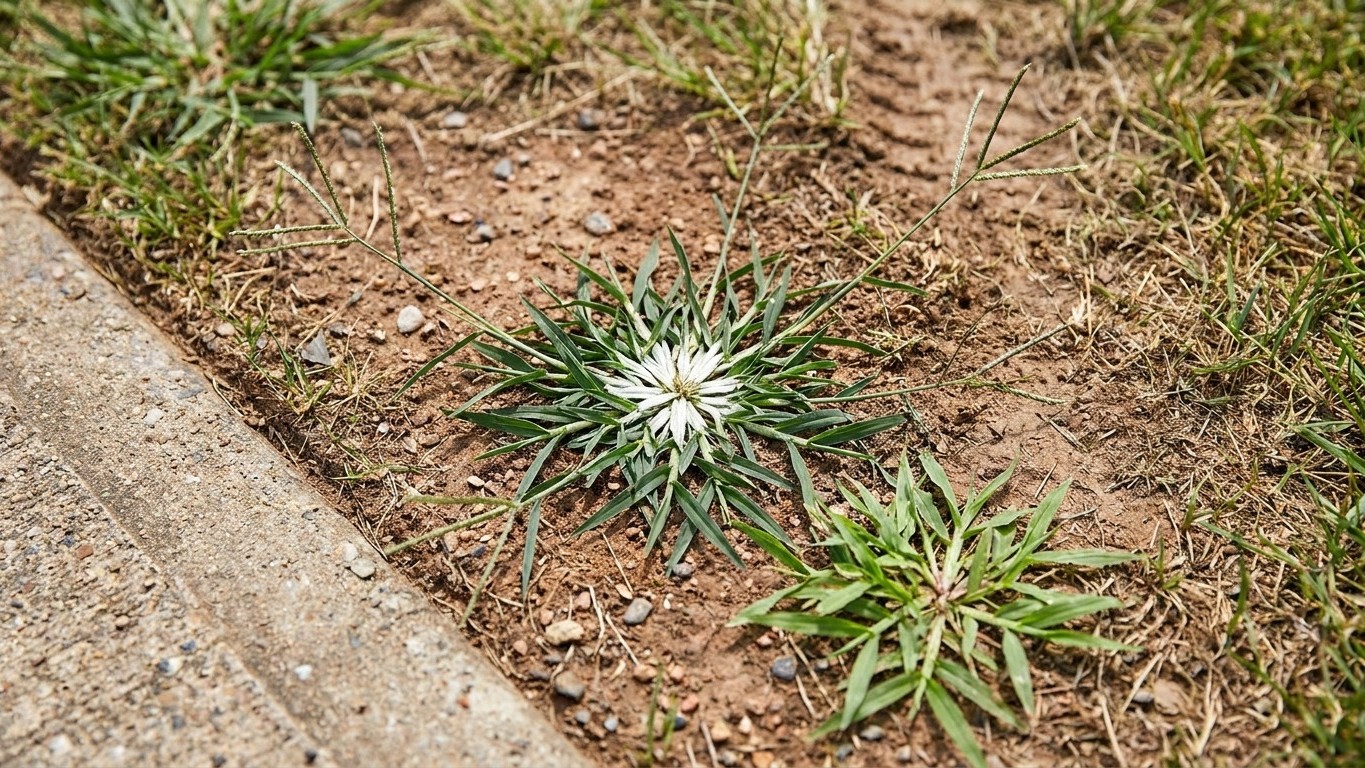

In Anchorage, grass seed goes down best from mid-May into early summer, once the soil two inches deep sits between 50 and 65 °F. A late-summer sowing still works if the seed is down by roughly August 8 to 17, which leaves about 45 days of growing weather before the first fall freeze. Alaska is huge, though, and those dates belong to one city. Interior and northern yards run on a shorter clock.
The best time to sow grass seed in Alaska
Soil temperature beats the calendar
Cool-season grass seed germinates in soil between 50 and 65 °F. The reading that counts is taken two inches down, mid-morning, with an ordinary soil thermometer. A sunny 60-degree afternoon in the air means little if the ground underneath is still waking up from winter. Seed sown into cold soil doesn’t die right away. It sits there, and birds, rain and washouts get to it first.
The frost record gives you the outer boundaries. At the Anchorage weather station, NOAA’s 1991-2020 Climate Normals put the last spring freeze at May 3 to May 12 (the 30 to 70 percent probability band at 32°F). The first fall freeze falls between September 22 and October 1. That leaves about 143 frost-free days, and Anchorage is one of the mildest inhabited parts of Alaska. Fairbanks, the Interior and the Arctic coast get far fewer. Don’t borrow Anchorage dates for a yard in Delta Junction or Nome.
Long summer daylight softens the short season somewhat. Seedlings in June and July get many more hours of light than a lower-48 lawn would, and they use them. Daylight doesn’t warm cold soil, however, so the thermometer still has the final say.
Grasses that hold up here
Stick with the cool-season species: fine fescues, Kentucky bluegrass, perennial ryegrass, rough bluegrass and tall fescue. Warm-season grasses, the kind sold for the Deep South, want hot soil to germinate and long heat to grow. Alaska’s summers can’t supply either, and their roots have little hope against a subarctic winter. A bag labeled for Florida or Texas lawns is wasted money here.
Ground conditions also tilt the odds. The soil USDA lists as representative of Alaska is the Tanana series, a Gelisol, meaning permafrost sits within reach of the profile. Its surface layer is strongly acid (pH about 4.7), silty, very high in organic matter and poorly drained. That describes the state’s typical ground, not yours. River bottoms, hillsides and any lot a builder has scraped or filled will differ. Still, in cold, wet, acid soil, spring warming comes late. Waiting for the thermometer, rather than the calendar, pays off even more.
The last date that still works
Seedlings need about 45 days of growing weather before the first fall freeze. Seed sown later often germinates and then dies over winter, because the plants are too small and shallow-rooted to make it. So the last sowing date comes from counting backward from your first fall freeze, not from when the garden center puts seed on sale.
For Anchorage, the first fall freeze arrives between September 22 and October 1. Counting back 45 days gives a deadline between August 8 and August 17. Treat the early end as the safer one. A cool, wet September slows growth, and a warm one gives you no guarantee either.
Move the math to your own location. A yard in the Interior, where the first freeze comes earlier, may have a deadline in July. Look up your nearest station’s normals, or ask your local University of Alaska Fairbanks Cooperative Extension Service office what dates people use in your borough. Then subtract 45 days. This page doesn’t publish dates for towns other than Anchorage, so confirm yours.
Colder territories face the same arithmetic, and the answers are instructive. Gardeners can compare how When to Plant Grass Seed in Yukon handles a short northern season, or see what a maritime climate does in When to Plant Grass Seed in Newfoundland and Labrador.
If you miss the window, don’t gamble. Wait for the next spring, once the soil warms. A bare yard for a winter costs less than reseeding a lawn that sprouted and died. Cover the ground lightly if erosion worries you.
Seed rate and soil preparation
Rates depend on the species, and they are measured per 1,000 square feet of new lawn (about a 20 by 50 foot patch). Overseeding an existing lawn takes half these amounts.
| Grass | Seed per 1,000 sq ft (new lawn) |
|---|---|
| Tall fescue | 6 to 8 lb |
| Fine fescues | 4 to 6 lb |
| Rough bluegrass | 2 to 3 lb |
| Kentucky bluegrass | 1 to 3 lb |
| Perennial ryegrass | 4 to 10 lb |
Where university extension sources disagree, these ranges cover them. More seed isn’t insurance. Crowded seedlings compete for the same water and light, and the weaker ones thin out on their own.
Depth is where most new lawns go wrong. Cover the seed with no more than 0.25 inch of soil, then press it down so every seed touches the ground. Seed buried deeper often never emerges, and that is the most common cause of a patchy new lawn. Rake lightly and roll or tamp, rather than tilling the seed in.
Before any of that, test the soil. The state’s representative ground runs strongly acid, with a surface pH about 4.7, but your pH could be nothing like it. Take a sample, and send it to a lab or ask the extension office how. The result will tell you whether lime is needed and by how much. Don’t guess, since guessing in either direction costs a season.
Drainage matters just as much. Poorly drained, silty ground compacts and stays soggy, and seed rots in standing water. Loosen the top few inches, grade the surface so water runs away from the house, and clear out rocks, roots and old sod. For a step-by-step walk through the basics, see Starting a New Lawn From Seed.
Watering a new lawn until it holds
Seed sown a quarter inch deep dries out fast, especially under Alaska’s long June days. Keep the top layer of soil damp, never soaked and never crusted. Water lightly and often at first, with short sessions that wet the seedbed without pooling. A sprinkler on a timer helps, because missing one hot afternoon can undo a week of germination.
Cool soil slows everything down. Germination takes longer than the seed packet suggests when spring ground is near the 50 °F end of the range, so be patient before assuming a failure. Check the seedbed daily. If the surface is pale and dry, water. If it’s puddled, skip.
Once most of the seed has sprouted, change the pattern. Water less often and for longer, so the roots follow moisture downward instead of sitting at the surface. A lawn trained on shallow daily sips struggles the first time the weather turns dry.
Hold off on the first mowing until the grass stands clearly taller than the height you intend to keep it. Use a sharp blade, and take off only the tip. Foot traffic should stay light until the lawn is thick, because young seedlings tear easily.
For an August sowing, the 45-day window is the real test. Your goal is to reach the first freeze with a dense, rooted stand. Keep watering through September when the weather stays dry, and don’t assume the job is done because the grass looks green.
Common questions
Can I plant grass seed in Alaska in the fall?
Only in late summer, and only early enough. Count back 45 days from your first fall freeze. In Anchorage that means seed down between August 8 and August 17. After that, seedlings tend to germinate and then die over winter.
What type of grass grows best in Alaska?
Cool-season species hold up: fine fescues, Kentucky bluegrass, perennial ryegrass, rough bluegrass and tall fescue. Warm-season grasses need hot soil and long heat, which Alaska doesn’t provide.
How deep should I plant grass seed?
No more than 0.25 inch. Press the seed into the soil so it makes firm contact. Deeper planting often means the seed never emerges.
Should I test my soil first?
Yes. The USDA’s representative Alaska soil, the Tanana series, is strongly acid at the surface, but that figure isn’t your yard’s. Soil in the state varies widely, so your UAF Cooperative Extension Service office can point you to a testing option and help read the results.