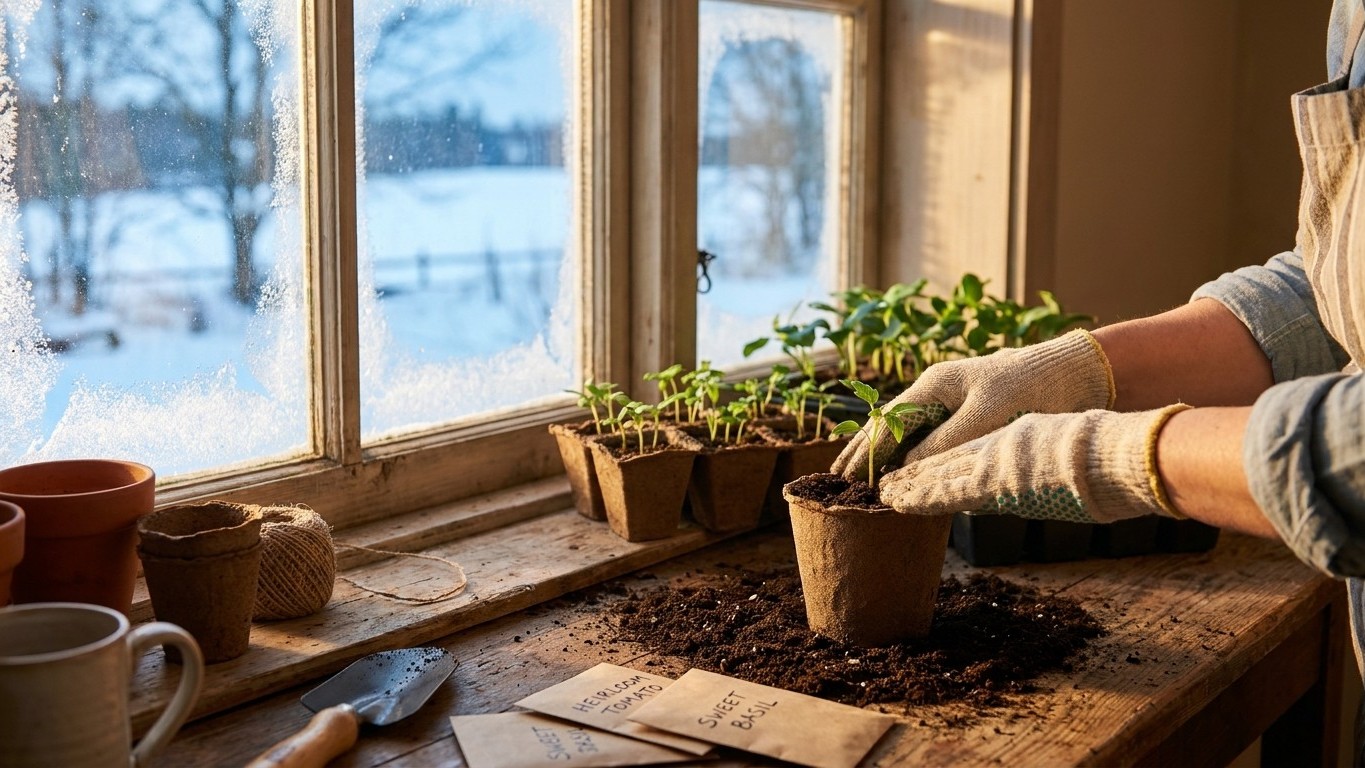

In most of Alaska, March means frozen or snow-covered ground, so nothing goes into the open garden yet. The real work this month happens indoors and under cover: starting long-season transplants, pruning dormant fruit stock, ordering seed, and prepping soil for the short window that opens once the ground finally thaws, months from now.
What goes in the ground in March

Say it plainly: in Alaska, nothing goes into open, unprotected garden soil in March. The state’s last spring frost window runs May 3 to May 12 (source: NOAA NCEI 1991-2020 Climate Normals, station USW00026451, Anchorage), which puts open-ground planting a full two months or more away for most of the Southcentral region, and considerably longer for the Interior. The soil itself is the deciding factor, not the calendar or a stretch of sunny afternoons. Frozen or waterlogged ground damages roots, compacts structure, and drowns anything you try to tuck in early. Waiting for the soil to actually thaw and drain matters more than watching the thermometer.
That does not mean the garden sits untouched. A few things are genuinely possible in March, depending on how far south and how sheltered the property is:
- Garlic and shallots only where cloves were already planted in fall and the ground is now workable at the surface, which is rare this early outside the mildest coastal pockets.
- Cold frames and low tunnels holding over hardy greens like spinach, mache, or kale that were established the previous fall.
- Bare-root and dormant plantings of fruit trees or shrubs, but only once the ground can be worked without smearing wet clay or breaking through ice.
- Forcing rhubarb or chicory indoors in a dark, cool space for an early harvest that has nothing to do with outdoor soil conditions at all.
Anything beyond that list is a gamble that Alaska’s climate rarely rewards. The frost-free season in Anchorage runs roughly 143 days, and that’s the mild end of the state; pushing outdoor planting into March anywhere in Alaska risks losing seed, transplants, and the time spent on them.
What to start under cover
March earns its keep indoors. Counting backward from the May 3 to May 12 frost window gives a workable schedule for anything grown as a transplant. Onions and leeks need roughly 10 to 12 weeks of growth before they go outside, which means the ideal sowing window opened in mid to late February; if that slipped, starting now still produces usable, if smaller, transplants. Tomatoes and peppers need about 8 to 10 weeks indoors, which lines up well with a March start for a May transplant date. Broccoli and cabbage need only 6 to 8 weeks, so March covers them comfortably, with a little room to spare. Lettuce and other quick greens destined for a cold frame need just 4 to 6 weeks, meaning they can go either now or a couple weeks later without losing much ground.
| Crop | Weeks needed indoors before transplant | Start under cover in March? |
|---|---|---|
| Onions, leeks | 10-12 weeks | Yes, expect smaller transplants if delayed |
| Tomatoes | 8-10 weeks | Yes, ideal timing |
| Peppers | 8-10 weeks | Yes, ideal timing |
| Broccoli, cabbage | 6-8 weeks | Yes, some flexibility |
| Lettuce, cold-frame greens | 4-6 weeks | Now or slightly later |
The two ways this goes wrong are opposite ends of the same mistake. Start tomatoes or peppers too early, back in January, and they turn leggy and rootbound long before the ground is ready in May. Start broccoli or onions too late, and they never bulk up enough to handle transplant shock before the short summer runs out. March sits in the sweet spot for most transplant crops precisely because it matches the arithmetic against Alaska’s frost dates rather than a habit carried over from milder states.
What is ready to pick
Outdoors, the honest answer is little to nothing in March. The ground is frozen or covered in snow across most of the state, and nothing planted the previous fall is actively growing yet. What keeps a household fed this month comes from storage and from protected structures built the season before. A cold frame with fall-planted spinach or kale may offer a light harvest on a sunny stretch, but this depends heavily on how well it was insulated and how far south the garden sits; in the Interior, expect nothing at all from a frame in March.
Indoors, sprouts and microgreens fill the gap fastest, ready in one to two weeks from seed with no soil or daylight requirements to speak of. The bigger job this month is going through the root cellar or storage space and checking what is starting to turn. Potatoes with soft, dark spots or sprouting eyes should come out before they spread rot to the rest of the bin. Squash with a soft stem end or a sour smell near the skin is past saving. Onions that have gone soft at the neck or started growing green shoots should be used first, not left for later. A five-minute check every week or two in March saves far more of the harvest than catching problems after they’ve spread through a whole bin.
The jobs that matter this month
March carries real deadlines even without anything going into the ground. Dormant pruning of fruit trees and berry canes should happen before buds break, while the plant’s structure is still visible and cuts heal cleanly without disrupting new growth. Waiting until leaves emerge means every pruning cut costs the plant stored energy it needs for the season ahead.
Seed ordering belongs on this month’s list too, and not as an afterthought. Alaska’s short growing season means gardeners depend on early-maturing, cold-hardy varieties, and those sell out first every year. Waiting into April routinely means settling for whatever’s left rather than the varieties bred to actually finish in a 143-day window or shorter.
Soil testing and amending also pay off now, while beds are still accessible but before planting pressure takes over the schedule. Turning a compost pile once it’s thawed enough to work restarts decomposition after a winter of dormancy, and a pile left frozen and untouched simply loses months of breakdown time. Cleaning and sharpening tools, from pruners to hoes, takes an afternoon and prevents ragged cuts and torn roots once the season starts in earnest.
Alaska’s winter is hard on infrastructure, too. Snow load and freeze-thaw cycles loosen fence posts, crack raised bed frames, and open gaps that moose and other browsers find quickly once green growth appears. Walking the garden perimeter in March, before anything worth protecting is in the ground, is far easier than making repairs around live plants in June.
What not to do in March
The most common mistake is treating a mild, sunny March day as a green light for the garden. Air temperature and soil temperature are not the same thing, and Alaska’s soil stays cold and often frozen well below the surface long after the air feels like spring. Direct-sowing anything based on a warm afternoon, weeks or months before the May 3 to May 12 frost window, means losing seed to cold, wet soil that never lets it germinate.
Uncovering cold frames or pulling back winter mulch too early after a warm spell is the second trap. A few mild days followed by a hard freeze, which is entirely normal in March across Alaska, can undo months of protection in a single night. Mulch and frame covers should stay in place until there’s a real, sustained shift in conditions, not just a brief thaw.
Fertilizing dormant plants or bare soil too early is the third mistake worth naming. Nitrogen applied before roots are actively growing either leaches away with spring melt or sits unused in soil that plants can’t yet access. It’s wasted product and, in some cases, unnecessary runoff. Wait until there’s visible new growth before feeding anything, whether that’s a fruit tree breaking bud or a transplant settling into its new bed.
Checking this against your own county
Alaska spans USDA hardiness zones 1a through 8a (USDA Plant Hardiness Zone Map, based on 1991-2020 normals), one of the widest ranges of any state, and the frost dates cited here reflect Anchorage specifically. A garden in Southeast Alaska’s milder coastal pockets, the Interior around Fairbanks, or farther north will see these windows shift by weeks in either direction, driven by elevation, latitude, and local terrain. Treat this page as a starting point, then check it against the University of Alaska Fairbanks Cooperative Extension Service for county-level guidance and planting calendars built for your specific region.
Common questions
Can I direct-sow anything outdoors in Alaska in March?
No, not in unprotected soil. The last spring frost window runs May 3 to May 12 in Anchorage, and most of the state is colder still, so open-ground sowing in March risks losing seed to frozen or waterlogged conditions.
What’s the earliest I can start tomatoes indoors for an Alaska garden?
Tomatoes need roughly 8 to 10 weeks indoors before transplanting, which lines up with a March start given the May 3 to May 12 frost window. Starting much earlier than that risks leggy, rootbound plants by transplant time.
Is it too late to prune fruit trees in March?
No, March is generally the right window, since pruning should happen while trees are still dormant and before buds break. Waiting until leaves emerge costs the plant stored energy it needs for spring growth.
Why does my hardiness zone matter if I already know the frost dates?
Hardiness zone (1a-8a across Alaska, per the USDA Plant Hardiness Zone Map) measures average annual extreme minimum temperature, which affects what perennials and woody plants survive winter. It doesn’t predict last-frost or first-frost dates, so both figures matter for different decisions.