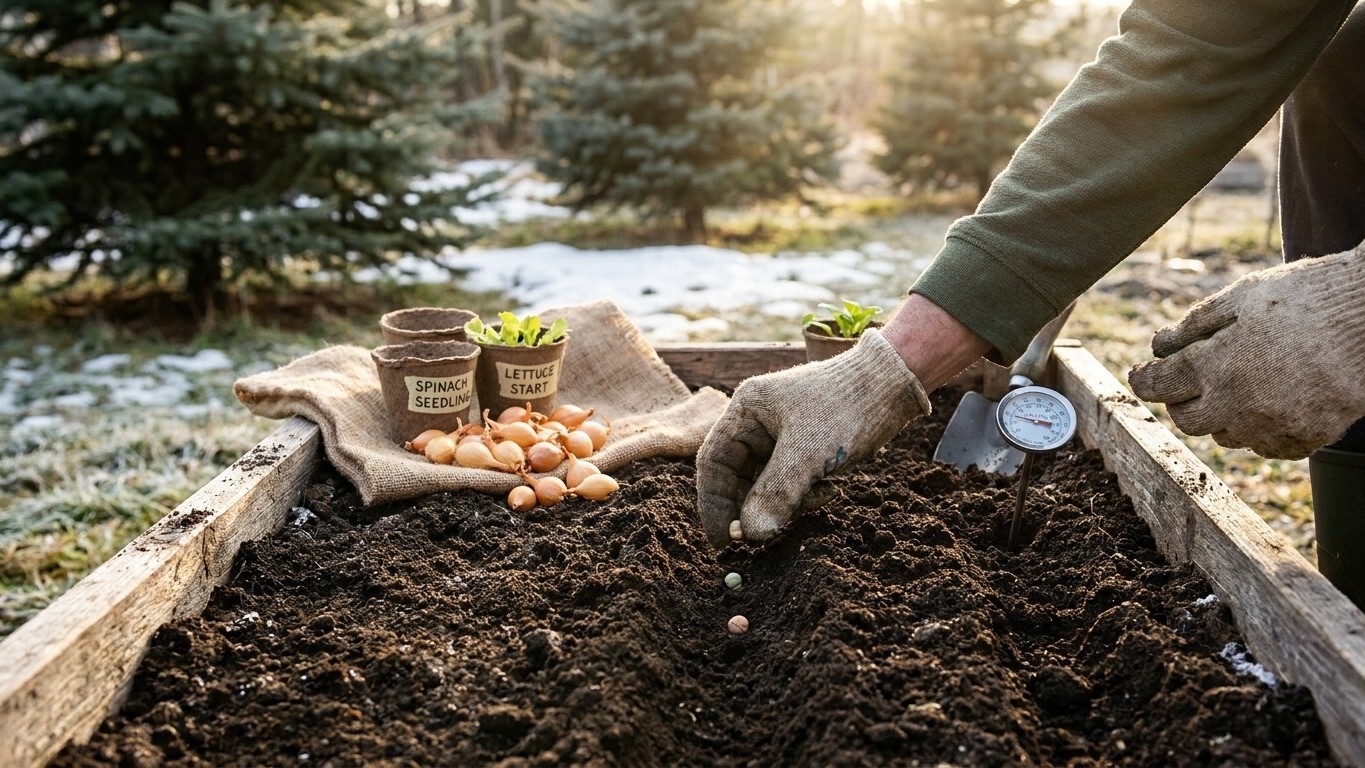

By early May, Anchorage gardeners are still inside the frost window (last spring frost falls between May 3 and May 12, per NOAA), so the ground itself decides what’s safe, not the calendar. Hardy greens, alliums, and peas can go outside once soil is workable. Tomatoes, squash, and other tender crops still need to wait for warmth the air alone won’t guarantee.
What goes in the ground in May

Soil temperature is the real gatekeeper here, not the date on the wall. Alaska’s growing season averages about 143 frost-free days, and with the last spring freeze landing somewhere between May 3 and May 12 at the Anchorage reference station, the first half of May still carries real freeze risk. That risk doesn’t vanish because the sun is up eighteen hours a day. Air warms fast under that long daylight; soil, especially anything that was under snow a few weeks earlier, lags well behind.
What’s safe to direct-sow once beds are thawed and workable: peas, spinach, arugula, radishes, and hardy lettuce mixes all tolerate a light frost and germinate in cool soil. Onion sets and seed potatoes can go in too, though potatoes benefit from hilling extra soil over the row if a late freeze is forecast. Garlic, if it wasn’t planted the previous fall, is largely a lost cause for the current season and should wait.
What’s a gamble
Brassica transplants (broccoli, cabbage, kale starts raised indoors) can go out mid-to-late May if they’ve been hardened off over a week or two, but keep row cover on hand. Carrots and beets can be sown once soil hits the mid-40s, though germination will be slow and patchy before that. Anything in the tender category, tomatoes, peppers, cucumbers, squash, corn, beans, stays indoors or under cover until well after the frost window closes. Planting these outdoors in May because a warm afternoon fooled you into thinking summer had arrived is one of the most common ways a season gets set back before it starts.
Cold frames and low tunnels stretch what’s possible. A frame over a bed of greens can knock several degrees off the risk and let you push hardy crops in a week or two earlier than open ground would allow.
What to start under cover
Work backward from the frost window rather than a fixed date. If tender transplants shouldn’t go outside until the risk of a May freeze has genuinely passed, and that window runs through May 12 at the earliest, then squash, cucumbers, and pumpkins started indoors now (three to four weeks before an early-to-mid-June transplant date) will be the right size when the ground and air are finally both ready. Started any earlier, they turn leggy and rootbound sitting in small pots waiting for soil that isn’t warm yet.
Tomatoes and peppers, which need six to eight weeks of indoor growth before transplant, should already be up and growing by May; this month is about hardening them off, not starting them from seed. Set trays outside in a sheltered spot for an hour the first day, adding time gradually over a week or two, so the shift from indoor light to direct sun and wind doesn’t scorch or snap them.
Given how short the frost-free stretch is, starting warm-season crops too late is the costlier mistake here. A tomato started in late May won’t have time to set and ripen fruit before the first fall frost arrives in the September 22 to October 1 range. Cold frames double as a middle ground: sow fast crops like lettuce and cilantro directly in them now for cuttings in a few weeks, no indoor tray required.
What is ready to pick
Not much is coming out of open ground yet, and that’s normal for this point in the Alaska season rather than a sign anything went wrong. Rhubarb is the exception worth watching closely: established crowns push up fast once the ground thaws, and by late May the first stalks are often thick enough to cut. Take only a few stalks per plant early on so the crown can keep building strength for the rest of the summer.
Perennial herbs like chives are usually among the first green things worth snipping, often before most vegetable beds have even been turned. Anything overwintered under a cold frame, spinach, kale, or hardy lettuce sown the previous fall, may be ready for a cut-and-come-again harvest right now, since the frame has been buffering it from the worst of the cold for months.
Indoors, sprouts and microgreens fill the gap on a countertop in a week to ten days and don’t care what the soil temperature is doing outside. It’s also the last stretch to go through the root cellar or pantry: check stored potatoes, carrots, and cabbage for soft spots or sprouting eyes, and use up anything on the edge before it turns, since by now those stores are months old and starting to decline.
The jobs that matter this month
Soil preparation earns its keep more in May than almost any other month, because everything planted later depends on beds that have thawed, drained, and been worked before seed goes in. Pull back any mulch that’s kept soil frozen or soggy longer than it needs to be; on the other hand, a fresh layer of mulch around anything already planted helps hold the moisture that long daylight hours burn off fast.
Row cover and low tunnels should be ready to deploy at a moment’s notice, not searched for after a frost warning. With the last freeze landing anywhere from May 3 to May 12, a clear, calm night in the middle of the month can still drop temperatures enough to damage anything newly transplanted.
This is also the window to finish amending soil with compost before beds fill up, since working compost into open ground gets much harder once seedlings are in the way. If seed for the season hasn’t been ordered yet, do it now; popular short-season varieties bred for northern gardens tend to sell out first.
Watering rhythm needs adjusting too. Eighteen-plus hours of daylight dries soil faster than gardeners moving from a shorter-day climate expect, so newly seeded beds need checking daily rather than every few days. Finally, walk the fence line and raised bed frames for winter damage, sharpen and clean tools that sat idle, and start scouting for early slug activity, since damp, cool soil is exactly what they favor.
What not to do in May
The single most common mistake is planting warm-season crops outdoors because a stretch of sunny, mild afternoons made it feel like summer. Air temperature and soil temperature move at different speeds, and a tomato or squash set into cold soil will sit stalled, or die outright, even if the days feel warm. Wait for actual soil warmth, not a good week of weather.
A close second: pulling row cover or cold frame lids off too early after a mild spell. The frost window here runs through May 12 in an average year, and a single clear night after several warm ones can still bring a hard frost. Keep protection in place, or at least within easy reach, until that window has clearly passed for your specific location.
Nitrogen timing trips people up too. Heavy nitrogen feeding right after transplant, before roots have had a chance to establish in cold soil, tends to push soft, weak top growth that’s more vulnerable to the very frost risk still hanging around. Hold off on heavier feeding until plants show active growth, and favor a balanced or lower-nitrogen approach at transplant time instead.
Skipping the hardening-off step on transplants raised indoors is another costly shortcut. Seedlings moved straight from a windowsill or grow light into open garden conditions often show sunscald or wind damage within days, setting them back further than if they’d simply stayed inside another week.
Checking this against your own county
Everything above is anchored to conditions at Anchorage, one of the mildest inhabited parts of Alaska. The state’s hardiness range runs from USDA zone 1a to 8a, and the Interior, the North Slope, and higher-elevation areas all see a shorter frost-free stretch and colder extremes than the coastal reference station used here. Local terrain matters too: cold air pools in low spots, and coastal or lake-adjacent areas often see milder swings than inland sites just a few miles away.
Treat everything here as a starting point, then confirm it against your own site. The University of Alaska Fairbanks Cooperative Extension Service publishes region-specific planting guidance that accounts for these local shifts far than a state-wide average can.
Common questions
Is it safe to plant tomatoes outside in Alaska in May?
No. The last spring frost at the Anchorage reference station falls between May 3 and May 12, and tomatoes have zero frost tolerance. Keep them indoors or hardening off under cover until that window has clearly passed at your specific site.
What vegetables can handle a late frost in May?
Peas, spinach, arugula, hardy lettuce, radishes, and onion sets all tolerate a light frost once in the ground. Potatoes can go in too if you’re ready to hill soil over the row as insurance against a cold snap.
Why does Alaska’s long daylight not solve the frost problem?
Long daylight warms air quickly but soil warms much more slowly, especially where snow lingered into spring. A sunny, mild afternoon can sit right next to a clear, cold night, and it’s the night low that determines whether frost forms.
How short is the Alaska growing season really?
Around 143 frost-free days at the Anchorage reference station, running roughly from early-to-mid May through late September. That’s short enough that starting warm-season crops too late in spring often costs more than starting them a little early indoors.