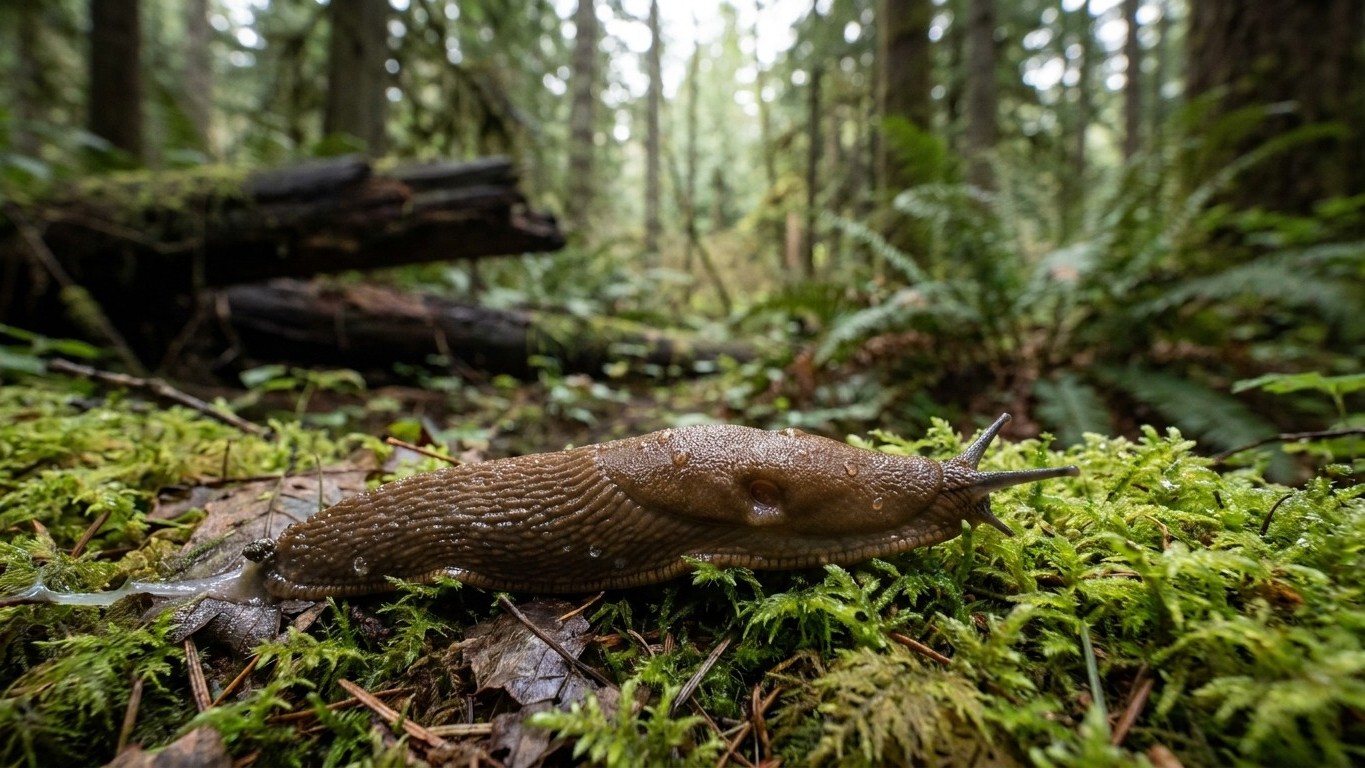

Slugs turn up in Alaska wherever the ground stays wet and mild long enough for them to feed and breed, mainly the Southeast panhandle and parts of the Southcentral coast from April through October. Cold, dry Interior towns like Fairbanks rarely see them. Slowing them down comes down to cutting moisture, clearing hiding spots, and using barriers or baits that target slugs without harming pets, chickens, or the local wildlife people up here tend to care a lot about.
Where Alaska’s Climate Makes Slugs Possible

Slugs need two things to thrive: moisture and mild temperatures. Alaska’s Interior fails on both counts. Fairbanks winters routinely drop below minus 20°F, and summers there are short and comparatively dry. Slug populations struggle to establish in that kind of boom-and-bust climate.
Southeast Alaska is a different world entirely. Juneau averages around 62 inches of precipitation a year, and Ketchikan regularly tops 150 inches, numbers that put those towns among the wettest in the country. Add temperate rainforest cover, mossy understory, and winter lows that rarely stay brutally cold for long, and you’ve got conditions slugs actually like. Gardeners in Juneau, Sitka, Ketchikan, and Petersburg deal with slug damage as a routine part of growing vegetables and flowers, not an occasional nuisance.
Southcentral Alaska, including Anchorage and the Kenai Peninsula, sits in between. It’s cooler and drier than the Southeast panhandle but wetter than the Interior, so slug pressure there tends to be moderate and tied closely to how wet a particular summer turns out to be. A rainy July in Anchorage can bring noticeably more slug activity than a dry one.
The Seasonal Window
Slugs become active once soil temperatures climb into the 40s and 50s Fahrenheit, which in coastal Alaska usually means late April or May. Activity peaks during the cool, damp stretches of summer, especially overnight and during the long dusk hours Alaska’s high latitude provides. By late September or October, as nights get colder and drier, slug feeding drops off sharply. They don’t disappear entirely, though. Many species overwinter as eggs laid in soil or leaf litter, while adults of hardier species tuck into deep mulch, under boards, or below the frost line and wait out the cold in a dormant state.
Which Slugs Show Up in Alaska Gardens
Not every slug in an Alaska yard is the same species, and that distinction matters a little for control. The European black slug (sometimes labeled Arion ater or Arion rufus) is the most commonly reported garden pest in Southeast Alaska. It’s an introduced species, likely arriving decades ago through shipping and nursery stock, and it can grow to several inches long. It’s the one most gardeners mean when they complain about ragged holes in lettuce and hosta leaves.
Alaska also has native slugs, including several taildropper species (genus Prophysaon), which are smaller and generally less destructive to cultivated plants. These natives play a role in breaking down leaf litter and fungi in forest ecosystems, so wholesale slug eradication in wild areas isn’t something ecologists recommend. The practical goal for most homeowners isn’t eliminating slugs from the landscape, it’s keeping them out of vegetable beds and ornamental plantings.
Alaska is not banana slug territory in the way the Pacific Northwest coast is, though similar large yellow-bodied slugs occasionally get reported and can be confused with introduced species. If you’re unsure what you’re dealing with, the University of Alaska Fairbanks Cooperative Extension Service fields identification questions and can point you toward the right local office.
What Actually Stops Slugs in an Alaska Yard
Slug control works best as layered strategy rather than a single fix. Poison bait alone rarely solves a bad infestation if the yard still offers slugs plenty of moisture and cover.
Cut the Moisture and Hiding Spots First
Slugs move and feed at night using a mucus trail that depends on damp surfaces. Watering gardens in the morning instead of evening lets soil surfaces dry out somewhat by nightfall, denying slugs the moist window they prefer. Thick mulch and dense ground cover feel great to slugs, so thinning mulch layers, removing decaying boards, and clearing plant debris near vegetable beds takes away daytime shelter. Raised beds with well-drained soil also dry faster than flat garden rows, which is part of why raised-bed gardening has caught on in soggy Southeast Alaska towns.
Barriers and Traps That Work Without Chemicals
Copper tape around raised bed edges or pot rims creates a mild electrical reaction when slug slime touches it, and many gardeners in wet coastal climates rely on it as a physical deterrent. Diatomaceous earth, a fine powder made from fossilized algae, scratches the soft underside of slugs and dehydrates them, though it loses effectiveness once it gets wet, which is a real limitation during Southeast Alaska’s long rainy stretches.
Beer traps, shallow containers sunk into the soil and filled with beer, still get recommended widely because slugs are drawn to the yeast and drown in the liquid. They need emptying and refilling every few days to stay effective, and they work best as a supplement to other methods rather than a standalone solution.
Hand-picking at night with a flashlight remains one of the most reliable low-cost methods, especially in small garden plots. Slugs are most active after dark during humid weather, and a short nightly patrol during peak season can meaningfully thin numbers over a couple of weeks.
Baits: Iron Phosphate Over Metaldehyde
When bait becomes necessary, iron phosphate slug baits are the safer choice for households with pets, chickens, or nearby wildlife such as porcupines and deer that might wander into a yard. Iron phosphate disrupts a slug’s calcium metabolism and causes it to stop feeding, and it’s approved for use in organic gardening. Metaldehyde-based baits are more toxic and pose a real risk to dogs and wild animals if ingested, which makes them a poor fit for the kind of mixed-use rural and suburban properties common across Alaska.
A short list of what tends to move the needle fastest in an Alaska garden:
- Morning watering instead of evening watering to dry surfaces by nightfall
- Removing dense mulch, boards, and debris within a few feet of vegetable beds
- Copper barriers on raised beds and pots
- Iron phosphate bait applied around, not directly on, vulnerable plants
- Nightly hand-picking during the wettest weeks of summer
When Slug Damage Points to a Bigger Moisture Problem
Heavy, recurring slug pressure around a home’s foundation sometimes signals drainage issues worth fixing on their own merits, not just for pest control. Gutters that dump water right next to the foundation, crawl spaces with standing moisture, or beds mulched too close to siding all create the damp, sheltered microclimate slugs favor, and they’re the same conditions that invite wood rot and other moisture damage in a place with Alaska’s rainfall totals. Regrading a bed, extending a downspout, or pulling mulch back a few inches from siding often knocks down slug activity near the house as a side benefit of solving a maintenance issue that needed attention anyway.
Slugs in Alaska aren’t going away as a category of yard nuisance, particularly along the rainforest coast where the climate practically guarantees them. But they’re also one of the more manageable pests once a household matches the method to the actual moisture and layout of the property, rather than relying on a single product bought once and forgotten in a garage.