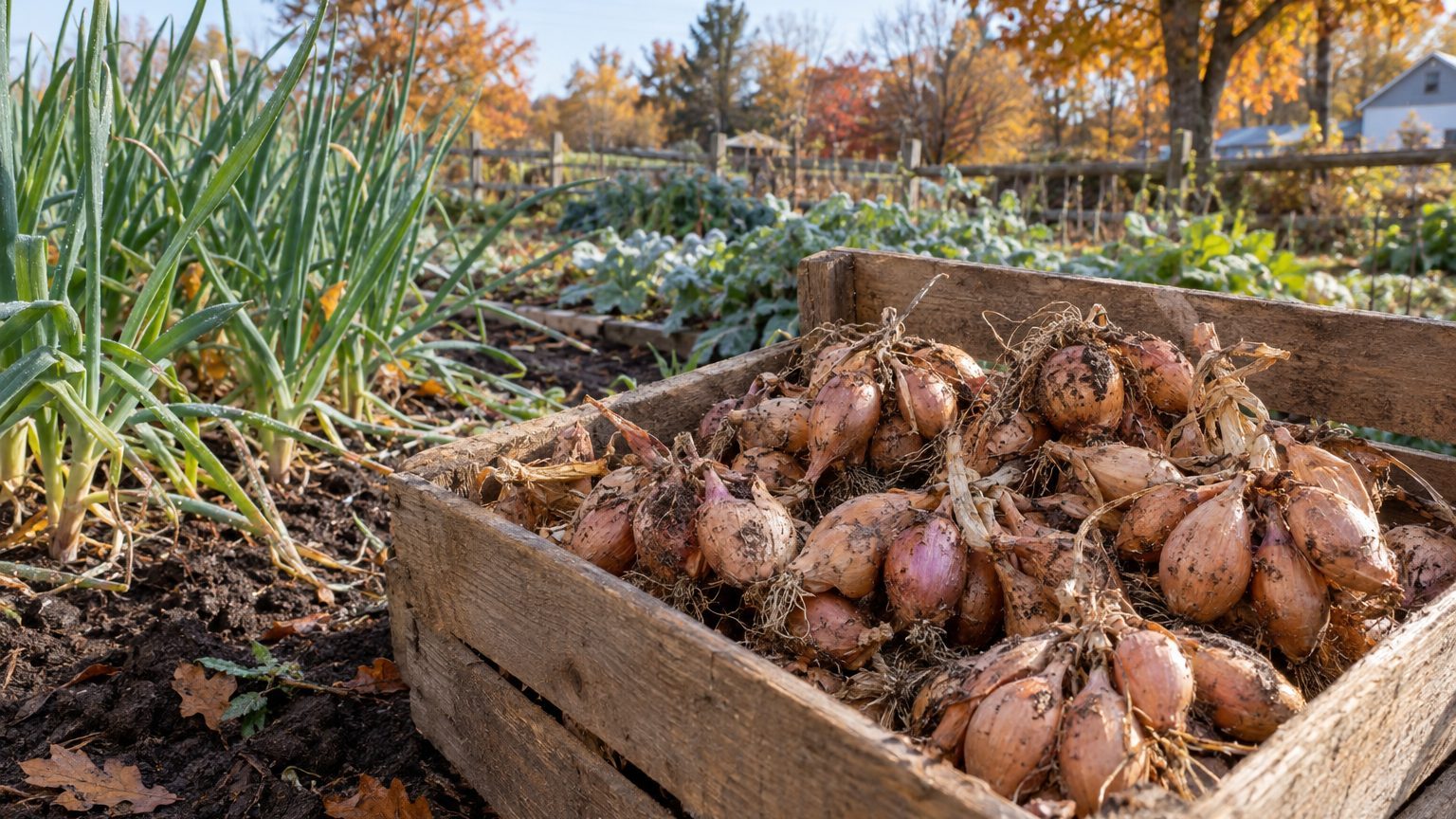

Grow multiplier shallots from bulbs, and treat anything that needs a long season as a gamble. Alaska rewards the hardy, early-maturing types that you can plant in fall under mulch or as soon as the ground thaws. Seed-grown shallots are a second choice. The numbers below come from Anchorage, the mildest inhabited reference point in the state, and everywhere else is tougher.
The short answer for Alaska
The best shallots for Alaska are multiplier types grown from bulbs, planted in fall under a thick mulch or in spring as early as the soil can be worked. Seed-grown shallots come second, and only when started indoors. A bulb planted in fall begins its season already rooted, which matters when the whole season is short.
For Anchorage, NOAA’s 1991-2020 Climate Normals put the last spring frost between May 3 and May 12. That is a probability band, not a promise: the dates mark where the odds of a 32°F freeze sit between 30 and 70 percent. The first fall frost falls between September 22 and October 1, on the same basis. In between lie about 143 frost-free days, and the long summer daylight partly makes up for the shortness.
Winter is the other half of the decision. The mean daily minimum of Anchorage’s coldest month is 11.0°F. That is an average, not the record low, so the real cold your bulbs see on a bad night is lower. Shallots are hardy bulbs, and cold alone rarely kills them. Heaving, wet ground and bare soil do the damage.
Here is how the types stack up for a reference-city garden:
| Type | How it starts | Fit for Alaska |
|---|---|---|
| Multiplier shallots | Bulbs planted in fall (mulched) or early spring | Best choice. Fast to size up, hardy, one bulb becomes a cluster |
| Seed-grown shallots | Seed started indoors, transplanted out | Workable with indoor starts and a careful grower |
| Late-maturing, long-season types | Either | Poor. They want more days than most of the state offers |
A note on what this page does not have. The facts behind it include no named Alaska variety trial, so it recommends by type and does not rank individual cultivars. Where a named variety has been trialled near you, that result beats anything here. For sowing and planting dates, the When to Plant Shallots in Alaska page works through the frost windows, and the broader Growing Shallots in Alaska guide covers the full crop cycle.
What will not work here
Start with the clock. About 143 frost-free days is the generous end of Alaska. The Interior and the north are far shorter, and that is where a slow shallot is beaten before it begins. Anything that needs a long, warm run to finish will still be sizing up when the first fall frost lands, somewhere between September 22 and October 1 even in Anchorage.
Seed sown straight into the ground
Direct-sowing shallot seed in late spring wastes your best weeks. Even if the last frost passes around May 3 to May 12, soil warms slowly, and tiny seedlings then have to bulb up in whatever season is left. Seed-grown shallots do better with a head start indoors and a transplant out. Skip that step and you will likely harvest thin, small bulbs that store poorly.
Bare fall plantings
Fall planting works well here, but not with the Lower 48 habit of tucking bulbs in and walking away. With a coldest-month mean minimum of 11.0°F, and real nights colder than that, uncovered bulbs face hard freezes and repeated freeze-thaw swings that can push them up out of the soil. Mulch is not optional. A loose, deep layer of straw or shredded leaves is the usual answer, and it should go on after the ground has started to cool. Plant too late, and bulbs have no time to root before the ground locks up. Plant too early, and green shoots appear that winter will cut back.
Lower 48 calendars
This one catches the most people. A planting guide written for a state with a 200-day season will hand you dates that are simply wrong here. A gardener who plants “after the last frost” in mid-May based on a national chart is giving up weeks that the 143-day season cannot spare. Daylight helps, since shallots bulb in response to long days and Alaska has plenty of them, but daylight cannot replace days on the calendar.
The final failure is at harvest. Shallots must be pulled and cured before storing, and a late crop that is lifted in cold, damp fall weather cures slowly and rots in storage. This page has no rainfall figure for the state, so it will not claim that fall is wet. The principle holds anyway: a crop that matures late is a crop that cures late.
What changes across Alaska
Alaska is not one garden. The USDA Plant Hardiness Zone Map (2023, built on 1991-2020 normals) runs from 1a to 8a across the state. That spread is seven full zones, and it is based on a single variable, the average annual extreme minimum temperature. No one answer fits a state that wide, and this page cannot give you one.
The zone figure also says nothing about season length. A warm-winter coastal garden and a cold Interior garden can both grow hardy bulbs, but their frost-free periods are very different. The Anchorage figure of about 143 days is the mild end. Climb into the hills above town, move north, or head into the Interior, and the window tightens.
If you garden in the north or at altitude, shift three things. First, favor the earliest-maturing bulb types and avoid seed-grown crops unless you can start them well indoors. Second, plant deeper into mulch, because a lower minimum temperature means more insulation matters. Third, use every day: fall planting buys back weeks that spring cannot give, and a row cover or a low tunnel at either end of the season can stretch it further.
Do not take your zone from this page. To find yours, use the USDA Plant Hardiness Zone Map and enter your ZIP code. Then compare that zone to the range of 1a to 8a and notice where you sit in it. If you are far from Anchorage, treat every date here as a starting guess to be moved later in spring and earlier in fall.
Where to check this for your own county
Your state extension service is the next stop. In Alaska that is the University of Alaska Fairbanks Cooperative Extension Service, part of the land-grant extension network. It is staffed by people who work with the soils and seasons of specific regions, and its guidance is built on local conditions.
Look for two things there. The first is a local planting calendar, ideally one that names shallots or at least onions and garlic for your area. The second is the list of varieties that have been trialled near you. A bulb type that has been grown to harvest in your district is worth more than any general recommendation, including this one. If the service has no shallot calendar, a garlic or onion calendar for your region is the next best proxy, since the timing logic is similar.
One honest limit: this page does not have an Alaska extension shallot calendar to quote, so it does not invent one. The extension library in the facts behind this page includes a lawn calendar from another state, and that is no use for a shallot bed, so it was left out.
Alaska is organized by boroughs and census areas more than counties, so ask your local extension office which area you fall under. Then hold their recommendation above this page. A county or borough recommendation beats a state one every time, and what you are reading is the state one. It is a map of the whole territory, and your garden is one small patch on it.
Checking this against your own garden
Your own observations outrank every date here. Three are worth watching, and none needs equipment.
Soil warmth by feel. Push your hand into the bed, a few inches down, and hold it there for a minute. If the soil feels cold and clammy, it is too early for bulbs to root well, whatever the calendar says. A bed that warms sooner than your neighbor’s, perhaps because it faces south or drains quickly, gives you an earlier start. A bed that stays cold tells you to wait or use a cover.
The first true leaves. If you start seed indoors, the first true leaves, the ones after the thin grass-like seed leaf, show the seedlings are ready to be hardened off. For overwintered bulbs, the first green tips breaking through mulch are the signal. How early those tips show tells you how much shelter the spot has. A garden where they appear weeks ahead of the next yard has a warm pocket.
The first flush of flowers on a neighbor plant. Pick a common perennial or a roadside weed, such as dandelions, and note the day it first blooms. Do that for a couple of seasons. Plants respond to the same warmth your bulbs do, so a bloom date you can repeat becomes your personal calendar, and it will often be more reliable than a regional frost chart.
Write the dates down. After two or three seasons, those notes will beat any table on this page.
Common questions
Can I grow shallots from seed in Alaska?
Yes, but start them indoors and transplant them out. With about 143 frost-free days at the mild Anchorage reference point, and far fewer farther north, seed sown straight into cold ground leaves little time to bulb up. Bulb-grown multipliers are the safer path.
Should I plant shallots in fall or spring?
Either can work, and fall planting under deep mulch gets roots working before the season starts. Spring planting suits gardeners who cannot mulch well or whose ground heaves. The frost windows on the planting calendar page help set the timing.
Will shallots survive an Alaska winter?
Hardy bulbs generally do, particularly when mulched. Anchorage’s coldest-month mean minimum is 11.0°F, though actual nights run colder than that average. Zones across Alaska range from 1a to 8a, so what survives in one garden may not in another.
Which zone am I in?
This page cannot say. Use the USDA Plant Hardiness Zone Map and enter your ZIP code. Zone is built only on the average annual extreme minimum temperature, so it will not tell you how long your growing season runs, which for shallots matters just as much.