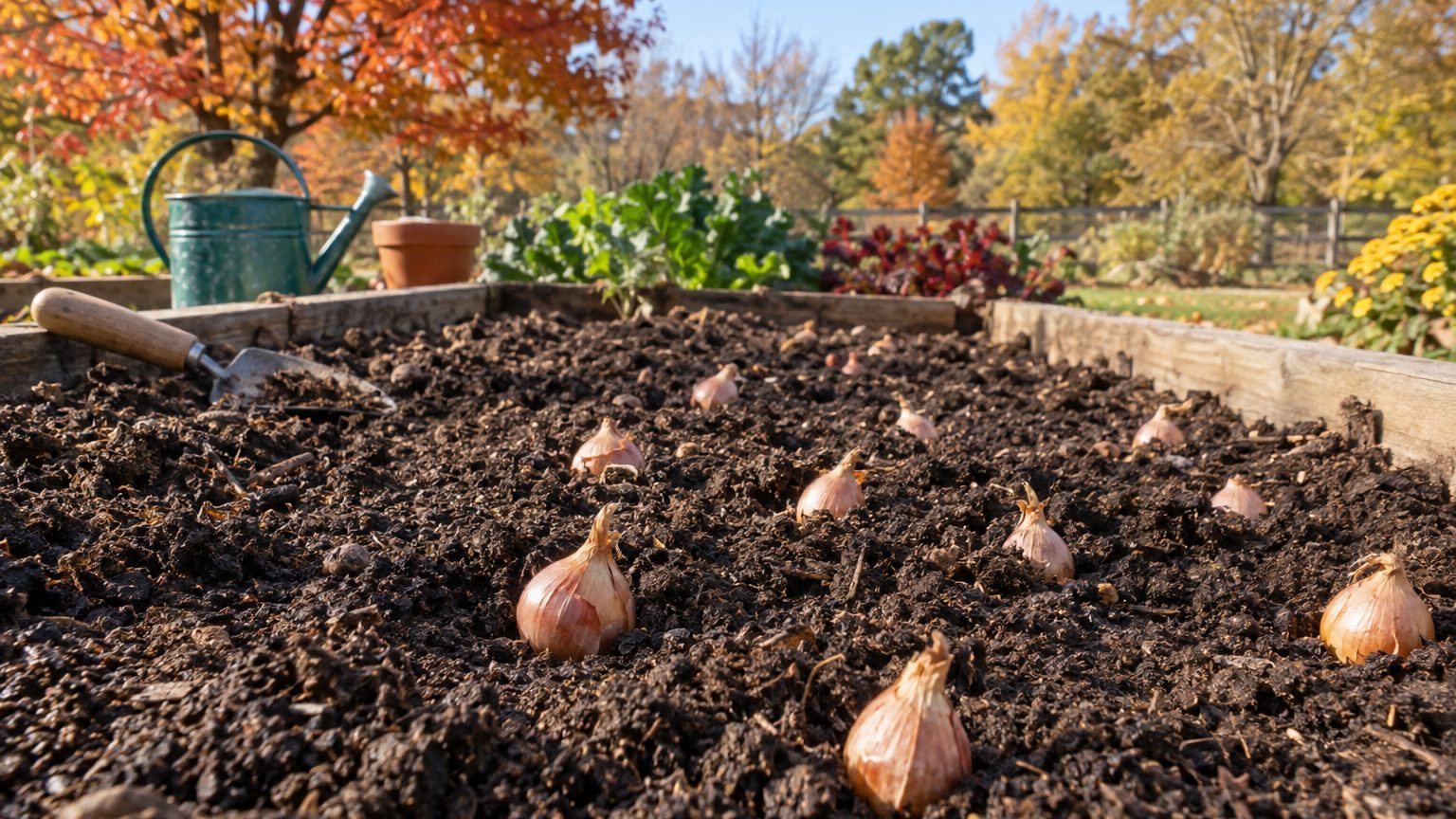

In Anchorage, plant shallot sets in spring as soon as the soil can be worked. In a normal year that falls around the last-frost window of May 3 to May 12. Shallots shrug off light frost, so you don’t have to wait for the window to close. The harder part is the far end of the calendar. About 143 frost-free days leaves little slack, and the rest of this page works out what follows from that.
The short answer for Alaska
The sowing window opens when the ground thaws and drains, and it closes in the first weeks of June at the latest. The two frost dates that frame it are probabilities, not promises. According to the NOAA NCEI 1991-2020 Climate Normals for the Anchorage station, the last spring frost falls between May 3 and May 12, and the first fall frost between September 22 and October 1.
Both ranges are the 30 to 70 percent band of 32°F freeze probabilities. Inside the spring band, the odds of one more freeze at or below 32°F sit somewhere between 30 and 70 percent. Inside the fall band, the odds that the first freeze has already arrived sit in that same range. A freeze can still land outside either band, because the band is the middle of the distribution, not its edge.
| Marker | Anchorage normal | What it measures |
|---|---|---|
| Last spring frost | May 3 to May 12 | 30-70% band of 32°F freeze probabilities |
| First fall frost | September 22 to October 1 | 30-70% band of 32°F freeze probabilities |
| Frost-free season | About 143 days | Gap between the two |
Spring planting
Those 143 days are the whole budget. Anchorage is one of the mildest inhabited parts of Alaska, so treat the number as a ceiling, not an average for the state. Spend the budget at the front end. Sets (small bulbs) planted the week the bed is snow-free get the longest run of growing time, and they tolerate a late freeze better than most vegetables do. Planting by soil condition beats planting by calendar date. If the bed is still soggy from snowmelt, the date on the page doesn’t matter.
Long summer daylight partly makes up for the short season. It speeds leaf growth, which is why a May planting can still size up into a respectable bulb. Plan to lift the crop and start curing it before the fall band opens on September 22, not after it closes.
Fall planting
Fall planting is the open question. The coldest-month mean daily minimum at the Anchorage reference station is 11.0°F, which is the figure that decides whether a plant survives winter at all. Plenty of Alaska gardeners plant garlic in fall under mulch, and shallots belong to the same family. This page does not have a published Alaska trial of fall-planted shallots, though, so it won’t hand you a fall date. Spring is the documented path here.
What will not work here
A Lower 48 calendar is the first casualty. Advice written for states where shallots go in during March or early April assumes workable soil. In Anchorage the freeze probabilities don’t thin out until the first half of May, so a copied date means digging into frozen or waterlogged ground.
The slowest shallots are the second. With roughly 143 frost-free days, and fewer once you subtract the weeks the soil spends thawing, a type that wants a long, warm season will stall. It may not size up before September. This is where variety choice matters, and The Best Shallots to Grow in Alaska sorts types by how they handle a short run.
Starting from true seed on a Lower 48 schedule is the third. Seed-grown shallots need a long head start indoors, and a seedling that goes out late has little time to fatten. Sets carry that head start inside the bulb, which is why they suit a short season better.
Late planting also fails, and for a reason worth understanding. Shallots form bulbs in response to lengthening days, and Alaska’s days are very long in June. A plant that is still small when the long days arrive will bulb anyway, just small. Putting sets in the ground in mid-June gives you tender green onions at best.
Cold, saturated soil is the quiet killer. Sets sitting in snowmelt-soaked ground rot before they root. A raised bed, or a spot that drains early, buys you days and costs nothing but a little planning.
Finally, don’t leave the crop in the ground to “finish.” The fall band starts September 22, and a freeze before the bulbs are lifted and curing makes storage harder. If the tops have started to yellow and flop, harvest. Anchorage runs about 143 frost-free days, and every gardener north of it runs fewer.
What changes across Alaska
Alaska is not one garden. Under the USDA system, which rests on a single variable (the average annual extreme minimum temperature), the state runs from zone 1a to zone 8a. That is seven full zones apart, a gap wider than between Minnesota and the Gulf Coast. There is no single answer for the state, and any page claiming one is guessing.
Anchorage is the reference city here, and its figures (the May and September windows, the 11.0°F coldest-month minimum) describe Anchorage and not the spread. The Interior and the far north have much shorter frost-free seasons. Coastal and southern pockets can run milder. The hardiness zone also says little about season length. It measures the coldest night of the year, while shallots live or die on how many warm weeks you get.
If you garden in the Interior or the north, shift three things. Plant on the first workable day, not by the Anchorage calendar. Choose the fastest types from the variety list. Warm the bed early with a raised bed or clear plastic, then pull the plastic when the soil is up to temperature. Frost pockets matter more when the season is short, so avoid the lowest corner of the yard.
At altitude, expect later thaw and earlier fall, so both ends of the Anchorage window compress. Move the planting date later and the harvest date earlier, and treat slow varieties as a bad bet. To see where you fall, check the USDA Plant Hardiness Zone Map for your location. This page won’t place you on it.
Where to check this for your own county
Your state extension service is the next stop. In Alaska that is the University of Alaska Fairbanks Cooperative Extension Service. It staffs local offices that know the soil, the thaw dates, and the microclimates of their own districts.
Look for two things. The first is a local planting calendar, ideally one that covers alliums (the onion family) or specifically shallots. The second is a list of varieties trialled in your area, because a type that bulbs well in a trial plot near you is worth more than any ranking from outside.
A county recommendation beats a state one, and this page is the state one. It is built on freeze probabilities from one Anchorage station and a territory-wide hardiness range. Alaska is organized by boroughs and census areas, not counties, but the principle holds: the closer the office, the better the advice. This page also has no Alaska extension shallot calendar to cite, and it won’t borrow one from another state. Calendars published elsewhere, such as lawn calendars from southern states, are written for different species and different climates.
If extension has no shallot-specific page, ask about garlic and onions. Their timing is the best available proxy, and local staff can say how closely shallots track them. For a broader view of the crop, start with Growing Shallots in Alaska.
Checking this against your own garden
Your own observations outrank every date above. Three are worth watching, and none needs equipment.
Soil warmth by feel. Push a hand into the bed. If the soil crumbles instead of clumping and your fingers don’t ache after a minute, it is ready for sets. A bed that reaches that point a week before your neighbor’s tells you it drains early or gets more sun. Note which beds thaw first and plant there first.
The first true leaves. Once sets are in, watch for green shoots. Quick emergence says the bed is warm. Slow emergence, or a gap between two beds, points to cold, wet, or shaded ground. That is how you find your own frost pocket, usually a low corner where cold air pools.
The first yellowing of the tops. This is your harvest cue, and it also shows how long your season really runs. If tops flop in late August, you have a shorter season than Anchorage’s 143 days. Write the date down each year. After three seasons, your notes will be a better calendar than any normal built from a weather station miles away.
Common questions
Can I plant shallots before the last frost date?
Yes, once the soil is workable and not waterlogged. Shallots tolerate light frost. The May 3 to May 12 range is a probability band for a 32°F freeze, not a deadline you must wait out.
How long is the growing season in Anchorage?
About 143 frost-free days, based on the NOAA 1991-2020 normals for the Anchorage station. Much of the Interior and the north gets far less.
Should I plant shallots in fall in Alaska?
This page does not have an Alaska trial for fall-planted shallots, so it recommends spring. Garlic is commonly fall-planted under mulch. Ask your extension office whether shallots have been tried locally.
Does the USDA zone tell me when to plant?
No. The USDA system measures the average annual extreme minimum temperature, which speaks to winter survival and not season length. Alaska spans zones 1a to 8a, so planting dates have to come from frost dates and local observation.