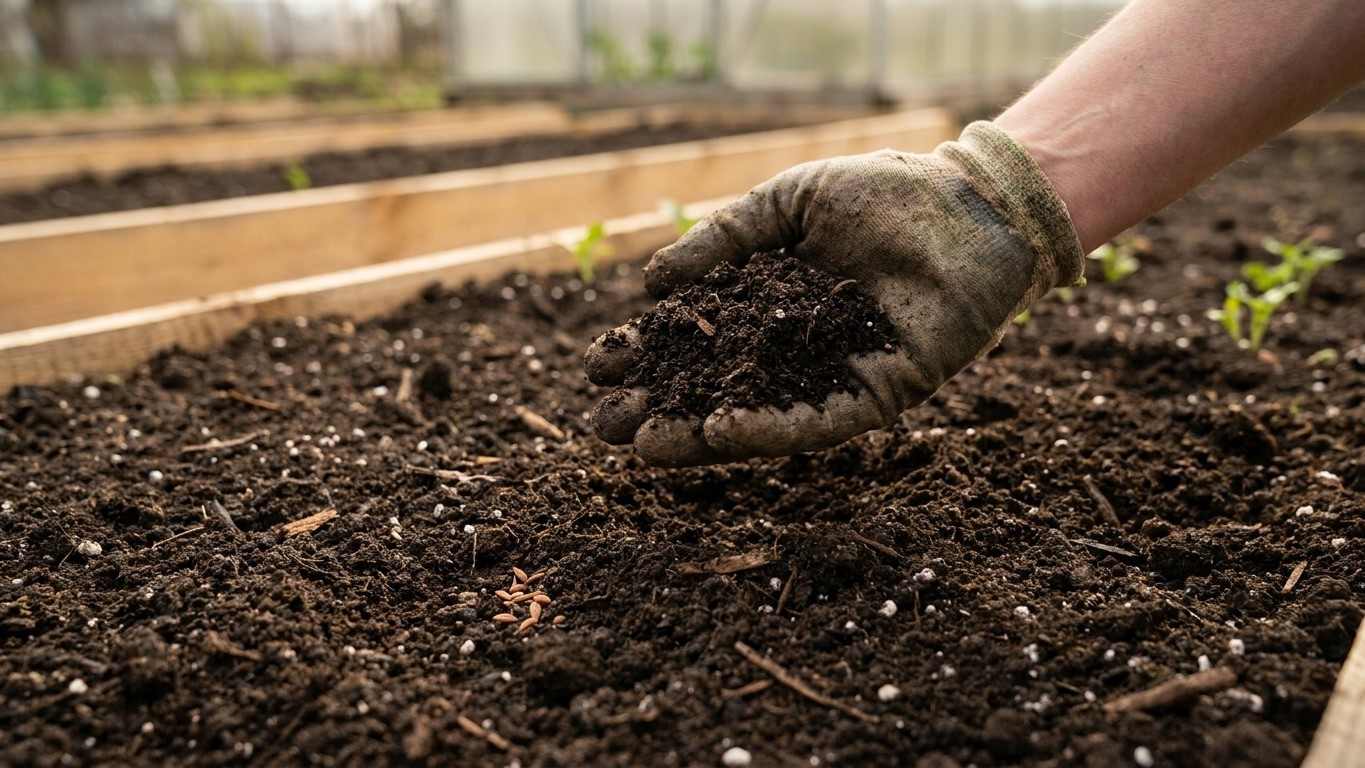

Alberta gardeners get carrots into the ground once the soil itself is ready, not on a fixed calendar square. There’s no single last-frost date that covers the whole province, since growing conditions shift dramatically between the Peace Country, the central parkland and the southern prairie. What actually decides the moment is the ground: whether it’s dried out enough to crumble, warmed past its frozen crust, and no longer waterlogged from spring runoff. Carrots go straight into that soil. There’s no transplant step to count back from.
The short answer
Across Alberta’s farmed regions, the most common soil order mapped is Chernozem, the deep, dark grassland soil the prairies are known for, rich in organic matter and naturally fertile. It covers roughly 40 percent of the mapped surface, with Luvisolic soils coming in second. Where Chernozem shows up, the surface texture runs loam to silt: about 37 percent sand, 21 percent clay, and 42 percent silt, with organic matter around 5.2 percent and a median surface pH near 6.5, slightly on the acid side. Drainage in these soils is generally well drained, which matters more for a carrot than almost anything else in the bed.
That texture is workable news for root vegetables. Carrots want deep, sandy, well-drained ground rich in organic matter, according to Utah State University Extension. A loam-to-silt mix with only about a fifth clay isn’t the heavy, sticky ground that forces a taproot to split and fork around obstructions. Well drained also means water moves through instead of pooling around the root, which is the other main cause of forking and rot. On paper, this dominant Alberta profile leans toward being carrot-friendly rather than carrot-hostile.
But “leans toward” is the honest phrase here, not “is.” Any pocket of clay that runs heavier than that 21 percent average, any compacted patch left behind by construction fill, or any spot with buried stones will still fork a carrot root no matter what the provincial average says. Utah State’s guidance is blunt about the fix: heavy or rocky soil needs a generous amount of compost worked in and double digging to loosen the profile before seed goes in. Where that’s not practical, a raised bed built with a loose, sandy mix sidesteps the problem entirely rather than fighting the native ground every season.
Alberta spans hundreds of individual soil series, from river-bottom deposits to muskeg to soil that’s been scraped and refilled around a foundation. The province’s farmed-region average, the numbers above, is a starting point for guessing what your ground tends to do, not a diagnosis of what’s actually under your rows. The only way to know for certain is to check the dirt where the seed is going.
The test that settles it in your own garden
The provincial average can’t tell you what’s six inches under your own carrot bed. A short, hands-on check does that in a single afternoon.
- Pick a spot in the bed and dig a hole with a garden spade, going as deep as the blade allows without forcing it.
- Look at what you pulled up. Note where loose, crumbly soil gives way to a denser layer, and whether you hit stones, a hard clay pan, or rubble on the way down.
- Take a handful of soil from that hole and roll it between your fingers. Gritty and loose means sandy. Sticky and moldable like clay dough means heavy clay. Smooth and silky, holding a shape but crumbling easily, points to silt or loam.
- Fill the hole partway with water and time how long it takes to disappear. Water that vanishes quickly signals a well-drained, sandy profile. Water that sits for a long stretch signals compacted or clay-heavy ground that will need amending before carrots go in.
- Repeat the dig-and-fill check in two or three other spots in the yard, since garden soil can change completely from one bed to the next, even a few feet apart.
What comes out of that test tells you far more than any provincial average can. A loose, sandy hole that drains fast and comes up clean of stones is close to what carrots want on their own. A hole that holds water, resists the spade, or turns up a layer of clay a few inches down is telling you to build a raised bed or commit to compost and double digging before you ever open a seed packet.
What goes wrong here
- Forking in heavy ground. Any patch running heavier than the province’s average clay share, or holding buried stones, will split a taproot as it hits resistance and grows around it instead of straight down. The fix is working in plenty of compost and double digging the bed before sowing, or building a raised bed filled with a loose, sandy mix if the native ground is too dense to fight every season.
- Poor germination in a hot, dry spell. Carrot seed is slow to sprout under the best conditions, and a stretch of hot weather that dries the surface out fast can stall germination or kill seedlings before they’re established. Keeping the top inch of soil consistently damp through germination, rather than letting it dry and rewetting it in bursts, is what gets a full row up.
- Splitting from uneven watering. Roots that go through a dry stretch and then get soaked all at once tend to crack along their length as they take up water faster than the outer skin can stretch. A steady watering schedule, backed by a layer of mulch to slow evaporation between waterings, keeps that swing from happening.
- Slow, patchy growth from cool, saturated spring ground. Well-drained soil is the default across most of Alberta’s farmed region, but any bed that stays soggy after spring melt will sit cold and slow carrot germination regardless of what the rest of the yard is doing. Raising that one bed, or working in extra organic matter to improve structure, brings it back in line with the rest of the garden.
Common questions
Does Alberta’s soil naturally suit carrots?
The province’s most common farmed-region soil, a Chernozem running loam to silt with well-drained texture, leans favorable for root crops. But that’s a regional average across hundreds of soil series, not a guarantee for any one garden, so a quick dig-and-feel test at home is worth more than the provincial number.
What soil pH do carrots need in Alberta?
The province’s dominant mapped soil runs a median surface pH near 6.5, slightly acid. Utah State University Extension’s guidance on carrots doesn’t specify a target pH, so treat that 6.5 figure as a description of common Alberta ground rather than a rule for the crop itself.
Can I fix heavy clay soil for carrots without a raised bed?
Yes, according to Utah State University Extension, which recommends working in a generous amount of compost and double digging the bed to loosen the profile before sowing. A raised bed filled with a loose mix is the alternative for ground too compacted or rocky to rework easily.
Why did my carrots come up patchy this year?
Patchy germination is usually tied to inconsistent soil moisture right after sowing, particularly during a hot, dry stretch that dries the surface before seedlings can establish. Keeping the top layer of soil steadily damp, rather than letting it swing between dry and soaked, is the fix Utah State University Extension points to for getting a full stand of seedlings up.