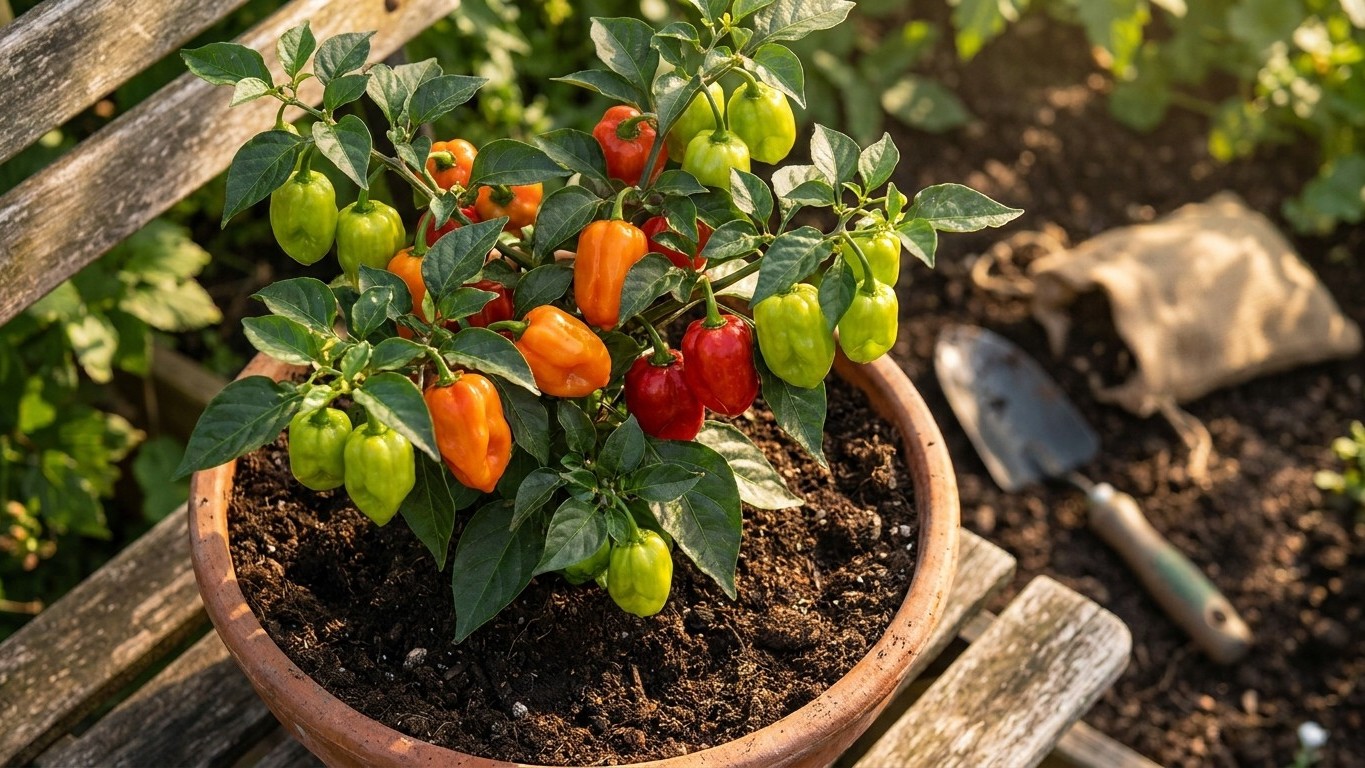

Only three insects on Alberta’s documented pest list actually feed on pepper plants: thrips, grasshoppers, and brown marmorated stink bug. Thrips scar leaves and flowers early in the season, grasshoppers chew foliage and fruit as their numbers build through summer, and stink bugs pit ripening fruit late in the season. Two other species on the same list, miller moths and social wasps, don’t belong on a pepper pest page at all.
Which pests attack pepper in Alberta

Montana State University Extension’s Urban IPM program documents five insects relevant to this territory: brown marmorated stink bug, grasshoppers, miller moths, social wasps, and thrips. That’s the full list this site can point to for the region, and it’s worth noting it’s short, not a hedge, not a starting point to pad. A gardener checking a pepper plant for damage doesn’t need a longer list. They need the right three names.
Thrips belong on this list without qualification. They rasp at leaf surfaces and flower tissue with piercing mouthparts, leaving a silvery, stippled sheen that’s easy to mistake for something else (more on that below). Grasshoppers also earn their spot: they’re generalist chewers, and when populations spike, pepper foliage and even fruit skin take visible bites. Brown marmorated stink bug rounds out the list. It feeds on fruiting vegetables, pepper included, by piercing the fruit wall and leaving discolored, sometimes corky patches under the skin.
Miller moths don’t fit here, and the reason matters. The name refers to the adult stage of the army cutworm. As adults, these moths feed on flower nectar, not garden foliage, and their well-known habit is swarming into homes during their spring and fall migrations, not chewing on vegetable plants. The larval stage causes damage to some crops, but that’s a different life stage under a different common name, and it isn’t what “miller moth” refers to on the documented list.
Social wasps are a similar case. They’re documented as an urban pest because they sting and nest near structures, and they’ll investigate split or overripe fruit for sugar. But they aren’t plant feeders in any meaningful sense, and in a pepper patch they’re more often doing a gardener a favor by hunting caterpillars than doing any damage themselves. Listing them as a “pepper pest” would be misleading. The decision that matters here is trusting the sorted list over the raw one, since a pest that doesn’t chew, pierce, or rasp plant tissue has no business on a damage checklist.
When each one shows up, and what it does first
Alberta’s frost-free window is the clock that matters, not a calendar month. Calgary’s average last spring frost lands around May 21, and that’s a mean, not a guarantee, since frost arrives later than that in roughly half of all years. Pepper transplants need 8 to 10 weeks indoors before they go out, and they shouldn’t go into the ground until the soil has warmed to 60°F and frost risk has passed. Everything downstream, including pest timing, gets measured from that transplant date, not from a fixed week on the calendar.
Thrips are usually the first sign of trouble, often within the first couple of weeks after transplants go in or as the first flowers open. The early symptom isn’t a visible insect, it’s a stippled, silvery sheen on young leaves or streaking on petals, sometimes with tiny black flecks of excrement on the underside of the leaf.
Grasshoppers build slowly and hit hardest as summer goes on. Populations that were barely noticeable in the weeks right after transplanting can become obvious by mid to late summer, when ragged notches appear along leaf edges and, in heavier years, on the fruit itself. The first sign is rarely the insect; it’s the chewed margin on a leaf that wasn’t there a few days earlier.
Brown marmorated stink bug shows up latest of the three, once fruit has set and started sizing up. The first symptom is usually a small, discolored dimple or a slightly sunken, corky patch on the fruit wall, often before anyone spots the bug itself resting on a stem or leaf underside. Since fruit set already fails at both ends of the temperature range, nights below 55°F or days above 90°F, any late-season stress on fruit deserves a second look before assuming it’s an insect at all.
Telling the damage apart from everything else
Pepper problems get misdiagnosed constantly, and the fix starts with looking at where the damage sits and how it’s shaped, not just deciding “something’s eating it.” The single most useful habit is checking the underside of leaves and the shaded side of fruit before assuming an insect is involved, since several look-alikes never involve a pest at all.
| Symptom | Possible cause | What tells it apart |
|---|---|---|
| Silvery, stippled sheen on young leaves | Thrips feeding | Look for tiny black excrement flecks on the underside; sun scorch has no flecks and follows leaf veins evenly |
| Ragged notches along leaf edges | Grasshoppers | Chew marks are irregular and concentrated at margins; hail or wind damage tends to tear leaf tissue randomly, not just at edges |
| Sunken, corky patch on fruit skin | Brown marmorated stink bug | The patch sits under otherwise intact skin; sunscald instead produces a flat, papery, bleached patch on the side facing direct sun |
| Yellowing between leaf veins, no chew marks | Nutrient deficiency | Leaves stay intact with no puncture or bite marks; pest feeding always leaves a physical mark somewhere on the tissue |
| Wilting despite moist soil | Root or stem disease, not an insect | Check the stem base for discoloration or softness; insect feeding doesn’t cause wilting without visible surface damage first |
None of this replaces a second opinion. If the damage doesn’t clearly match one of these patterns, or if it’s spreading fast across several plants, that’s exactly the kind of question worth sending to a local extension office rather than guessing from a photo online.
What actually works here, and what is a waste of time
On a short growing season, timing beats intervention every time. A floating row cover placed over transplants right after they go into the ground, before the frost-free window fully opens, keeps early thrips off young foliage when the plants are most vulnerable. That cover needs to come off once flowering starts, since pepper still benefits from pollinator visits for full fruit set, and a cover left on too long trades one problem for another.
Grasshoppers respond better to monitoring than to any single treatment. Walking the rows weekly through mid and late summer, when populations are building, catches the shift from a few stray insects to a real infestation before fruit damage sets in. Waiting until chewed fruit shows up means the window for easy control has already closed.
Brown marmorated stink bug is the hardest of the three to manage directly. Physical exclusion late in the season is impractical once fruit has set and needs continued pollinator access, so the more realistic approach is inspecting fruit regularly as it ripens and removing damaged fruit before it draws more feeding activity.
What doesn’t work: guessing at a product off a hardware store shelf without confirming it’s labeled for pepper and legal to use in Alberta. This site doesn’t recommend specific pesticides or active ingredients, because product registration and rules vary, and a local extension office is the only source that can confirm what’s currently approved for a home garden. Broad, untimed spraying also tends to wipe out the predatory insects that would otherwise keep grasshopper and thrips numbers in check, which often makes the following season worse, not better.
Where to check this for your own county
The pest list on this page comes from Montana State University Extension, Urban IPM, documenting species across the border rather than a made-in-Alberta source. That gap matters more than it looks: a list built for a neighboring state or province tells you what’s plausible in the region, not what’s confirmed on a specific property. Pest presence shifts block by block depending on nearby crops, shelterbelts, and even how a yard is watered, so nothing here substitutes for a local check.
The next step is straightforward: contact your county’s agricultural service board or Alberta’s provincial Ag-Info line and describe exactly what’s on the plant, using the symptom-first language from the table above rather than a guessed insect name. Bring or photograph the damage close up, including the underside of a leaf and the shaded side of a fruit, since those are the details that let someone confirm or rule out a pest instead of guessing from a distance.
A documented species list at the state or provincial level is a starting point for what to watch for, never a diagnosis for what’s actually happening in one garden bed.
Common questions
Do I need to worry about pepper pests before transplanting outdoors?
Not usually. The pests documented for this territory, thrips, grasshoppers, and brown marmorated stink bug, act on plants already in the ground or in flower and fruit. Indoor seedlings during their 8 to 10 week start are far more likely to face damping-off or light stress than insect feeding.
Can cold nights alone stop pepper from setting fruit, even without any pest damage?
Yes. Fruit set fails whenever nights drop below 55°F, regardless of what insects are or aren’t present. This site doesn’t track summer night minimums for this territory, so watch your own thermometer rather than assuming from the season or the coldest month of the year.
Are extreme heat days a real threat to pepper here?
Calgary averages only 1.37 days a year reaching 32°C, and 5.1 days above 30°C, so days that could stall fruit set at the hot end are rare in most years. That low count says nothing about whether the frost-free season is long enough for peppers to mature; that depends on season length and summer averages, not the number of extreme days.
Is it safe to assume social wasps near ripening peppers are a problem?
No. Wasps investigating fruit are usually after sugar from splits or overripe spots, not causing the damage themselves, and they often hunt caterpillars that would otherwise feed on the same plant. Treat wasp activity as a nuisance and sting risk to manage carefully, not as crop damage to control.