
April in Alberta sits weeks ahead of the average last frost, so the answer is short: hardy, cold-tolerant crops can go into workable soil, warm-season vegetables get started indoors, and most of the real outdoor planting still waits. Garlic, peas, and leafy greens tolerate the cold snaps that are still normal this month, while tomatoes and squash stay under cover until the soil and the calendar catch up.
What goes in the ground in April

Soil temperature decides what survives in April, not the date on the wall. In Calgary and most of central Alberta, the average last spring frost falls around May 21, and that figure is a midpoint, not a guarantee: in half of all years, frost arrives even later. April sits four to seven weeks ahead of that average, which rules out anything tender but leaves real options for gardeners with workable ground.
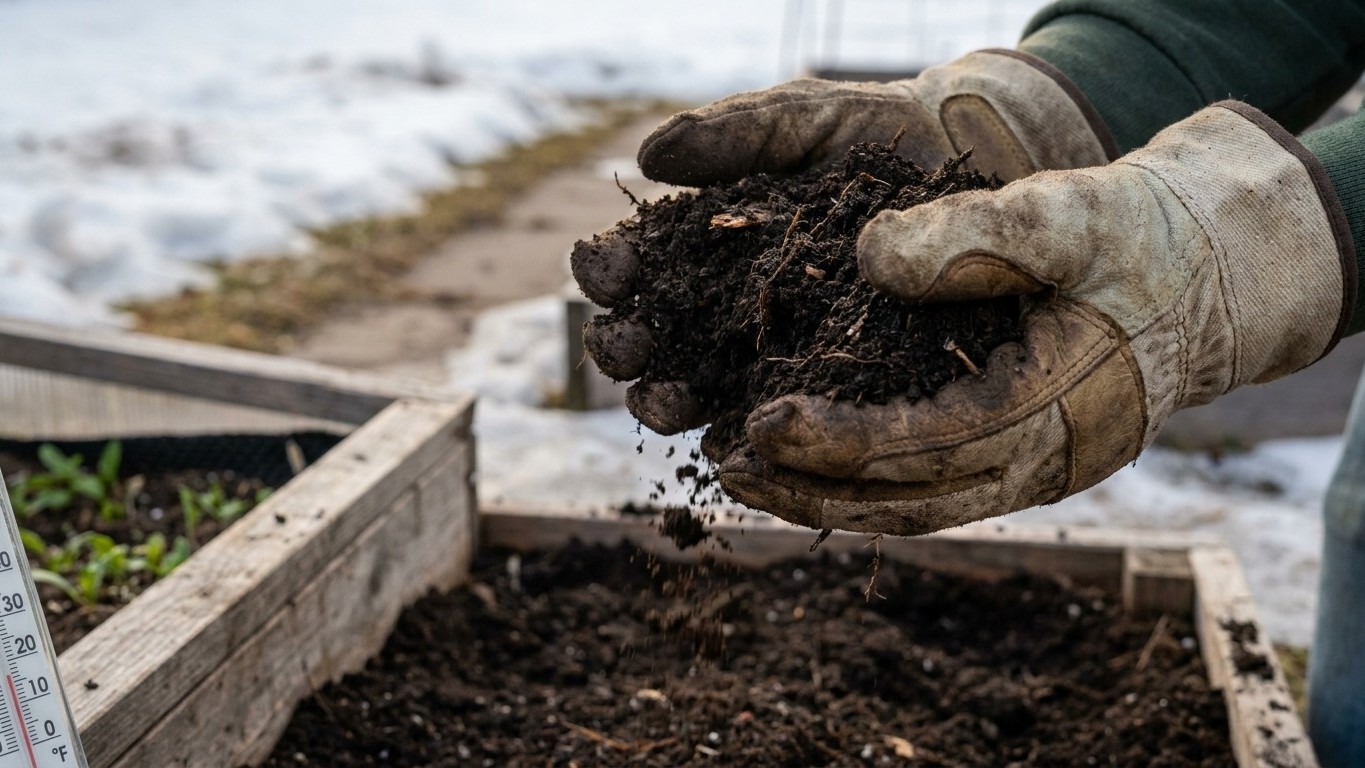
Garden soil in much of Alberta is still cold, sometimes still partly frozen at depth, and often waterlogged from snowmelt through early April. Working it while it’s wet compacts the structure and undoes a season of tilth. The test that matters more than any date: squeeze a handful of soil, and if it forms a muddy ball instead of crumbling, leave it another week.
Once soil is workable and has warmed past the low 40s Fahrenheit near the surface, several crops tolerate direct sowing even with more frost ahead:
- Peas, both shelling and snap varieties, which germinate in cold soil and shrug off light frost
- Spinach and hardy lettuce mixes, sown as soon as the bed can be raked
- Radishes, which mature fast enough to squeeze in before a late cold snap does damage
- Onion sets and shallot sets, pushed into the ground while it’s still cool
- Fava beans (broad beans), one of the most frost-hardy legumes available to home gardeners
Garlic planted the previous fall is already growing at this point and needs no new sowing, but shallots can still go in as sets if the ground wasn’t planted earlier. Cold frames and low tunnels buy an extra two to three weeks on all of the above, letting a gardener push sowing dates earlier than open ground would allow. What doesn’t belong outside yet: beans (bush or pole), corn, squash, cucumbers, and any tomato or pepper transplant. Those wait for the soil and the season to close the gap toward that late-May average.
What to start under cover
Counting backward from the average last frost is more useful here than any fixed date, because it travels with the reader to whatever county they garden in. With a mean frost date around May 21, tomatoes and peppers, which need six to eight weeks indoors before transplant, are started in early to mid-April to be ready right around that average, with room to hold them a little longer if a cold spring pushes the real frost later.
Brassicas destined for transplant, like broccoli, cabbage, and cauliflower, need four to six weeks under cover, so a mid-to-late April start lines them up for a late-May move outside. Onions grown from seed rather than sets need ten to twelve weeks indoors; if that window was missed in late winter, April sowing still produces usable transplants, just smaller ones at planting time, and sets remain the safer backup.
The two ways this goes wrong
Starting too early produces rootbound, leggy seedlings sitting in small trays for weeks past when they should have moved to bigger pots or outside soil, and they rarely recover their vigor even after transplanting. Starting too late runs into the other constraint: with an average first fall frost around September 16, the frost-free window in much of Alberta runs roughly four months, which is tight for long-season peppers and slicing tomatoes. A start pushed into May instead of April can mean fruit that never ripens before the cold returns.
| Crop | Weeks indoors before transplant | Approximate start window |
|---|---|---|
| Tomatoes, peppers | 6-8 weeks | Early to mid-April |
| Broccoli, cabbage, cauliflower | 4-6 weeks | Mid to late April |
| Onions from seed | 10-12 weeks | Better started earlier; April is a late option |
What is ready to pick
Little or nothing comes out of open Alberta ground in April, and that’s the honest answer for a month that still sits well before the frost-free season begins. What feeds the table this month comes from what was stored, forced, or grown under cover, not from what’s freshly harvested outside.
Kale and leeks left in the ground over winter, if they survived under snow cover, can still be pulled as the ground softens, and their flavor after repeated freezing is often sweeter than a fall harvest. Cold frames sown in late winter start producing baby greens and radish thinnings by mid-to-late April. Indoors, sprouts and microgreens on a windowsill or under a grow light fill the gap in a matter of days rather than weeks, and forced rhubarb, brought in from the garden and kept in the dark, pushes tender stalks well ahead of anything outdoors.
April is also the month to go through the root cellar or cold storage and be honest about what’s left. Squash with soft spots near the stem, potatoes that have started sprouting eyes longer than an inch, and onions gone soft at the neck are all past their storage life and should be used or composted before they spread rot to the crops around them. Checking storage weekly through April prevents one bad squash from taking out a whole bin.
The jobs that matter this month
April carries a full list of work that pays off precisely because it happens before the growing season, not during it. Dormant pruning of fruit trees and berry canes should wrap up before buds swell and break; pruning too late stresses the plant and invites disease into fresh cuts made while sap is already flowing. Apple, saskatoon, and currant plantings across Alberta are typically pruned through late winter into early April, right up to the point where buds show green.
Seed catalogs move fast this time of year, and the best-performing short-season and cold-hardy varieties bred for prairie climates tend to sell out first. Ordering now, rather than waiting for garden centers to restock, is the difference between growing the variety chosen and settling for whatever’s left on the shelf.
Soil, tools, and infrastructure
Soil testing done in April, once ground is workable, gives results back in time to amend before the main planting push in May and June. Compost piles started in fall benefit from a turn now, both to aerate them and to check that the center hasn’t gone anaerobic over winter. Tools that sat idle since fall, pruners, hoes, shovels, deserve a cleaning and a sharpening edge before the season’s heavier use starts. Raised beds, fencing, and trellis structures damaged by winter frost heave or snow load are far easier to repair now, on empty beds, than later once seedlings are in the ground around them.
What not to do in April
The single most common mistake in Alberta gardens this month is trusting a warm afternoon over the soil thermometer. Air temperature in the 60s Fahrenheit doesn’t mean the ground has warmed to match, and tender crops like beans, squash, and tomato transplants set into cold soil sit stalled or rot outright, even if the days that follow stay mild. The fix is simple: check soil temperature directly, and wait for consistency, not a single warm afternoon.
A related error is uncovering overwintered beds, cold frames, or mulched perennials too early after a stretch of mild weather. Alberta’s spring is well known for sending a hard freeze back through after several days that felt like summer, and plants stripped of their winter protection have no buffer left when that happens. Leave protective mulch and row cover in place until the pattern of mild weather actually holds, not just for a few warm days in a row.
Nitrogen fertilizer applied too early, before soil has warmed enough for roots to take it up, mostly washes away with spring runoff instead of feeding anything. It’s better held until plants are actively growing and able to use it. And working wet soil, whether that’s early bed prep or transplanting into ground that’s still muddy from snowmelt, compacts the structure in a way that takes a full season of amendment to reverse.
Checking this against your own county
A province-wide answer for April is a starting point, not an instruction for every yard in Alberta. Elevation, Chinook wind patterns, and the real distance between the province’s north and south move planting windows by two to three weeks in either direction from the averages used here, which come from a single Calgary-area station. A garden in the Peace Country or at higher elevation runs later than these figures suggest; a garden in the far south under regular Chinook influence can run earlier.
For local frost data and a provincial planting calendar built around Alberta’s actual regions, the Alberta Ministry of Agriculture and Irrigation is the reliable next stop.
Common questions
Is it safe to plant tomatoes outside in Alberta in April?
No. The average last frost is around May 21, and that’s a mean date, not a safe cutoff, meaning frost arrives even later in roughly half of all years. Tomatoes started indoors in April should stay under cover until nights are reliably above freezing.
What hardiness zone is most of Alberta?
The reference city used for this page sits in Canadian hardiness zone 4a, based on Natural Resources Canada’s system, which is built on seven climate variables rather than the single temperature measure used by the USDA. Canadian zone 4a doesn’t convert directly to a USDA zone, so it shouldn’t be compared on the same scale as US zone maps.
Can garlic still be planted in April?
Garlic is normally a fall-planted crop and is already growing by April if planted the previous autumn. Shallot sets, however, can still go in during April once the soil is workable, giving a usable harvest later in the season.
How long is Alberta’s frost-free growing season?
Based on the average last spring frost around May 21 and the average first fall frost around September 16, the frost-free window runs roughly four months in the region around Calgary. Both dates are averages, so the actual window varies from year to year and by location across the province.