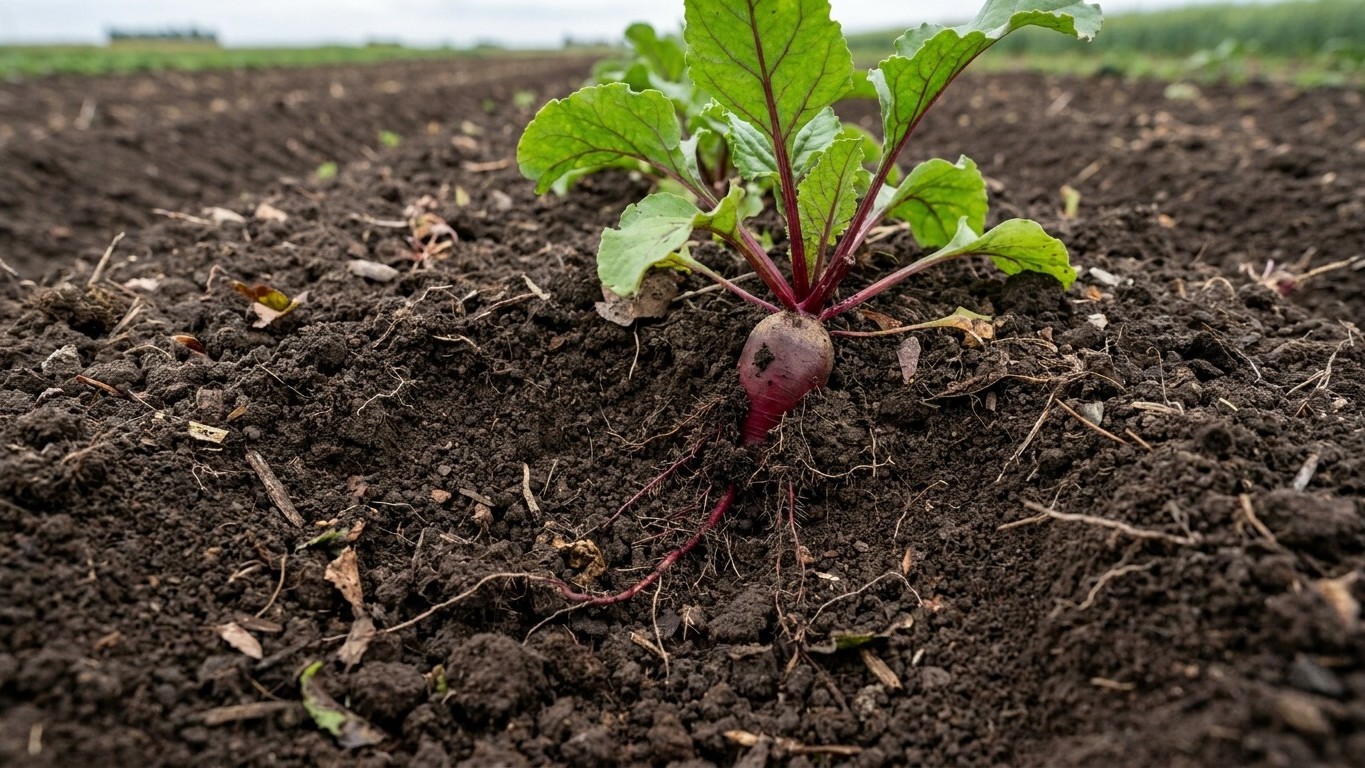

In Arizona’s low desert, beet plantings face insect pressure practically year-round, since a hard freeze is rare enough that it barely shapes the growing calendar here. The University of Arizona Cooperative Extension documents a handful of pests that turn up on beet, from tiny sap-suckers on seedling leaves to the one insect named after the crop itself. Which of them you’re actually looking at, and when it shows up, has less to do with the month on the wall than with how many weeks your beets have been in the ground.
Which pests attack beet in Arizona

The University of Arizona Cooperative Extension documents ten insects as pests across the state’s vegetable gardens: aphids, beet leafhopper (vector of curly top virus), false chinch bug (Nysius raphanus), grasshoppers, green fruit beetle (Cotinis mutabilis), spider mites, squash bug (Anasa tristis), thrips, tomato hornworm (Manduca quinquemaculata), and whiteflies.
Not all ten belong on a beet bed. The green fruit beetle feeds on ripening and decaying fruit, which beet never produces. The squash bug is a cucurbit specialist, tied to squash and pumpkin, not a root crop. The tomato hornworm feeds on solanaceous plants like tomato and eggplant, a family beet doesn’t belong to. Naming any of these three on a beet-specific page would send a gardener chasing the wrong insect.
That leaves seven documented pests with business on beet: aphids, beet leafhopper, false chinch bug, grasshoppers, spider mites, thrips, and whiteflies. Aphids and whiteflies cluster on the undersides of young leaves and pull sap directly from the plant. Thrips rasp the leaf surface. Spider mites do their damage in hot, dry stretches when humidity drops. Grasshoppers and false chinch bugs are generalist feeders that move in when nearby weeds dry out or get mowed. The beet leafhopper is the one worth watching hardest, not for its own feeding damage, but because it carries curly top virus, and a plant that shows curly top symptoms has no treatment that reverses it. Everything downstream of that insect’s arrival is about prevention, not cure.
Treating a squash bug problem or spraying for tomato hornworm on a beet row wastes time and material. If the damage is on beet, the search should stay inside these seven names, not the full state list.
When each one shows up, and what it does first
Beets are sown directly in the ground, and the crop runs roughly 60 to 80 days from seeding to harvest. Because Arizona’s low desert rarely sees a freeze at all, the pest calendar here isn’t built around a last-frost date the way it would be farther north. It’s built around the plant’s own growth stages instead.
In the first stretch after seeding, tender young leaves draw the earliest attention. Aphids and whiteflies show up on the undersides of the first true leaves, usually signaled by sticky residue or slight curling and yellowing rather than visible holes. Thrips arrive in the same early window, leaving fine silvery streaking or stippling across the leaf surface. This period also matters most for the beet’s own physiology: water stress in the first six weeks after seeding pushes beets toward premature bolting, so a plant that suddenly sends up a flower stalk this early may be reacting to dry soil, not insects.
Beet leafhoppers can move in during this same early stage too, and the first visible clue often isn’t the insect itself, since it’s small and quick, but the plant’s response a couple of weeks later: leaves that curl upward, turn stiff, and take on a yellowed, crinkled look consistent with curly top virus.
As plants fill out and temperatures climb later in the growing window, grasshoppers and false chinch bugs tend to move in from drying weeds or adjacent open ground, chewing ragged notches into leaf margins rather than leaving the fine stippling that mites and thrips cause. Spider mites become more likely once weather turns hot and dry, showing up as tiny yellow speckling that can spread into a dusty, webbed look on leaf undersides if unchecked. Meanwhile, heat above 85°F combined with water stress makes the beet root itself turn woody, a separate failure from bolting and one with nothing to do with any insect on this list.
Telling the damage apart from everything else
A beet bed can look damaged for reasons that have nothing to do with insects, and the state’s own ground gives it a head start on some of those problems. The soil USDA lists as representative of Arizona, the Casa Grande series, runs alkaline at a surface pH near 8.5, sandy at 64 percent sand, and low in organic matter at roughly 0.8 percent. Beets want deep, sandy, well-drained soil rich in organic matter, so a bed light on added organic matter can show yellowing or stunted growth with no pest involved at all.
The two physiological failures worth separating from insect damage are bolting and woodiness. Bolting, an early flower stalk, traces back to water stress in the first six weeks after seeding. Woodiness in the root traces to heat above 85°F layered on top of water stress later in the season. Neither is a symptom to blame on aphids, leafhoppers, or mites.
| What you see | Likely insect cause | What rules it out |
|---|---|---|
| Sticky residue, curling, mild yellowing on young leaves | Aphids or whiteflies | No stalk elongation; check leaf undersides for the insects themselves |
| Fine silvery streaking on leaf surface | Thrips | Streaking follows leaf veins rather than covering the whole leaf evenly |
| Stiff, crinkled, upward-curling leaves weeks after emergence | Beet leafhopper (curly top virus) | No amount of watering reverses it; soil moisture was adequate |
| Ragged chewed leaf margins | Grasshoppers or false chinch bug | Visible chew marks, not stippling or curling |
| Yellow speckling, fine webbing under leaves | Spider mites | Shows up in hot, dry stretches, not right after seeding |
| Early flower stalk, no chew or curl marks | Not a pest | Traces to water stress in the first six weeks |
| Woody, fibrous root | Not a pest | Traces to heat above 85°F combined with dry soil |
None of this replaces an actual look at the plant. When the symptom doesn’t match a row in that table cleanly, that’s the point to bring a leaf sample or photo to a local extension office instead of guessing further.
What actually works here, and what is a waste of time
Because curly top virus has no cure once a beet plant shows symptoms, the only real leverage against the beet leafhopper is keeping it off the plant before infection happens, not treating it afterward. A physical barrier, floating row cover set over the bed at seeding and kept on through the first several weeks, blocks the leafhopper along with aphids, thrips, and whiteflies during exactly the stretch when young leaves are most vulnerable and the beet is most sensitive to stress. The cover has to come off before it traps enough heat to push soil temperatures past what a cool-season root crop can tolerate, so removal timing matters as much as putting it on.
Grasshoppers and false chinch bugs are harder to stop with a cover alone once they’re moving in numbers from surrounding dry ground, and knocking back weedy growth around the garden bed reduces the staging area they use before arriving. Spider mites tend to build up under hot, dry, dusty conditions, so keeping plants evenly watered, without swinging into the water stress that causes bolting, discourages them without needing anything applied.
What wastes time is treating for insects never documented on beet in the first place. Spraying against squash bug or tomato hornworm on a beet row addresses pests tied to squash and tomato, not this crop, so nothing changes except the money spent. Reacting to bolting or root woodiness as though they were insect damage wastes just as much effort, since neither responds to pest control at all. This site doesn’t recommend specific products or active ingredients; any material control beyond a physical barrier or cultural change like watering and weed cleanup is a question for a licensed local source, since only that source knows what’s currently labeled for use in Arizona.
Where to check this for your own county
The list of seven pests in this article comes from the University of Arizona Cooperative Extension, and that’s the right first stop for anything more specific than what’s covered here. A pest documented somewhere in the state doesn’t mean it’s present in every county, or every backyard within one. Insect pressure shifts with elevation, with what’s growing nearby, and with how dry the surrounding land has been.
University of Arizona Cooperative Extension maintains county offices across the state, and bringing a photo or an actual leaf sample to that local office beats guessing from a description online, since curly top symptoms, mite stippling, and simple nutrient stress from a sandy, low-organic-matter bed can all look similar at a glance. A county agent who knows what’s been reported nearby that season carries more weight than a statewide list ever will.
The next step is straightforward: identify which county extension office covers the garden in question, and reach out before treating anything. That single call, or an in-person drop-off of a sample, does more to solve a beet problem than any product decision made without it.
Common questions
Does frost limit when beets can be planted in Arizona’s low desert?
Not much. NOAA climate data shows no freeze in most years, with a rare cold snap bringing 32°F sometime between late December and mid-January. The bigger limit on beet planting here is heat, not frost, since temperatures above 85°F paired with water stress make the root turn woody.
Can curly top virus be treated once a beet plant shows symptoms?
No. Once a plant curls and yellows from curly top virus, there’s no way to reverse it. The only real control is keeping the beet leafhopper, which spreads the virus, off the plant before infection through a physical barrier like row cover.
Is an early flower stalk on beet always a pest problem?
No. Bolting most often traces back to water stress during the first six weeks after seeding, not to any insect. Checking soil moisture history is a faster diagnosis than checking for pests when a beet bolts early.
Should a gardener treat for squash bug or tomato hornworm if they see damage on beet?
No. Neither is documented as a beet pest by University of Arizona Cooperative Extension. Squash bug targets cucurbits and tomato hornworm targets solanaceous crops, so similar-looking damage on beet has a different cause worth checking with a local extension office.