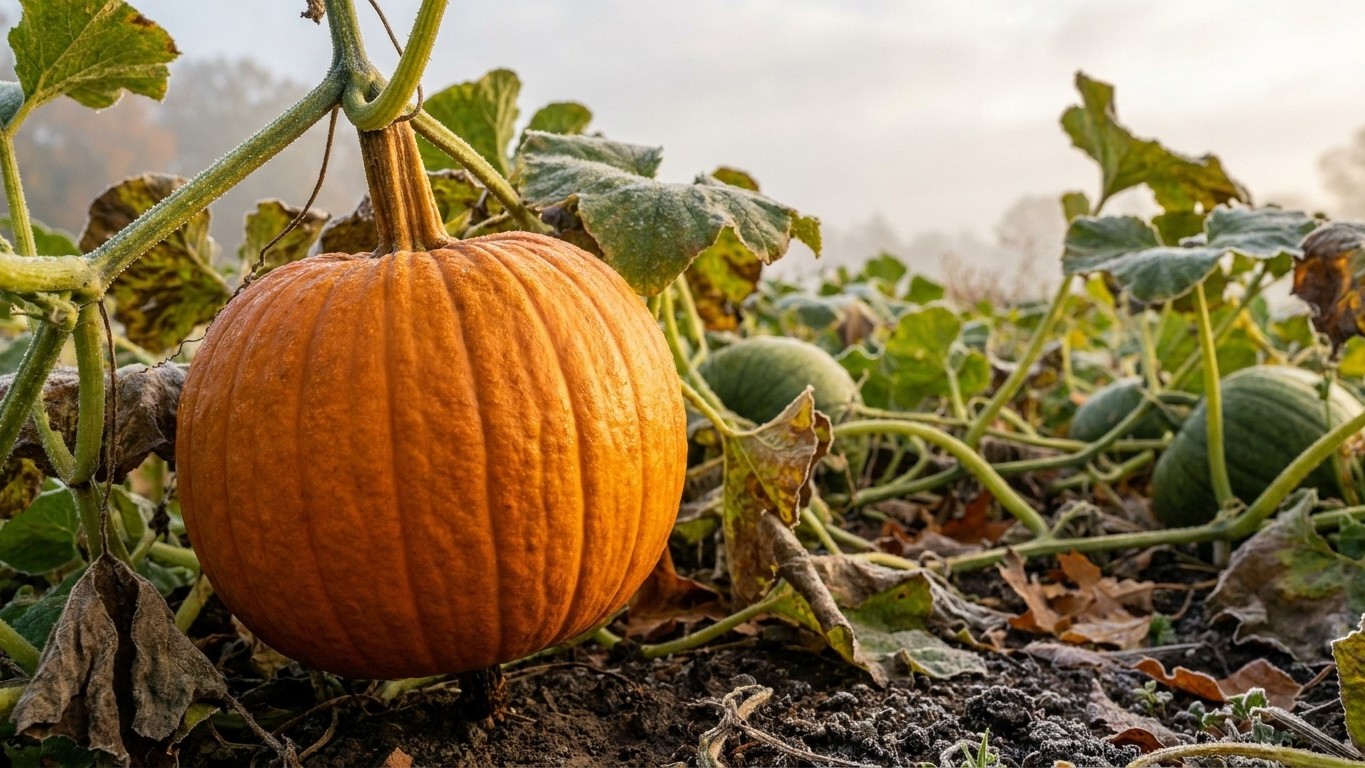

Nine pests documented for Arizona gardens actually feed on pumpkin: aphids, beet leafhopper, false chinch bug, grasshoppers, green fruit beetle, spider mites, squash bug, thrips, and whiteflies, according to the University of Arizona Cooperative Extension. None of them follow a frost calendar here. Because the low desert has no reliable fall freeze, the pest season stretches from the seedling stage clear through fruit ripening, with each species keyed to a plant growth stage rather than a month on the wall.
Which pests attack pumpkin in Arizona

The University of Arizona Cooperative Extension documents ten pests relevant to Arizona garden crops that a pumpkin grower needs to know about:
- Aphids
- Beet leafhopper (vector of curly top virus)
- False chinch bug (Nysius raphanus)
- Grasshoppers
- Green fruit beetle (Cotinis mutabilis)
- Spider mites
- Squash bug (Anasa tristis)
- Thrips
- Tomato hornworm (Manduca quinquemaculata)
- Whiteflies
One name on that list doesn’t belong in a pumpkin patch conversation. Tomato hornworm feeds on nightshades, tomato, pepper, eggplant, potato, and has no particular business on a cucurbit vine. A gardener who spots hornworm damage on squash leaves is looking at something else, because that caterpillar’s host preference sits in a completely different plant family. Nine of the ten are documented cucurbit feeders, and the tenth targets a plant family pumpkin doesn’t belong to.
Of those nine, the pressure isn’t spread evenly. Squash bug is the closest thing to a cucurbit specialist on the list, it rarely bothers with anything else once pumpkin or squash vines are available. Green fruit beetle narrows its interest even further, going after fruit that’s already ripening or damaged rather than foliage. The rest, aphids, whiteflies, thrips, and spider mites, are generalists that show up on plenty of garden crops but concentrate on cucurbits once the vines fill out and offer the tender growth they prefer. False chinch bug and grasshoppers tend to arrive from the edges, moving in from surrounding weeds or open ground rather than starting their life cycle on the pumpkin itself. Beet leafhopper matters less for the physical feeding it does and much more for what it carries, since it’s the vector for curly top virus rather than a pest that strips leaves on its own.
That’s a shorter list than some states carry for the same crop, and it’s worth saying plainly: the University of Arizona Cooperative Extension documents these nine for pumpkin here, not a longer roster borrowed from wetter or cooler regions.
When each one shows up, and what it does first
Arizona’s low desert doesn’t run on a frost calendar the way most garden guides assume. NOAA’s National Centers for Environmental Information lists a 365-day frost-free season for the region, and station records show freezing temperatures were reached in only 6 of the past 30 springs. That means the pumpkin calendar here runs on soil temperature and summer heat, not on a last-frost or first-frost date. Seed goes in once soil reaches 65°F, and from there, each pest tends to appear at a specific growth stage rather than a fixed month (see the sowing dates guide for what that soil threshold looks like locally).
At the seedling stage, aphids are usually first, clustering on tender new leaves within the first couple of weeks after emergence. False chinch bug tends to arrive in waves right around then too, often hitting hardest when nearby weedy hosts have already dried down and the bugs move onto whatever’s still green.
Once vines start running, grasshoppers chew ragged notches along leaf margins, spider mites show up as fine stippling and a bronzed or grayish cast on leaves during hot, dry stretches, and whiteflies begin building colonies on the undersides of leaves that thicken as the plant grows.
Flowering brings a new wave. Squash bug adults appear near the base of the plant and lay bronze-colored egg clusters on leaf undersides right around bloom time. Thrips rasp at young leaf tissue and work inside open blossoms. Beet leafhopper feeding around this stage is what can trigger the sudden yellowing and leaf curling that signals a curly top virus infection has taken hold.
The fruit stage runs on its own clock. Pumpkins take 45 to 55 days to mature after flowering, according to Utah State University Extension, and it’s in that final stretch, as fruit softens and takes on color, that green fruit beetle shows up, feeding directly on ripening or already-damaged fruit (more on that timing in the ripening guide).
Telling the damage apart from everything else
Not every yellow leaf or wilted vine means an insect. Arizona’s heat, uneven watering, and native soils all produce symptoms that can look enough like feeding damage to send a gardener chasing the wrong problem.
| Symptom | Could be this pest | Could also be | What tells them apart |
|---|---|---|---|
| Sudden yellowing, curling leaves | Beet leafhopper feeding (curly top virus) | Nitrogen deficiency | Virus symptoms usually start in one part of the vine and spread outward, deficiency yellows the whole plant more evenly |
| Fine stippling, bronze or gray leaves | Spider mites | Heat stress or water stress | Check leaf undersides for fine webbing, which stress alone doesn’t produce |
| Ragged holes, chewed leaf margins | Grasshoppers | Wind or hail damage | Mechanical damage tears tissue randomly, chewing leaves a cleaner scalloped edge |
| One vine wilting while others stay green | Squash bug feeding at the base | Uneven watering | Pull back mulch at the base and look for bugs or egg clusters before assuming it’s drought |
| Soft, sunken spots on ripening fruit | Green fruit beetle feeding | Blossom end issues or bruising | Beetle damage shows chew marks, often with beetles still nearby, rot from watering problems has no feeding marks |
A vine that wilts while staying green everywhere else usually points to feeding at the base, not thirst. When a symptom doesn’t cleanly match one column or the other, that’s the point to stop guessing and check with someone who can look at the actual leaf.
Quick field check
- Turn over three or four leaves near the base of the plant before assuming a wilting vine is a watering problem
- Look for webbing on stippled leaves, not just discoloration, before calling it mite damage
- Check ripening fruit for chew marks and live beetles rather than assuming soft spots are rot
What actually works here, and what is a waste of time
On a growing season this compressed, timing does more work than any single treatment. Row covers placed over seedlings block false chinch bug and early aphid colonization effectively, but the covers have to come off once flowers open, or there’s no pollinator access and the plant sets no fruit at all.
Clearing weedy growth near the garden before it dries down in the heat reduces the influx of both false chinch bug and beet leafhopper, since both move onto pumpkin vines once their preferred weedy hosts disappear. Handpicking squash bug egg clusters, the bronze-colored patches on leaf undersides, before they hatch is one of the few controls that reliably pays off once vines are already established, since a hatched cluster does a lot more damage than a hand can undo after the fact. Harvesting ripe fruit promptly rather than leaving pumpkins in the field once they’ve colored up limits how much a green fruit beetle can feed on any single fruit (the ripening guide covers what that stage looks like).
What wastes time: treating on a fixed schedule instead of at the growth stage when a given pest is actually active, and any treatment applied during flowering that also removes the pollinators the plant needs to set fruit in the first place. Deciding what’s labeled for use on cucurbits in Arizona, and when, isn’t something to guess at from a general list, since approved products and rates change and vary by situation. That call belongs to the county extension office, not a generic recommendation.
Where to check this for your own county
The nine pests listed above come from the University of Arizona Cooperative Extension at the state level. That’s not the same thing as knowing what’s active in one particular yard this season.
Pest pressure shifts from county to county, and even from one yard to the next, depending on nearby crops, weedy fields left unmanaged, and how hot a particular summer runs. A statewide list documents what’s been recorded across Arizona, not what’s guaranteed to show up in any single garden. The University of Arizona Cooperative Extension keeps offices in each county, and that’s the right first call for a photo-based identification or a confirmation before treating anything at all. It’s also where questions about what’s currently labeled for cucurbits in Arizona get sorted out properly.
Before deciding what’s chewing on a patch of vines, check the growth stage against the calendar above first. If the timing or the symptom doesn’t line up cleanly, the next step is a call or a photo to the county office, not another guess from a general list. For the broader planting and care picture, the Arizona pumpkin growing guide covers what comes before pest pressure even starts.
Common questions
Do pumpkin vines in Arizona need frost protection?
In most of the low desert, no. NOAA’s climate normals list a 365-day frost-free season for the region, and station records show 32°F was reached in only 6 of the past 30 springs. Higher elevations, like Flagstaff and the surrounding high country, are a different climate entirely and do freeze hard, so this doesn’t apply there.
Which pest causes the most damage to the fruit itself, not just the leaves?
Green fruit beetle. It feeds directly on ripening or already-damaged fruit, unlike most of the other documented species, which work on foliage or transmit disease.
Can curly top virus be treated once a plant shows symptoms?
No. Once a pumpkin plant shows the yellowing and curling tied to curly top virus, there’s no treatment for the infected plant. Managing the beet leafhopper, the vector the University of Arizona Cooperative Extension documents for this virus, before symptoms appear is the only real lever.
How long after a flower opens is a pumpkin ready to pick?
45 to 55 days, according to Utah State University Extension, counted from when the flower opens rather than from seeding. Harvest with the stem attached, before any frost, though in most of Arizona’s low desert that frost concern rarely applies.