
There isn’t a fall frost date to count back from in most of Arizona. NOAA’s 30-year climate record shows a nearby low-desert station logged 32°F in only 6 of the last 30 springs, and lists the frost-free season at a full 365 days. That single fact rewrites the usual pumpkin calendar. Instead of dodging frost, growers here time flowering around summer heat, using the 45-to-55-day window after bloom and a 65°F soil check to decide when seed goes into the ground.
The short answer
Start with what the record actually says. Data from NOAA NCEI’s 1991-2020 Climate Normals, cross-checked against daily records at station USW00023183, shows no reliable fall freeze at all in the low desert. Six springs out of thirty touched 32°F; the rest didn’t come close. NOAA’s own frost-free season figure for that station runs 365 days. For a crop that’s usually planned around dodging a frost date, that’s a strange starting point, and it means the standard math doesn’t work the way it does almost everywhere else.
Utah State University Extension’s rule for pumpkins is that a fruit needs 45 to 55 days after the flower opens, not after the seed goes in the ground, to reach a ripe, storable state. In a climate with a real fall freeze, you’d count backward from that date to find the last safe day for a flower to open. In the low desert, there’s no fall freeze reliable enough to count back from. So the backward math that works in most of the country simply doesn’t apply here.
What replaces it is heat. Flowers don’t set fruit reliably once summer temperatures climb into their harshest stretch, and that stretch, not frost, is what boxes in the flowering window in low-desert Arizona. The practical question isn’t “how late can a flower open before frost,” it’s “when does it cool off enough for a flower to open and hold at all.” That shifts the whole planning exercise from a frost calendar to a heat calendar, and it’s the reason blanket planting dates pulled from frost-based charts don’t hold up here.
Flagstaff and the Arizona high country play by an entirely different rulebook. That terrain sits at elevation, sees real winter cold, and does freeze hard most years. The frost data above comes from a low-desert station and doesn’t describe that climate at all.
| Region | Fall frost data (NOAA NCEI, station USW00023183) | Main limiting factor |
|---|---|---|
| Low desert (this page’s station) | No reliable fall freeze; 32°F reached in only 6 of 30 springs | Summer heat halting flowering, not frost |
| Flagstaff and high country | Not published on this page; different climate zone | Hard freezes on a true frost calendar |
When to sow here
Without a frost date to work from, the sequence for the low desert runs off soil temperature and the summer heat window instead. Here’s the order of decisions, in words rather than a single date, since a single date can’t honestly cover this climate.
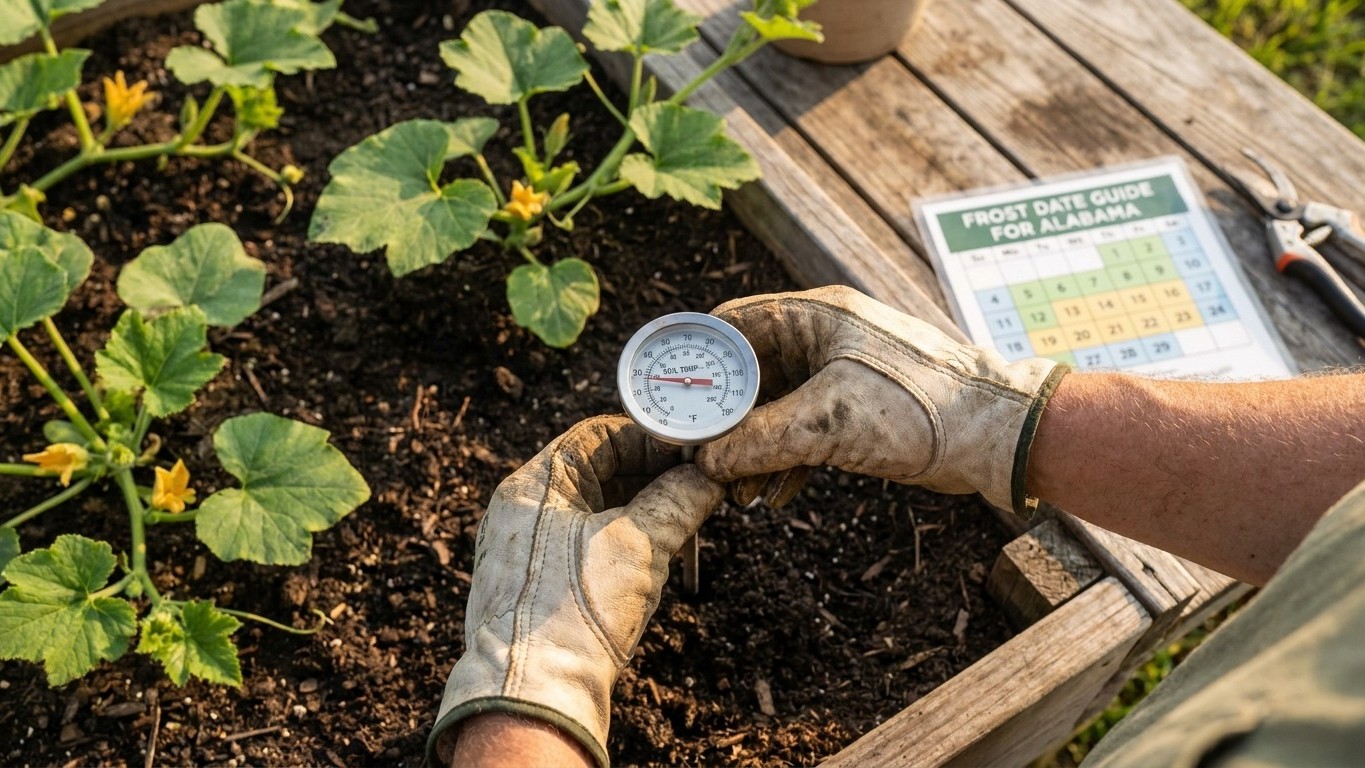
- Confirm soil temperature, not air temperature. Utah State University Extension’s guidance is that pumpkin seed goes in once soil reaches 65°F. Soil lags air by weeks, so treat 65°F soil as its own checkpoint, never as a stand-in for a frost date. In this climate, any lingering winter chill (the rare cold snap that can bring 32°F between late December and mid-January) is long gone by the time topsoil actually holds 65°F.
- Use row covers if you want to push earlier. Covering the row can buy roughly two weeks over waiting on bare soil to warm naturally. That’s a real but modest cushion, not a way to skip the soil check altogether.
- Work backward from the 45-to-55-day flowering clock. Once soil is ready and seed is in, count on flowers appearing some weeks later, then add 45 to 55 days from that first flower, not from sowing, to estimate a ripe fruit.
- Aim flowering away from the harshest stretch of summer heat. Since frost isn’t the constraint here, the goal is landing bloom and fruit set in a milder stretch of the season rather than the peak of it, so the 45-to-55-day clock has enough workable weather to run its course.
- Treat Flagstaff and the high country separately. That elevation climate does freeze hard, and a plan built on low-desert soil and heat data won’t transfer. This page doesn’t carry sourced frost figures for that zone.
What goes wrong here
Most of the failures below trace back to the same root cause: sowing on a frost-based schedule borrowed from somewhere else, in a climate where frost isn’t the thing to plan around.
- A late flower that never colors. If bloom opens too close to a stretch of extreme heat or too late in the cooling season, the fruit doesn’t get the full 45 to 55 days it needs before growing conditions turn unworkable. Remedy: track soil temperature and bloom timing directly rather than assuming a calendar date, and be ready to accept that a very late flower simply won’t finish.
- A fruit caught by an unexpected cold snap. Even though a fall freeze isn’t reliable here, the rare cold snap that brings 32°F between late December and mid-January can still catch a fruit that’s running behind schedule. Remedy: harvest with the stem attached once color and rind hardness are there, rather than leaving fruit on the vine hoping for a few more days.
- A vine that dies back before the skin hardens. Vines under sustained heat stress can collapse well before a fruit’s rind has toughened enough for storage. Remedy: keep soil moisture consistent through the hottest stretch of the season and avoid pushing sowing dates into the peak of summer.
- Pest pressure compounding a tight window. Squash bugs and cucumber beetles can weaken a vine at exactly the moment it needs to finish a fruit on schedule; both already have dedicated Arizona pages on this site covering identification and control, worth checking alongside your sowing plan.
Common questions
Does Arizona ever get a real fall frost for pumpkin planning?
In the low desert, rarely. NOAA NCEI’s 1991-2020 Climate Normals for station USW00023183 show 32°F reached in only 6 of the last 30 springs, and the station’s frost-free season is listed at 365 days. That’s why a frost-based planting calendar doesn’t hold up in this part of the state.
If frost isn’t the risk, why do pumpkin failures still happen here?
Because summer heat, not frost, is what stops flowers from setting fruit reliably. A vine can survive the season and still fail to produce a ripe pumpkin if flowering lands in the hottest stretch instead of a milder one.
What does the 65°F soil check actually tell me?
It tells you the ground has warmed enough for pumpkin seed, according to Utah State University Extension. It says nothing about frost risk on either end of the season, and the two shouldn’t be treated as the same signal.
Is Flagstaff on the same schedule as Phoenix and the low desert?
No. Flagstaff and the Arizona high country sit at elevation and do freeze hard in most years, which is a different growing climate than the low desert. The frost data in this article is specific to a low-desert station and doesn’t describe conditions at elevation.