
In most of Arizona, winter squash planting has nothing to do with frost dates at all. Phoenix and the surrounding low desert barely freeze, so the calendar that works everywhere else in the country doesn’t apply here. What actually decides when you plant, and whether the vines survive to set fruit, is summer heat and a monsoon rain pattern that arrives late and unevenly. Get the timing wrong and the plant collapses in July, frost or no frost.
When the soil is warm enough in Arizona

Ask when the soil is warm enough in Phoenix and the honest answer is: almost always. NOAA’s 1991-2020 climate normals for station USW00023183, the Phoenix reference station, list the frost-free season at 365 days. Over 30 recorded springs, the temperature dropped to 32°F in only six of them, and when it did, it landed somewhere between late December and mid-January, well before most gardeners even think about squash. That is not a planting calendar. It is a rare cold snap that a gardener in the low desert can mostly ignore.
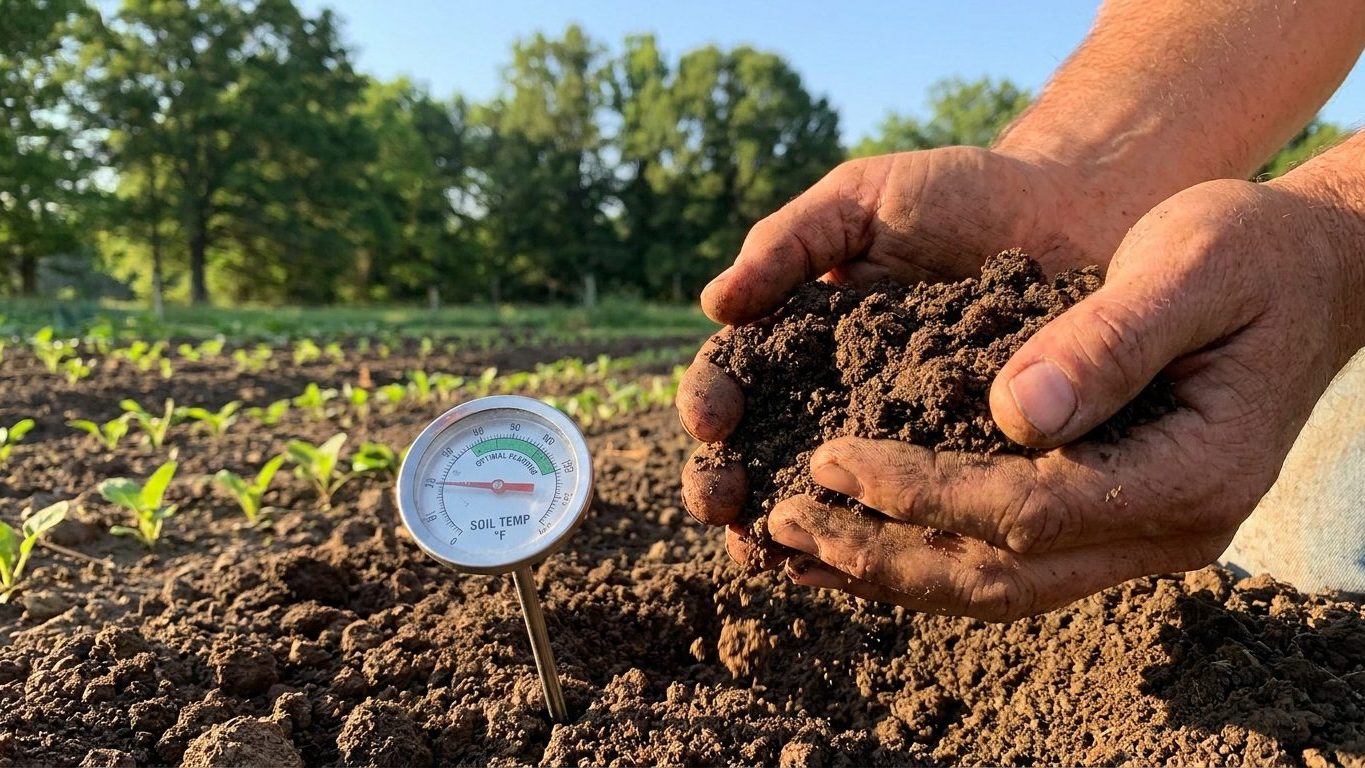
A frost date is normally used as a proxy for something else: soil temperature warm enough for squash seed to germinate without rotting. In most of the country, the two track closely, so gardeners plant a couple weeks after the last frost and the soil has caught up by then. In the Phoenix area, that proxy breaks down completely, because there is effectively no frost to track against. Soil in the low desert warms into planting range by mid-spring regardless, and the real question shifts from “has it stopped freezing” to “has it gotten dangerously hot yet.”
That distinction matters because Arizona is not one climate. The USDA Plant Hardiness Zone Map, built on average annual extreme minimum temperature, places the state across a startling range, from 4b up to 10b. Phoenix sits at the warm end of that range and functions as the reference city for the low-desert reasoning above. Flagstaff and the high country sit at the cold end, and they do freeze hard, on a schedule closer to a mountain climate than a desert one. A planting calendar built for Phoenix would fail a Flagstaff garden by months, and the reverse is just as true.
None of this means timing doesn’t matter in the low desert. It means the constraint has moved. Instead of watching for a last frost that may never come, low-desert gardeners are really watching for the point where daytime highs start climbing past the range squash can tolerate for pollination and fruit set, a topic the next two sections deal with directly. For a planting calendar built to your zip code, and for the varieties actually trialled in Arizona conditions, the University of Arizona Cooperative Extension keeps that guidance, split by county and elevation, because a single statewide date would be misleading for a state this varied.
How long the season lasts here
Normally this section does simple subtraction: fall frost date minus spring frost date equals the growing window. Arizona’s low desert breaks that math, because NOAA’s normals give no reliable frost date in either direction for the Phoenix reference station. Subtracting one absence from another produces nothing useful. What the station data actually says is that the low desert has, in effect, a 365-day frost-free season on paper. On the ground, that is not the same thing as a 365-day squash season.
Winter squash still can’t be grown continuously through a Phoenix summer, because the plant stops functioning well before any frost would touch it. High daytime temperatures shut down pollen viability and fruit set for a stretch of the hottest months, effectively splitting the frost-free year into two usable windows: an earlier spring planting that needs to size up and set fruit before the worst heat arrives, and a second window later in the season once temperatures ease enough for the plant to resume setting fruit and finish maturing before any autumn cool snap. That second window is why a lot of desert gardeners treat this as a two-shot season rather than one long uninterrupted grow.
That structure changes the transplanting calculation too. Where a genuinely long frost-free window exists, direct-sown squash and transplants both have room to recover from setbacks, and a second sowing is a low-risk hedge if the first one struggles. In a heat-split season like the low desert’s, timing the transplant to avoid root disturbance right as temperatures spike becomes more important, because a stressed root system has far less buffer before the heat window closes it out. High-country gardeners, working with an actual hard frost on both ends, face the opposite math: a shorter, single window where the first sowing usually has to be the only one.
Either way, the general logic of staggering plantings to spread risk and harvest still applies, just fitted to whichever window structure a given part of the state has. The site’s succession sowing guide walks through how to time a second planting once you know your own frost or heat window.
Heat and water in Arizona

The number that actually governs a Phoenix-area squash season is 168.9, the mean count of days per year reaching 90°F or higher at the Phoenix reference station, per NOAA’s 1991-2020 normals. That is close to half the calendar year spent at or above a temperature that stresses vining crops, shuts down pollen viability during the hottest stretch, and pulls moisture out of both plants and soil at a rate few other states have to plan around. For winter squash specifically, whose fruit needs to mature fully and cure before it goes into storage, that heat load is the real constraint, not frost. An immature squash won’t cure properly regardless of the reason it stopped growing, and in Arizona the far more common reason is heat stress, not an early fall freeze.
Rainfall does little to offset that. NOAA’s monthly normals for the same station put summer rainfall, June through August combined, at about 1.9 inches, against 7.2 inches for the full year. June is the driest month of the entire year at just 0.02 inches, essentially nothing. July and August pick up slightly with the monsoon, 0.91 and 0.93 inches respectively, but that rain tends to arrive as short, intense thunderstorms rather than steady soaking rain, which means a good share of it runs off rather than reaching the root zone. Combined with 168.9 days of 90-plus heat driving evaporation, that rainfall pattern makes irrigation the deciding factor in whether fruit fills out at all, not an optional supplement to it.
This is squarely a hot, dry-summer territory, and the gardening response follows from that: consistent, deep irrigation carries the fruit through its filling period, and mulching to hold soil moisture matters more here than almost anywhere else in the country. That is a different problem than the one facing cooler, damper territories, where the risk runs the other way, toward powdery mildew, slow ripening, and rot from excess moisture rather than heat stress. Arizona gardeners, particularly in the low desert, are managing scarcity and heat load, not the mildew and slow-ripening problems that dominate discussions of Winter Squash in wetter regions.
Which winter squash suit Arizona
None of this points to a specific variety, and it shouldn’t. What Arizona’s own numbers point to is a type of squash suited to the constraint that actually applies where a given gardener lives, which is not the same constraint statewide. In the low desert, where 168.9 days a year top 90°F and summer rain barely wets the topsoil, the priority is a type that tolerates heat stress through the fruit-set period and benefits from airflow and some afternoon shade at the root zone to keep soil temperatures from climbing further. In the high country, where hardiness zones run as cold as 4b and a real frost bookends the season on both ends, the priority flips to the earliest-maturing types, since there simply isn’t a long window to work with.
Monsoon humidity during July and August adds a third factor worth weighing for anyone gardening at elevation where moisture lingers longer on foliage: disease resistance becomes the first filter to apply, ahead of size or storage qualities, because a plant that succumbs to fungal pressure during the wettest weeks never gets the chance to mature fruit regardless of how well it handles heat.
This page isn’t going to name a cultivar, and that’s a deliberate choice, not an oversight. Arizona spans hardiness zones from 4b to 10b, a range wide enough that a variety thriving in Flagstaff could fail outright in Phoenix, and the reverse. The trials that actually settle which named varieties perform well under Arizona’s heat load, water pattern, and elevation swings are run locally, not from a general gardening page. The University of Arizona Cooperative Extension publishes exactly that guidance by county, and it’s the only recommendation worth following, because it’s built on results from Arizona soil and Arizona summers rather than a national average that doesn’t fit this state at all.