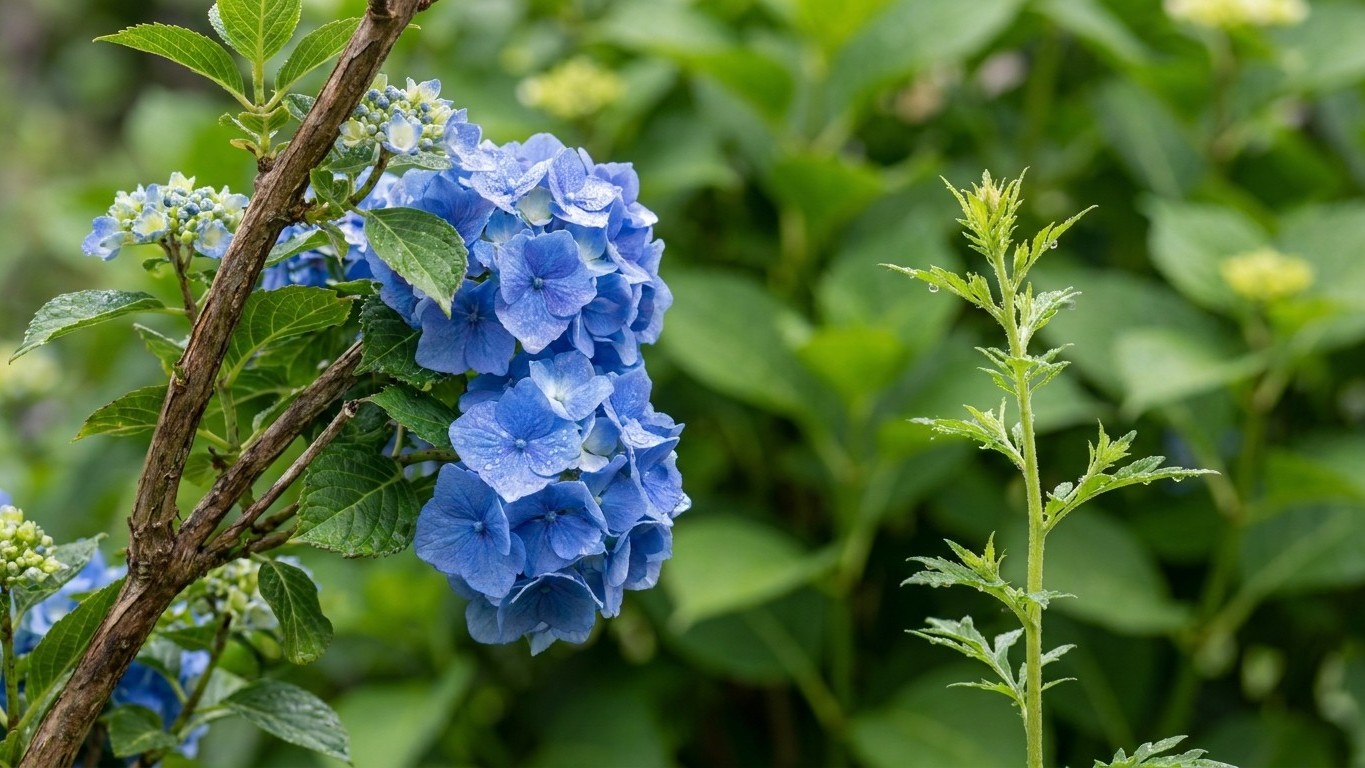

Nearly every hydrangea sold in Arkansas will live through the winter. The plants rarely die. What fails is the flowers. The state falls in USDA hardiness zones 6b to 8a, and bigleaf, oakleaf, smooth and panicle types all root-survive that range. The real question is which ones bloom after a warm February, a hard March freeze, or both.
What this comes down to in Arkansas

In Arkansas, the cold of January is seldom what ends a hydrangea’s season; a freeze after leaf-out is. At Little Rock, the reference city for these numbers, the last spring freeze falls between March 12 and March 28, and the first fall freeze between November 7 and November 20 (NOAA NCEI climate normals, 30-70% probability band).
The USDA Plant Hardiness Zone Map, which rates only the average annual extreme minimum temperature, puts the state in 6b to 8a. That is a range across the whole state, not a single zone, and it says nothing about how late a frost arrives. Hydrangeas sort by a different trait: whether next summer’s flowers ride on stems grown last year (“old wood”) or on stems that grow this spring (“new wood”). Old-wood bloomers carry their flower buds through the winter, so a December cold snap or a March freeze after the buds swell can erase a year of color. New-wood bloomers just regrow.
The cultivars below run from most exposed to least exposed. None of this comes from the state extension service; it follows from how each type sets buds.
Nikko Blue
An old-wood bigleaf, and the classic blue mophead. The plant survives Arkansas winters without trouble, but its buds sit exposed all winter. One March freeze after a warm spell can mean a summer of leaves and no flowers. Plant it only where you can shelter it.
Endless Summer
A reblooming bigleaf that flowers on both old and new wood. A killed set of buds hurts less, because new stems can still produce blooms later in summer. It is the safer bigleaf choice here, though the later flush is smaller.
Snow Queen
An oakleaf hydrangea with upright white flower cones and burgundy fall foliage. It blooms on old wood, but oakleafs tend to hold their buds more tightly through cold and break dormancy later than bigleafs. Native to the Southeast, the type is comfortable across most of Arkansas.
Annabelle
A smooth hydrangea with big white globes, blooming on new wood. Freeze it to the ground and it returns that spring and flowers anyway. Its weak spot is floppy stems under heavy blooms, not winter.
Incrediball
Also a smooth hydrangea and also a new-wood bloomer, bred for sturdier stems than Annabelle. Winter behavior is the same: dieback is cosmetic and flowering is protected.
Limelight
A panicle hydrangea whose lime-green cones age to pink. It flowers on new wood and breaks bud later than bigleafs, which helps it dodge the March freeze. Few hydrangeas are more dependable in a state with unpredictable springs.
Quick Fire
A panicle that colors earlier in the summer than most. Like Limelight, it sets flowers on new growth, so winter hardly touches the bloom. Its early start suits Arkansas’s long season.
Working it out for your own garden
You can predict how a cultivar will fare using three questions, and the method holds up after a move or in an odd weather year. First, which wood does it bloom on? Second, when does it leaf out where you live? Third, how far does that sit ahead of the last-frost window?
| Type | Blooms on | Effect of a hard spring freeze |
|---|---|---|
| Bigleaf (Nikko Blue) | Old wood | Buds can die; few or no flowers |
| Reblooming bigleaf (Endless Summer) | Old and new wood | Early flowers lost; later flush likely |
| Oakleaf (Snow Queen) | Old wood | Moderate risk; later bud break helps |
| Smooth (Annabelle, Incrediball) | New wood | Stems may die back; flowers unaffected |
| Panicle (Limelight, Quick Fire) | New wood | Minimal; late bud break |
Now the arithmetic, in words. Suppose a warm spell at the end of February wakes a Nikko Blue and the buds start swelling around February 26. The Little Rock last-freeze window opens March 12 and closes March 28. From February 26 to March 12 is two weeks, and to March 28 is a little over four. That means the plant sits exposed for roughly two to four weeks past its first push of growth. A bigleaf in that position is gambling every year.
Run the same check on Limelight. It does not push meaningful growth until later, and what it grows after a freeze is the stem that will carry the flowers anyway. A freeze in the window costs it a few leaf tips at most. That is the line: old-wood bloomers that wake early fall on the wrong side, and new-wood bloomers fall on the right side.
For fall, count backward the other way. The first freeze lands between November 7 and November 20, so any late feeding that pushes soft new growth in September or October gives a freeze something tender to hit. The NWS Little Rock light-frost dates, April 3 and October 31, matter more than the freeze dates for tender new growth, since a light frost already damages young leaves and buds.
To tell winter damage from something else, wait until the plant has leafed out, then scratch a stem with a thumbnail. Green underneath means alive. Brown and dry means dead wood to cut back (see When to Prune Hydrangeas in Arkansas for timing). Healthy shoots from the base on a plant with dead upper stems point to freeze dieback, not disease.
What changes across the state
Arkansas is not one climate, and the 6b to 8a hardiness range shows how much the winter minimum varies. Little Rock sits roughly in the middle. The Ozarks and the Boston Mountains in the northwest and north are higher and colder, and the hardiness numbers there sit at the cooler end of the range. Winters bite harder, buds stay dormant longer, and fall freezes can arrive ahead of the Little Rock dates. A bigleaf there is a bigger risk.
Move south and east toward the Delta and the southern part of the state, and winters soften. That brings its own trouble. Mild spells in midwinter coax old-wood bloomers out early, so the freeze that follows catches soft growth, even though the average minimum is gentler. Heat and summer dryness also weigh more on every hydrangea down there, and the case for oakleaf and panicle types gets stronger.
Local ground matters too. A planting on a low spot where cold air pools will lose buds that a bed on a slope, a few feet higher, keeps. A south-facing wall warms early and pushes growth ahead of the frost. An east or north exposure delays it, which is useful for bigleafs. Treat the Little Rock window as your baseline and adjust by what your own yard does.
The mistakes this state punishes

The costliest one is trusting a warm spell. Arkansas can sit in the 70s in late February and drop below freezing in mid-March. Gardeners pull mulch and winter covers during the warm week, the buds swell, and then the freeze lands. Leave protection in place until the window closes on March 28, and keep a frost cloth handy through the first days of April. The full routine is in Protecting Hydrangeas Through a Arkansas Winter.
Another is buying a bigleaf because the tag shows a pretty blue and a hardiness rating that fits the state. Zone ratings measure plant survival, not flower survival. If you want guaranteed blooms, lean on smooth and panicle types, with reblooming bigleafs as the compromise. If you love old-wood bigleafs, plant them near a wall and accept some off years.
Cutting back old-wood hydrangeas in fall or winter is a third. You remove the very stems that carry the buds, and the plant will not bloom that summer. Prune those after flowering. New-wood types can take a late-winter cut safely.
Last, late fertilizing. Feeding in early fall pushes growth that has no time to harden before November 7 to 20. Stop feeding well before then and let the plant slow down on its own.
Checking this against your county
A state figure is a starting point. Your county’s frost dates, soil, and elevation can all shift it. Call or visit your county office of the University of Arkansas Cooperative Extension Service for local frost guidance and what grows well near you. For general care beyond winter survival, the state guide to growing hydrangeas in Arkansas covers the rest.
Common questions
Will a hydrangea die if the winter is colder than normal?
Usually the plant survives, since the types sold here are rated for colder conditions than most of Arkansas sees. Expect lost flower buds on old-wood types and stem dieback on others, with regrowth from the base in spring.
Which hydrangea is the safest bet for guaranteed flowers?
A panicle such as Limelight or Quick Fire, or a smooth type such as Annabelle or Incrediball. All bloom on new wood, so a winter or spring freeze does not decide the flowers.
Why did my bigleaf leaf out but never bloom?
The likely cause is bud loss to a freeze, or pruning of last year’s stems. Scratch a stem to check the wood is alive, and hold off pruning old-wood types until after they flower.
Should I rely on the USDA zone number when buying?
Use it as a first filter, but remember it reflects only the average annual extreme minimum temperature. It will not tell you about a late March freeze. Add the frost window for your county, and choose by bloom wood.