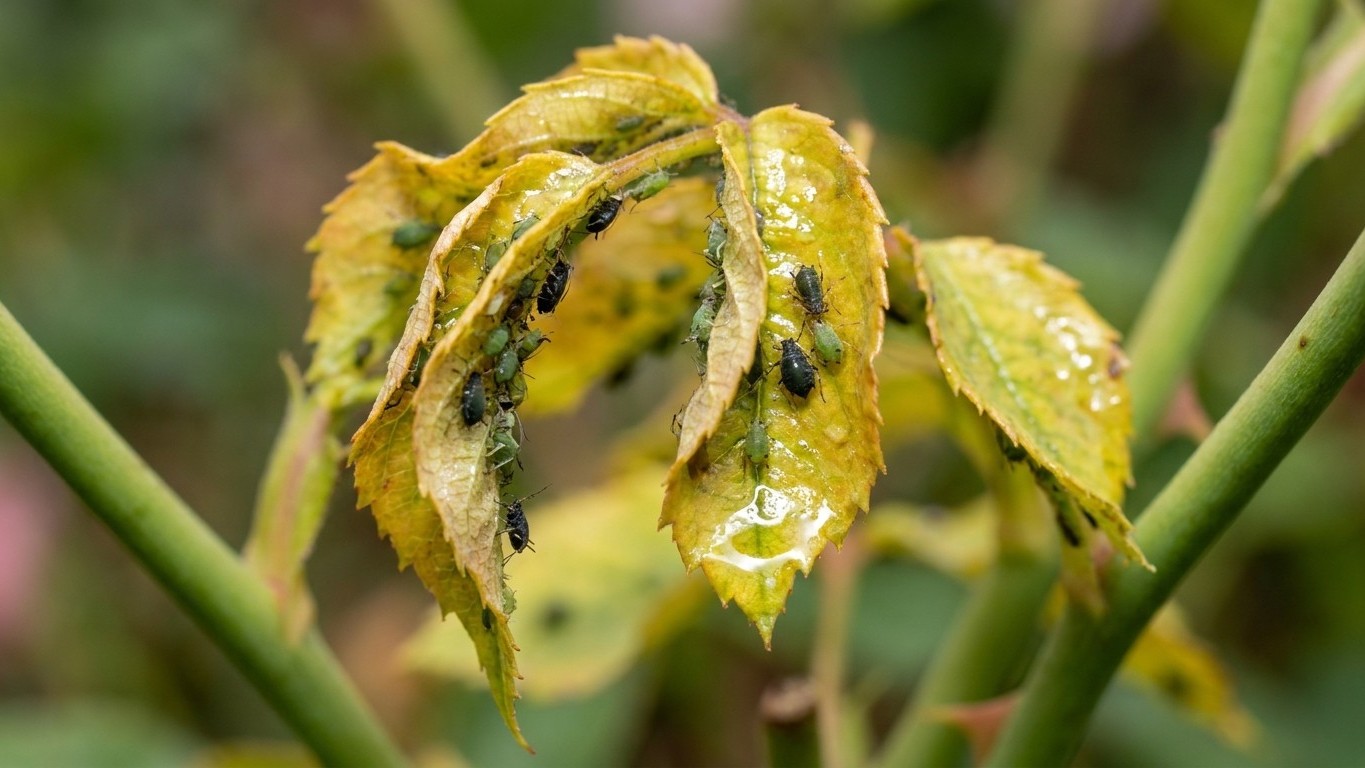

Aphids show up in Arkansas as early as late March in the southern Delta and stick around through October, with population spikes tied to two things: warm, humid stretches and the tender new growth on soybeans, cotton, roses, and garden vegetables that these tiny sap-suckers can’t resist. Stopping them comes down to acting early, before colonies explode, and leaning on natural predators before reaching for a spray bottle.
When Aphids Actually Show Up in Arkansas

Arkansas sits in USDA hardiness zones 6 through 8, which means mild winters in the southern half of the state let some aphid species overwinter as eggs on woody plants or even survive as adults in sheltered spots. By the time daytime temps hit the 60s, usually mid-to-late March in the Delta and closer to early April up in the Ozarks, the first generations are already feeding.
Reproduction is where things get out of hand fast. Most aphid species in Arkansas reproduce asexually through spring and summer, with females giving birth to live young without needing to mate. A single aphid can produce dozens of offspring in a week, and each of those offspring can start reproducing within days. That’s how a few aphids on a rose bud in April turn into a sticky, curled mess of leaves by May.
Peak pressure lands in two windows. The first runs from late April through June, when cool-season vegetables and ornamentals are putting out soft new growth. The second, often the more damaging one for row crop farmers, hits in July and August when soybean aphid and cotton aphid populations build on mature plants during the hottest, most humid stretch of the Arkansas summer. Activity tapers off once temperatures consistently top 95 degrees, since extreme heat actually knocks back aphid reproduction rates, then picks back up again in September as things cool.
Which Plants Get Hit Hardest in Arkansas
Not every aphid species targets the same plants, and knowing which one you’re dealing with helps narrow down the fix.
Soybean aphid is the one that keeps Arkansas row crop growers watching their fields closely. Arkansas ranks among the top ten soybean-producing states in the country, and this pest can cause yield losses when populations go unchecked during the reproductive stages of the plant. Cotton aphid (also called melon aphid) causes similar headaches in the cotton and cucurbit fields scattered across eastern Arkansas.
Home gardeners in Arkansas deal mostly with green peach aphid and potato aphid on tomatoes, peppers, and brassicas, plus a steady stream of rose aphid on backyard rose bushes every spring. Crape myrtle, a staple of Arkansas landscaping from Fayetteville to El Dorado, hosts its own dedicated pest, the crapemyrtle aphid, which coats leaves in a sticky honeydew that later grows black sooty mold.
Yaupon holly, another common Arkansas landscape shrub, and crape myrtle are also two of the plants most likely to show ants trailing up and down the stems. Ants farm aphids for the sugary honeydew they excrete, and in exchange they’ll chase off ladybugs and other predators trying to eat the aphids. Seeing an ant highway on a plant stem is often the first visible clue that an aphid colony is already established higher up.
Garden Vegetables Versus Field Crops
The timeline differs depending on what’s growing. Spring greens like lettuce and spinach, planted in March across most of Arkansas, are vulnerable almost immediately after emergence. Tomatoes and peppers, typically transplanted after the last frost (mid-April in northern Arkansas, early April farther south), tend to see aphid pressure build through May and June as the plants put out new leaf growth. Field crops like soybeans face their real test later, once canopy closure creates the humid, sheltered microclimate aphids prefer.
What Actually Stops Aphids in an Arkansas Yard or Field
Aphid control works best as a layered approach rather than a single fix, and the order you try things in matters.
A strong blast of water from a garden hose, aimed at the undersides of leaves where aphids cluster, physically knocks colonies off the plant and kills a good percentage of them outright. This works well on roses, vegetable transplants, and smaller ornamentals, and it costs nothing. Doing this every two to three days for a week during the first sign of an infestation often stops things before they need any product at all.
Insecticidal soap and horticultural oil are the next step up, and they’re effective because they work on contact rather than through a systemic mode of action, which means they don’t linger in the plant tissue or harm pollinators visiting flowers later. Spraying in the early morning or evening, when beneficial insects are less active and temperatures are cooler, cuts down on plant stress and improves how well the product coats the aphids.
Neem oil offers similar contact control plus a mild repellent effect, though Arkansas’s humidity means it needs to dry fully between rain events to avoid fungal issues on the treated leaves. For row crop growers dealing with soybean aphid at damaging thresholds, the University of Arkansas System Division of Agriculture recommends scouting fields regularly during the reproductive growth stages and only treating with a labeled insecticide once populations cross an economic threshold, since spraying too early or unnecessarily can wipe out the natural predators already doing the work for free.
Letting Predators Do the Work
Ladybugs, lacewing larvae, and parasitic wasps are already present across Arkansas and can eat through an aphid colony faster than most home remedies. A single ladybug larva can eat dozens of aphids a day during its development. The problem is that broad-spectrum insecticides, even ones bought at a home improvement store for general “garden pest control,” kill these predators right alongside the aphids, which often leads to a worse rebound infestation two or three weeks later because the aphids reproduce faster than the predator population can recover.
Planting flowering herbs like dill, fennel, and yarrow near vegetable beds gives adult lacewings and hoverflies (whose larvae are aggressive aphid predators) a nectar source that keeps them sticking around the yard instead of moving on. This is a small landscaping choice that pays off across an entire growing season rather than a one-time fix.
Signs You’re Dealing With an Aphid Problem, Not Something Else
Curled or yellowing new leaves, a sticky film on leaves and the ground beneath a plant, and black sooty mold growing on that sticky residue are the three most reliable signs of an active aphid colony. Distorted growth on the newest leaves at the tip of a stem, rather than damage spread evenly across the whole plant, is a strong tell, since aphids concentrate on the softest, most nutrient-rich tissue.
Ant activity climbing a plant stem toward the top, as mentioned earlier, is often a faster visual clue than spotting the aphids themselves, since many species are pale green or yellow and blend into new growth until a colony is already sizable. Checking the undersides of the top three or four leaves on a plant once a week during Arkansas’s peak spring and midsummer windows catches most infestations before they cause visible damage to the whole plant.
One detail that surprises a lot of Arkansas gardeners: aphids can produce winged forms when a colony gets overcrowded or a host plant starts declining, and those winged aphids fly off to start new colonies elsewhere in the yard or field. That’s part of why an infestation that seemed contained to one rose bush can show up on a plant fifteen feet away within a couple weeks, without any obvious path connecting the two.
Related guides
- Aphids in Tennessee: When It Shows Up and What Stops It
- Aphids in British Columbia: When It Shows Up and What Stops It
- Aphids in Florida: When It Shows Up and What Stops It
- Squash vine borer in Arkansas
- Aphids in Alabama: When It Shows Up and What Stops It
- Aphids in Oregon: When It Shows Up and What Stops It