
British Columbia sits deep inside its frost window in December, so open, unprotected ground planting is limited across most of the province. Coastal areas rated Canadian zone 9a can still tuck in garlic and shallots where soil isn’t waterlogged or frozen, and cold frames keep hardy greens going. Everywhere else, this is a bare-root, dormant-planting, plan-ahead month.
What goes in the ground in December

The calendar says December, but the soil and the frost record are what actually decide this. Environment and Climate Change Canada’s normals for Vancouver Int’l A put the average first fall frost at November 10 and the average last spring frost at March 18. That means December falls squarely inside the frost window, weeks past the first frost and more than three months from the last one. Soil temperatures on the coast rarely climb high enough this month to germinate anything warm-season, and in the BC Interior and the north, ground is often frozen solid.
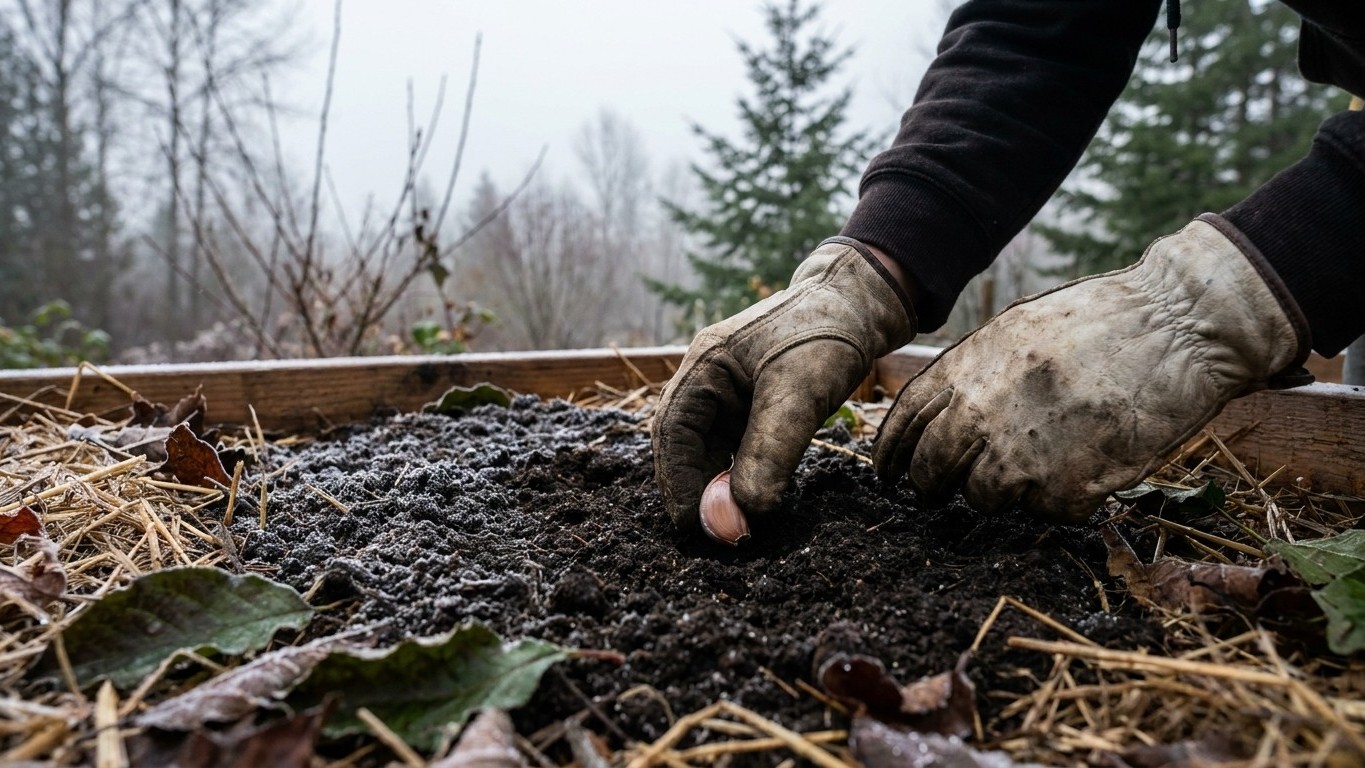
The honest answer for most of the province is that nothing new goes into open, unprotected ground this month. But that’s not the same as nothing happening in the garden. On the milder coastal strip, where the ground stays workable between rain events, garlic and shallots can still go in if you missed the usual fall window, pushed a few inches deep and mulched heavily against heaving. Bare-root fruit trees, roses, and dormant deciduous shrubs can also be planted on unfrozen coastal soil, since they’re not actively growing and won’t be stressed by cold snaps the way a leafy transplant would.
Cold frames and low tunnels extend the options a little further: hardy greens like spinach, mache, and claytonia can be sown or transplanted under cover, where the few extra degrees of protection matter more than the calendar date. Indoors, this is also a good month to force rhubarb crowns or chicory roots in a dark, cool space for an early, tender harvest that has nothing to do with outdoor soil conditions at all.
| Region | December ground planting | Best option instead |
|---|---|---|
| Coastal (zone 9a areas) | Garlic, shallots on unfrozen soil | Bare-root trees, cold frames |
| Interior valleys | Generally none, ground often frozen | Dormant pruning, planning |
| Northern BC | None | Indoor forcing, seed ordering |
What to start under cover
Counting backward from the March 18 average last frost is the only way this works, and it’s worth doing the math rather than trusting a fixed date on a seed packet. Onions and leeks grown from seed need roughly 10 to 12 weeks before they’re ready to go outside as transplants, which puts a December sowing on track for planting out in late February or March, right around when the frost risk starts to ease on the coast. That timeline only holds if the seedlings get enough light; a windowsill in the shortest days of the year rarely delivers it, so a grow light matters more here than in almost any other month.
Slower brassicas for very early spring transplanting, like cabbage or early cauliflower, can also go in under cover now if you’re working toward a coastal March or April planting date. In the Interior and the north, where the frost-free season is both shorter and later to start, the same December sowing risks producing plants that sit rootbound for weeks longer, waiting for ground that’s still too cold or too wet to receive them.
The two failure modes here are mirror images of each other. Start too early relative to your own frost window and you end up with leggy, rootbound seedlings competing for light before the ground is ready. Start too late and the transplants miss the narrow stretch of mild spring weather before summer heat or a late frost punishes them. December sowings should be reserved for crops with a long runway to transplant date, not anything meant for the garden within a month or two.
What is ready to pick
Outdoors, December harvests are thin across most of British Columbia, and that’s worth saying plainly rather than padding the list. On the coast, overwintered kale, leeks, parsnips, and some cold-hardy cabbage varieties can still be pulled from the ground, and a few nights of frost actually improve the flavor of parsnips and kale by converting starches to sugars. Brussels sprouts, if the stalks were left standing, often keep producing usable sprouts well into the month.
Cold frames extend this further, holding spinach, mache, and other hardy greens in edible condition even when the open beds have shut down. Indoors, sprouts and microgreens fill the gap for households wanting fresh, fast greens without depending on outdoor conditions at all, since they finish in a week or two regardless of what’s happening outside the window.
Stored crops need regular checking this month, not just at harvest. Squash should feel firm with no soft spots or mold at the stem end; potatoes should be checked for sprouting eyes and any green-tinged skin removed before use; onions and garlic in storage should be inspected for the papery, dry ones versus any that have gone soft or started to sprout, since one rotting onion in a bag can take down its neighbors within days.
The jobs that matter this month
Dormant pruning tops the list for fruit trees and cane fruit. Apples, pears, currants, and gooseberries can all be pruned while fully dormant and leafless, which makes the branch structure easy to see and reduces stress on the plant compared with pruning during active growth. This is not the month for stone fruit like cherries and plums, which are more vulnerable to disease entering through winter pruning wounds and are better handled in summer instead.
Seed ordering deserves attention now, before the popular varieties of tomatoes, peppers, and specialty greens sell out, which tends to happen earlier every season as more gardeners order online. Pairing that with a written rotation plan for next year’s beds, so nightshades and brassicas don’t land in the same soil two years running, is a task that takes an evening indoors and pays off for months.
Soil testing and amending can still happen wherever the ground isn’t frozen solid, and adding compost or aged manure now gives it the winter to integrate before spring planting. Turning the compost pile, even just once, keeps decomposition moving through the cold months instead of stalling out. Cleaning and sharpening pruners, loppers, and shovels prevents ragged cuts and blisters once the busy season starts, and repairing raised bed frames, cold frame glazing, or fencing now means those fixes aren’t competing with planting time later. Stored crops, again, need a periodic check for rot rather than a single inspection at harvest.
What not to do in December
A stretch of mild coastal weather in December can feel like spring, and that’s exactly when gardeners get tempted to set out tender starts or direct-sow warm-season seed. The March 18 average last frost is a midpoint, not a guarantee, which means in roughly half of all years the real last frost lands later than that date. Treat any December warm spell as temporary, not a signal to plant.
The same logic applies to uncovering cold frames or pulling back mulch after a few warm days. Cold snaps return through the winter in British Columbia, and plants that were hardened under protective cover can be damaged badly if that cover comes off too soon. Leave winter protection in place until the pattern of mild weather is sustained, not just a single warm afternoon.
Nitrogen fertilizer is another common misstep this month. Feeding nitrogen now pushes soft, leafy growth on anything still active in the garden, and that new growth has poor cold tolerance right when frost risk is still high. Hold off on nitrogen until active spring growth resumes closer to the last frost window. Finally, resist walking on or digging waterlogged winter soil, especially on the coast where December rainfall is heavy; working wet soil compacts it and can undo a season’s worth of structure-building compost work in a single afternoon.
Checking this against your own county
A single set of dates for British Columbia is a starting point, not an instruction, because the province holds enormous climate variation. The Vancouver Int’l A station reflects a mild coastal pocket rated Canadian hardiness zone 9a; the Interior and northern BC run weeks to months behind that, and elevation alone can shift a frost window significantly within a single valley. Before acting on any date in this article, check it against your own local pattern through the BC Ministry of Agriculture and Food’s extension resources, which cover regional growing conditions across the province in more detail than a single provincial average ever could.
Common questions
Can I still plant garlic in British Columbia in December?
On the milder coastal strip, yes, as long as the ground isn’t frozen or saturated. Plant cloves a few inches deep and mulch heavily, since a December planting is later than ideal and needs extra protection to establish before spring.
Is it too late to start seeds indoors in December?
Not for slow crops like onions and leeks, which need 10 to 12 weeks before transplanting and line up with a late-February or March planting date on the coast. It’s too early for tomatoes, peppers, and other fast-growing warm-season crops meant for planting after the last frost.
What can I still harvest in a British Columbia garden in December?
Overwintered kale, leeks, parsnips, and some hardy cabbage on the coast, plus anything held in a cold frame like spinach or mache. Everywhere else, expect little from the open garden and rely on stored crops and indoor sprouts or microgreens instead.
Why does British Columbia’s hardiness zone matter for December planting?
The reference zone of 9a for the coastal area uses the Canadian system, built on seven climate variables, not the single-variable USDA system used elsewhere in the US. It cannot be converted directly to a USDA zone, and it describes one reference city, not the whole province, so treat it as a general indicator rather than a precise match for your own garden.