
May sits weeks past the average last frost on the coast, so this is the month most Canadian gardening books hand to warm-season crops. But “average” is doing a lot of work in that sentence, and British Columbia’s actual planting window depends far more on soil temperature and where you garden in the province than on the date on the wall calendar.
What goes in the ground in May

The mean last spring frost for the reference station used on this site, Vancouver Int’l A, is March 18. That figure comes from Environment and Climate Change Canada’s 1981-2010 climate normals, and it is a mean, not a guarantee: in roughly half of all years, frost arrives after that date. By May, most low-elevation coastal gardens are safely clear of it, which is why this is the month direct-sowing and transplanting really open up.
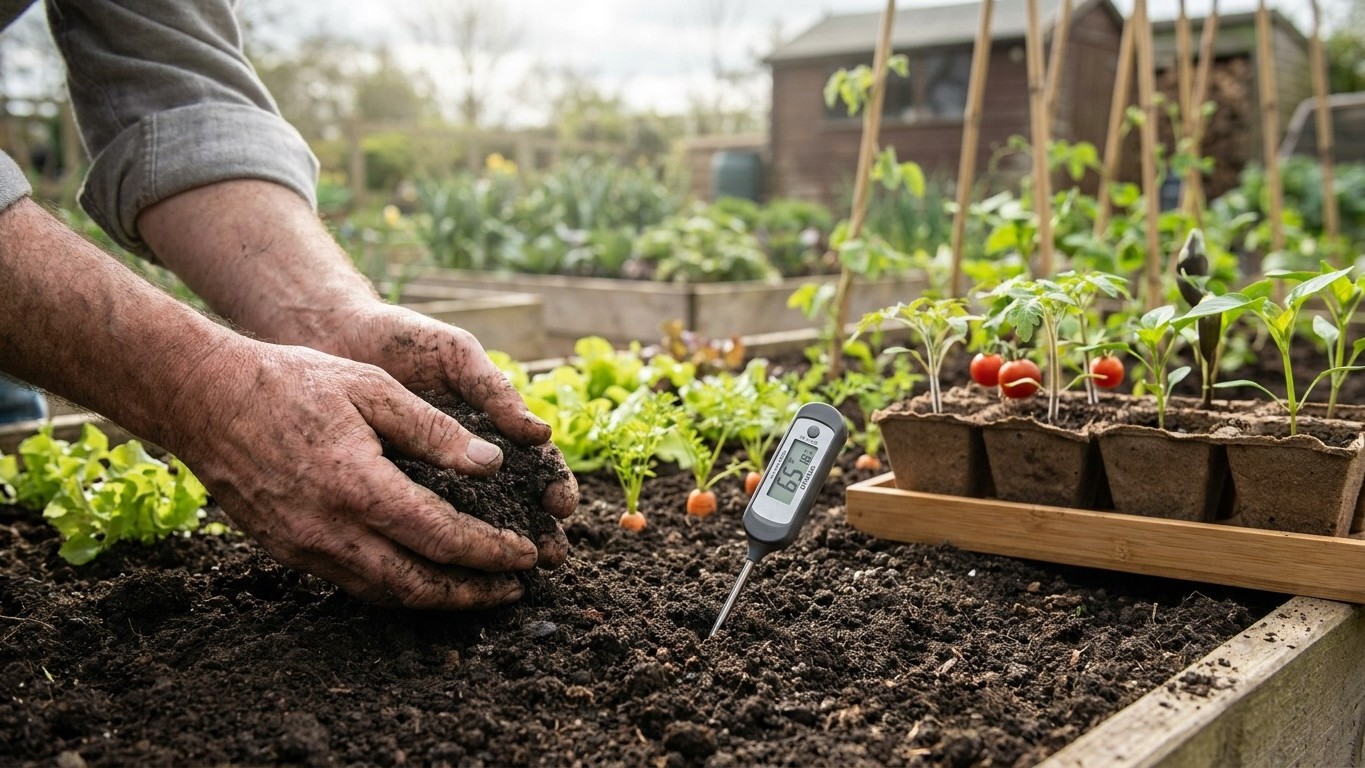
Soil temperature, not the calendar, decides what survives. Beans, corn, squash, cucumbers and melons all stall or rot in cold, wet soil even with the air feeling warm. Wait until the top few inches of soil are consistently warm to the touch before direct-sowing these. Potatoes can go in once the soil is workable and frost risk has dropped. Carrots, beets, lettuce, radishes and other hardy or semi-hardy crops tolerate cooler soil and can be direct-sown through the month without much drama.
Tomatoes, peppers and other tender transplants can go outdoors once the frost risk has genuinely passed in your specific garden, not just on the province-wide average. Because the March 18 figure is a midpoint, a cold pocket or an unusually late spring can still bring frost well into what looks like a safe month elsewhere. Keep row cover or cloches on hand for the first couple of weeks after transplanting.
Alliums such as onion and shallot sets, along with garlic that overwintered, continue to size up now. Peas sown earlier in spring should be climbing; a later succession sown early in the month often still has time to produce before summer heat turns the vines bitter. Brassica transplants (cabbage, broccoli, kale) started indoors earlier in spring move outside now, ideally hardened off over several days rather than set out cold.
What to start under cover
Counting backward from a frost window works better than counting forward from a seed packet date. If your garden’s realistic frost-free start falls somewhere close to the province-wide mean of March 18, plus whatever buffer your own site history suggests, then anything you start under cover in May is aimed at two different targets: filling gaps in the current season, and getting a head start on fall crops.
Warm-season crops like winter squash, melons, cucumbers and a second round of tomatoes can still be started indoors or in a cold frame early in the month for transplanting once nights stay reliably mild. Basil and other tender herbs do well started under cover now rather than direct-sown, since they sulk in cool soil.
The other target is fall harvest. Broccoli, cabbage, cauliflower and Brussels sprouts for autumn need to be started indoors in May so they’re ready to transplant in mid-to-late summer, giving them enough of the cool season ahead to mature before the first fall frost, on average November 10 at the reference station.
Two failure modes show up every year. Start too early and warm-season transplants get rootbound and leggy sitting in trays waiting for soil to warm, producing weaker plants than if you’d waited and direct-sown. Start fall brassicas too late in the month, and they run out of growing season before frost, never sizing up properly. Both mistakes trace back to the same habit: working from a date on a packet instead of the actual conditions in the garden.
What is ready to pick
Rhubarb and asparagus, both perennial and slow to establish, hit their stride in May in gardens where they’re already a few years old. Overwintered crops planted the previous fall, spinach, hardy lettuce, green onions and some kale, are often at their best now before longer days push them toward bolting. Perennial herbs like chives, sorrel and oregano are actively growing and ready for regular cutting.
Radishes sown early in spring are usually ready within a matter of weeks and should be pulled promptly; left in the ground too long in warming soil, they turn woody and hot. In milder coastal microclimates, the earliest strawberries may be starting to color up, though most of the crop is still ahead.
This is also the month to walk through winter storage and be honest about what’s declining. Squash, potatoes and onions held over from the previous fall should be checked for soft spots, sprouting or a sweetish smell that signals they’re turning. Use anything showing early signs before it spreads to the rest of the batch, and compost what’s gone too far. Clearing out the last of the winter store also frees up space and forces a useful inventory before next fall’s harvest starts filling it again.
The jobs that matter this month
Weeds and slugs both explode in May’s combination of warming soil and coastal rain, and neither waits for you to catch up. Scout beds every few days rather than weekly; a slug population that goes unchecked for two weeks can strip a bed of seedlings overnight, and weeds that go to seed once cost several seasons of cleanup after.
Mulching pays off disproportionately this month. Soil that’s been bare over winter loses moisture fast once temperatures climb, and a mulch layer applied now, once the soil has had a chance to warm slightly, holds that moisture and suppresses the first flush of weed seedlings before they establish. Wait until the soil has warmed rather than mulching over still-cold ground, which just traps the cold in.
Staking and support structures belong in the ground before plants need them, not after they’ve flopped. Peas, tomatoes and climbing beans all establish stronger, straighter growth when the support is already in place at transplanting or shortly after, rather than forced onto a sprawling plant later.
Watering rhythm matters more than volume. Frequent shallow watering trains roots to stay near the surface and makes plants more vulnerable to the first dry spell; deeper, less frequent watering encourages roots downward. Succession sowing of quick crops like lettuce, radish and salad greens, a new short row every couple of weeks, spreads harvest out instead of dumping the whole bed’s worth on you at once. Hardening off any remaining indoor-started transplants over several days before they go into open ground reduces transplant shock significantly compared to moving them straight from a windowsill.
What not to do in May
The classic mistake is planting warm-season crops, tomatoes, peppers, beans, squash, into soil that’s still cold because the air finally felt warm. Air temperature swings fast; soil temperature lags behind by days or weeks. A seed or transplant sitting in cold, wet soil doesn’t just grow slowly, it often rots outright before it has a chance to establish.
Uncovering plants too early after a mild stretch is the second common error. Because the mean last frost date of March 18 is a midpoint rather than a safe cutoff, roughly half of all years see frost after it, and a warm week in spring doesn’t cancel that risk. Keep row cover or cloches within reach through the month rather than putting them away at the first sign of sun.
Heavy nitrogen applications early in the month push soft, lush growth that’s exactly what slugs and aphids prefer to target, and that growth is more vulnerable to any late chill that does arrive. A balanced, modest feeding suits this stage better than a heavy nitrogen dose meant for midsummer growth.
Overwatering compounds the slug problem that’s already building in a wet coastal spring. Keeping soil surface slightly drier between waterings, and watering in the morning rather than evening, gives plants a chance to dry off before the slugs’ most active hours after dark.
Checking this against your own county
A province-wide frost date is a starting point, not an instruction. British Columbia stretches from mild coastal valleys to high interior plateaus and northern districts, and elevation, lake effect and simple latitude move real planting windows by weeks in either direction from the Vancouver Int’l A figures used here. The Canadian hardiness zone of 9a cited for the reference city applies to that location specifically, not to the province as a whole, and does not convert to a USDA zone.
For a window matched to your own district, check the BC Ministry of Agriculture and Food for regional guidance and the province’s own planting resources.
Common questions
Is it safe to plant tomatoes outdoors in British Columbia in May?
In most low-elevation coastal gardens, yes, since the mean last frost falls in March. But that March 18 date is a midpoint, not a guarantee, so keep row cover on hand for cooler nights, and hold off entirely in higher-elevation or interior sites where frost risk lingers longer.
What vegetables can still be direct-sown this late in spring?
Beans, corn, squash and cucumbers are typically direct-sown now once soil has warmed, alongside successive plantings of lettuce, radish, carrots and beets, which tolerate cooler soil better than warm-season crops.
Why are my seedlings getting leggy under cover?
Starting warm-season transplants too early relative to your local frost-free window leaves them sitting indoors too long, stretching for light and becoming rootbound before conditions outside are ready for them.
How do I know if stored potatoes or onions are still good?
Check for soft spots, sprouting or a sweetish off smell. Use questionable ones promptly and discard anything showing rot before it spreads through the rest of the stored batch.