
In frost-free parts of California, nearly any pepper variety can ripen given enough warm days, because the growing window barely closes. Inland and mountain areas run a shorter, hotter, sometimes frost-touched season, so variety choice there means picking types that set fruit before the heat shuts pollination down or a late cold snap wipes out young transplants.
The short answer

Start with the number that actually drives pepper failure in this state: the Los Angeles reference station logs an average of just 2.4 days a year at or above 90 F. That’s a strikingly low heat load compared to the Central Valley or the desert interior, and it matters because pepper flowers abort when daytime temperatures climb past that 90 F line for stretches during bloom. A coastal or Southern California garden with a heat load that light rarely loses a fruit set to heat stress. Move fifty miles inland, into the Valley or the foothills, and that number climbs fast, which is why the same pepper variety behaves completely differently depending on which side of the coastal range it’s planted.
The mechanism is simple once you see it: pollen viability in pepper flowers drops sharply above 90 F, so the plant sheds blossoms rather than waste energy on fruit that won’t fill out. A garden that rarely crosses that line, like most of coastal and Southern California, has one less thing to manage. A garden that crosses it often needs either shade cloth during the worst afternoons or a deliberate choice to get flowering finished before the hottest stretch of summer arrives.
Heat is only half of the equation, though, and it’s the half this site can actually document. Pepper fruit set fails at the other end too, when nights drop below 55 F, because cool night temperatures interfere with pollen the same way excess heat does. That threshold matters most in spring, when transplants are just starting to flower, and again in fall for anyone pushing a second flush of fruit. Here’s the catch: summer night minimums aren’t part of the climate data this site carries for any California location. Coastal fog can keep nights mild even when a valley twenty miles away runs cold, and elevation changes the picture again in the foothills and mountains. There’s no way to infer a safe number from latitude or from how cold the coldest winter month gets, so the only reliable move is to track actual overnight lows in your own yard, ideally with a simple min-max thermometer, before deciding whether spring bloom is happening in a safe window.
When to start seed here
Working out a start date for pepper seed here means running the calendar backward from the transplant date, and the arithmetic is the same whether the garden sits on the frost-free coast or up in the Sierra foothills where frost is a real event.
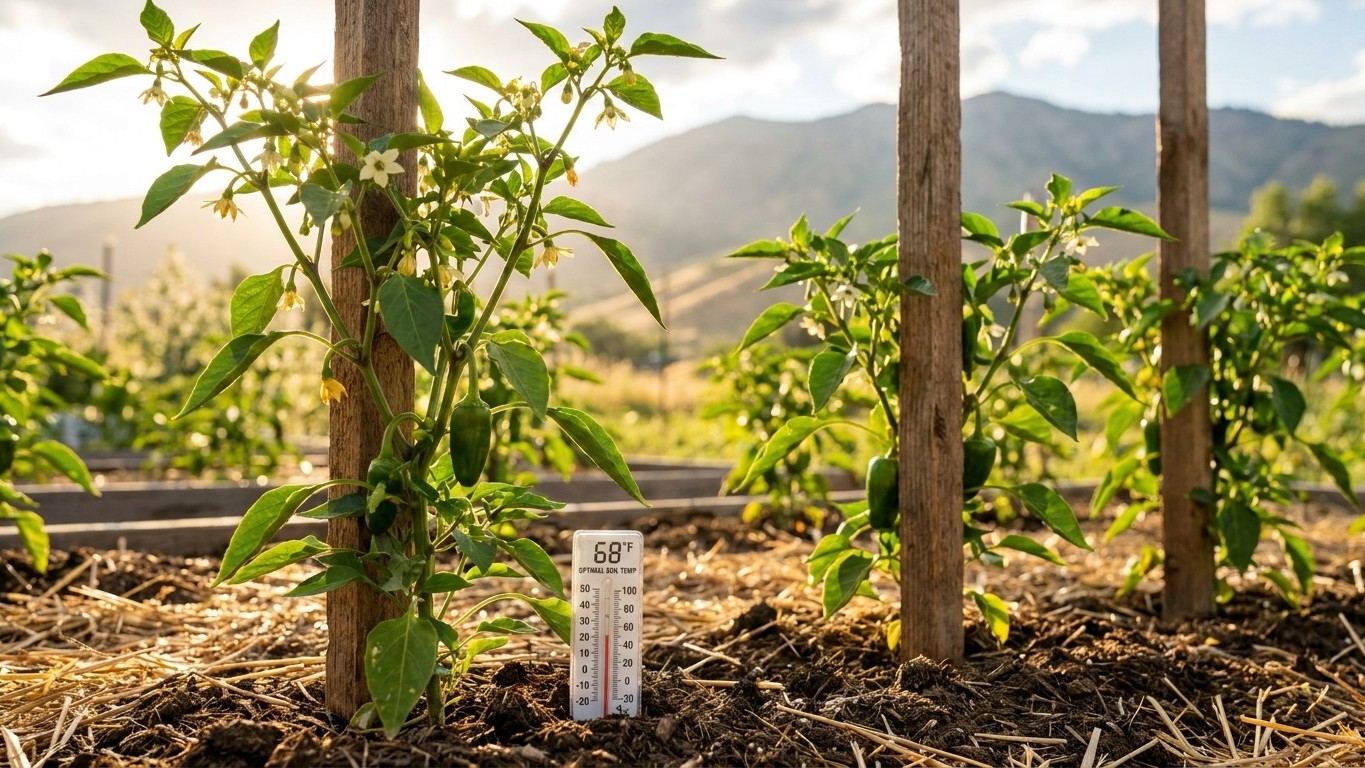
- Set the transplant condition first. Peppers go outside only after two things are both true: the danger of frost has passed, and soil temperature has reached 60 F. Soil temperature lags air temperature, sometimes by two or three weeks in spring, so a warm afternoon doesn’t mean the ground is ready. A basic soil thermometer pushed a few inches down at midmorning gives a far more honest answer than the calendar does.
- Check whether frost even applies. Along the coast and through Southern California, including the Los Angeles basin, freezing temperatures essentially don’t occur in an average year, according to 30 years of daily station records showing zero days at or below 32 F and a frost-free season listed at the full 365 days. For those gardens, the limiting factor is purely soil temperature reaching 60 F, not a frost date. Northern California, the Central Valley, and the Sierra are a different story entirely and do experience freezes, so gardeners there still need to identify their own last expected frost before doing this math.
- Count back 8 to 10 weeks. Pepper transplants need that much time indoors under lights or on a bright windowsill before they’re sturdy enough to go into the ground. If soil in a coastal yard typically hits 60 F by a given week, seed starting begins 8 to 10 weeks before that week, full stop. If a Valley or foothill garden’s last frost falls later, the same 8-to-10-week count applies from that frost date instead, and soil temperature still has to confirm 60 F before the move outside.
- Build in slack for a slow spring. A cool, wet stretch in early spring can delay soil warming by a week or two even in a frost-free zone, so starting seed on the early side of that 8-to-10-week window, rather than the late side, leaves room to wait if the ground isn’t there yet.
What goes wrong here
- Blossom drop during a heat spell. Once daytime temperatures push past 90 F during flowering, pepper plants routinely drop blossoms rather than set fruit. Where the local heat load runs low, like the Los Angeles area’s 2.4 days a year at or above 90 F, this is an occasional problem tied to isolated hot spells. Where summers run consistently hotter, the fix is shade cloth over plants during the peak of the afternoon and timing the earliest sowing so flowering happens before the hottest weeks arrive.
- Blossom drop from a cool night. The same failure shows up at the opposite temperature, when nights fall below 55 F during bloom. Because this site doesn’t track summer night minimums for any California location, and because coastal fog, elevation, and local topography all shift real nighttime lows in ways latitude can’t predict, the only remedy is watching your own garden’s overnight temperatures directly and delaying transplant, or protecting young plants, if a cold snap lines up with early flowering.
- Sunscald on exposed fruit. California’s clear skies and strong solar intensity, especially at elevation or in the desert interior, can scald pepper fruit that isn’t shielded by foliage, leaving pale, sunken patches on the side facing direct sun. Keeping plant canopy full through moderate, consistent watering, and avoiding overly aggressive pruning that opens up the fruit to bare sun, cuts this down substantially.
- Blossom-end rot from uneven watering. This shows up as a dark, sunken patch on the blossom end of the fruit and traces back to inconsistent soil moisture interrupting calcium uptake, not a soil calcium shortage in most cases. Drip irrigation on a steady schedule, plus a layer of mulch to buffer soil moisture swings between waterings, addresses the root cause more reliably than any additive poured on after the damage shows up.
Common questions
Do coastal California gardens ever need to worry about frost at all?
Along the coast and through Southern California, including the Los Angeles basin, thirty years of daily records show zero days at or below 32 F and a frost-free season listed at the full 365 days. Frost isn’t the constraint there; heat, drought, and water restrictions are the factors that actually shape the pepper season.
Does the Central Valley follow the same frost-free pattern?
No. Northern California, the Central Valley, and the Sierra do experience freezes, so gardeners in those regions need to work out their own local last-frost timing rather than apply the coastal pattern.
How do I know if my nights are staying above 55 F in spring?
There’s no published dataset here for summer night minimums by California location, and no safe way to guess it from latitude or from how cold winter gets in that spot. A simple min-max thermometer left outside overnight during the flowering period is the direct way to check.
Is 90 F the number that actually threatens fruit set, or is it just heat in general?
It’s specifically 90 F and above during flowering that interferes with pollen viability. The Los Angeles reference station averages only 2.4 such days a year, which is why fruit set failures tied to heat are far less common near the coast than they are in hotter inland districts.