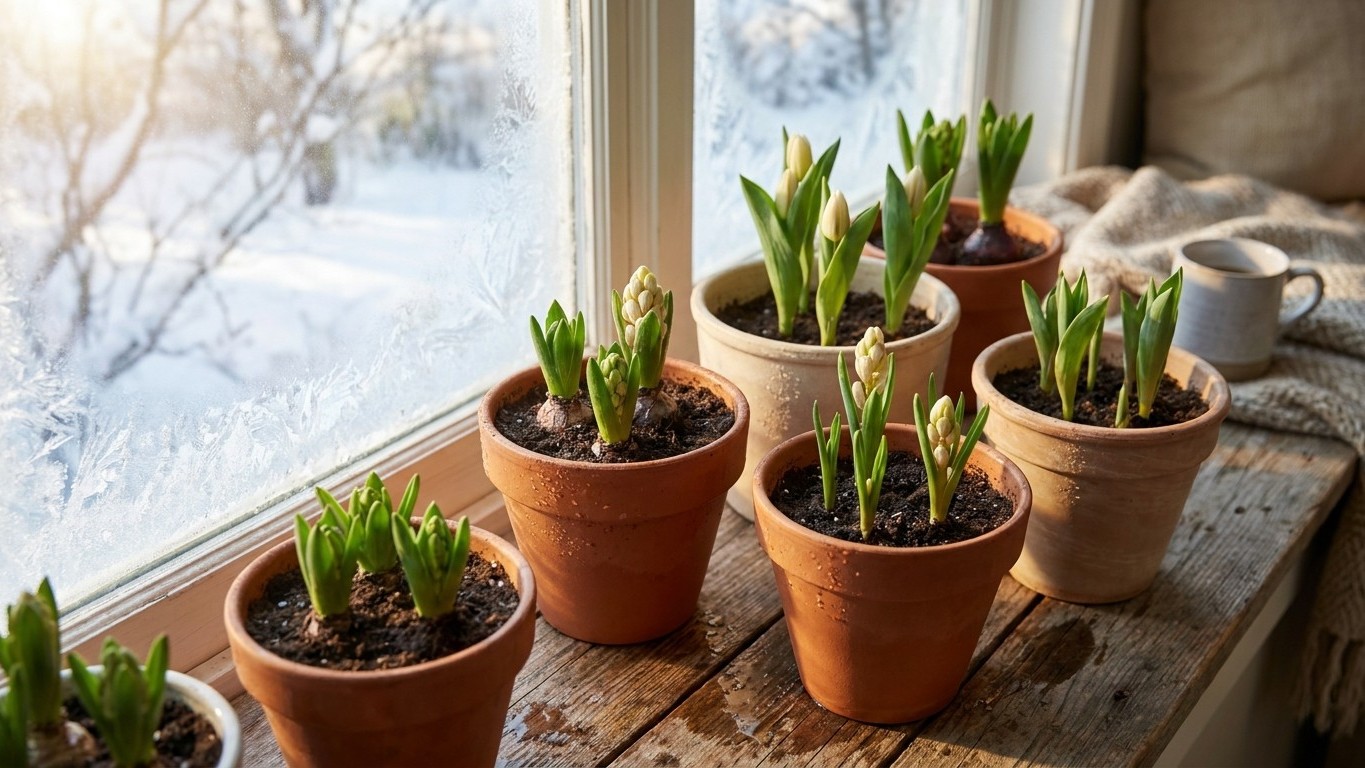

Denver’s coldest month averages an 18.4°F low overnight, according to NOAA’s 1991-2020 Climate Normals. That number answers the real question before you buy a single bulb: this state has cold to spare outdoors, so forcing indoors here isn’t about compensating for a mild winter. It’s about timing blooms for the house, and about protecting bulbs that end up in pots rather than the ground.
Why this matters in Colorado

Spring bulbs need twelve to fourteen weeks below 45°F before they’ll flower. In parts of the country where winter barely dips below 50°F, gardeners have to fake that cold in a refrigerator or the whole planting fails. Denver doesn’t have that problem. An 18.4°F average low in the coldest month means the ground itself delivers more chill than any tulip or crocus requires, and it does so for months, not weeks.
So why force bulbs indoors here at all? Mostly to control when they bloom, bringing hyacinths or paperwhites into flower in the dead of winter instead of waiting for the ground to thaw. That’s a choice, not a necessity forced by climate.
The real hazard in Colorado runs the other direction: Containers. A bulb bed in the ground freezes from the top down, with soil below the frost line staying insulated and stable. A pot has no such buffer. Cold reaches it from every side, and with the USDA Plant Hardiness Zone Map placing this state anywhere from zone 3b to 7b depending on elevation, a bulb that survives comfortably in a garden bed can freeze solid, roots and all, in a container left on a porch or patio.
That’s the situation this territory actually presents: not a shortage of cold, but an excess of it aimed at anything sitting above ground in a pot. A bulb rated hardy to zone 5 in your flower bed needs to be treated like it lives in zone 3 once it’s potted, because that’s effectively the exposure it’s getting. Gardeners who skip this distinction lose bulbs they assumed were tough enough, and the loss shows up as mush in spring, not as an obvious mistake in fall.
How to do it here
Forcing indoors is a sequence, and each step is something you can check yourself rather than take on faith.
- Choose bulbs suited to forcing. Smaller bulbs with shorter chill requirements handle the process better than large, slow ones.
- Pot them in early fall, in a container with drainage holes, using ordinary bulb or potting soil. Set the bulbs close together, tips just at the surface.
- Water thoroughly, then move the pot to a cold, dark location. An unheated but attached garage that stays above freezing works, since it protects roots from the kind of hard freeze that damages a bulb before it’s rooted. A refrigerator crisper drawer works too, as long as it’s kept away from ripening fruit; the ethylene gas that fruit gives off will kill the flower bud inside the bulb before it ever emerges.
- Track the weeks. Most spring bulbs need twelve to fourteen weeks of cold below 45°F before they’re ready to grow. Mark a calendar rather than guessing.
- Check for roots. Around the ten-week mark, tip the pot gently and look for white roots filling the container and a pale shoot pushing up from the bulb. That’s the signal the cold period has done its job.
- Bring the pot into low light first, a cool room out of direct sun, for a few days before moving it to a bright window. Jumping straight from a dark garage to a sunny sill shocks the plant.
- Water as the shoot grows, and expect flowers within two to four weeks of coming into full light.
For anyone tempted to skip the fridge and just leave a potted bulb outside all winter, the container has to be rated at least two USDA zones hardier than the bulb itself needs. A tulip hardy to zone 5 in the ground needs a pot treated as zone 3 conditions unless it’s moved against a heated wall and buried in mulch up to the rim. That’s the practical fix when moving the pot indoors isn’t an option.
Which bulbs are worth it
Not every bulb rewards the extra effort of forcing. The ones that force reliably tend to share two traits: a shorter cold requirement and a stem short enough to stand up on its own once it blooms. The ones that sulk are usually asking for more chill than a home refrigerator schedule comfortably allows, or they grow tall enough to flop over in a lightweight indoor pot.
Bulbs that force reliably here
- Paperwhite narcissus (needs no cold period at all, making it the easiest starting point)
- Hyacinths
- Crocus
- Muscari (grape hyacinth)
- Dwarf iris
Bulbs that sulk
- Tall tulip varieties (top-heavy stems topple in indoor pots)
- Large trumpet daffodils (longer chill requirement, uneven results indoors)
- Amaryllis (a different plant type entirely; it needs no cold period, so it doesn’t belong in a forcing schedule built around chill)
One practical note worth keeping in mind: most forced bulbs are treated as a single-season purchase anyway, since the forcing process uses up energy the bulb would otherwise save for future years. If a bulb was never going to be planted out and expected to return, forcing costs nothing extra in the long run. It’s already a one-time display.
What goes wrong, and when you can still fix it
Leaves, but no flower
This means the cold period was cut short. The bulb has enough stored energy to push leaves, but the flower bud inside never finished developing because it didn’t get its full twelve to fourteen weeks below 45°F. There’s no fixing it this season. The bulb can be planted in the garden once the ground is workable, where it may recover over a year or two, but it won’t flower indoors this round.
A flower on a stem too short to see
This happens when the pot was moved into warmth and bright light too fast. The flower formed correctly during the cold period, but the stem never had time to elongate before blooming took over. Nothing to fix here either; the flower will still open, just low and tucked in the foliage. Next time, add a few extra days in low light before the bright window.
Rot in the pot
Soft, mushy bulbs with a sour smell mean water sat around the roots with nowhere to go. This is almost always a drainage failure, either no holes in the container or a saucer that held standing water during the cold storage period. This one can’t be saved. Discard the bulb and the soil, and check that any pot used for forcing next season has real drainage before a single bulb goes into it.