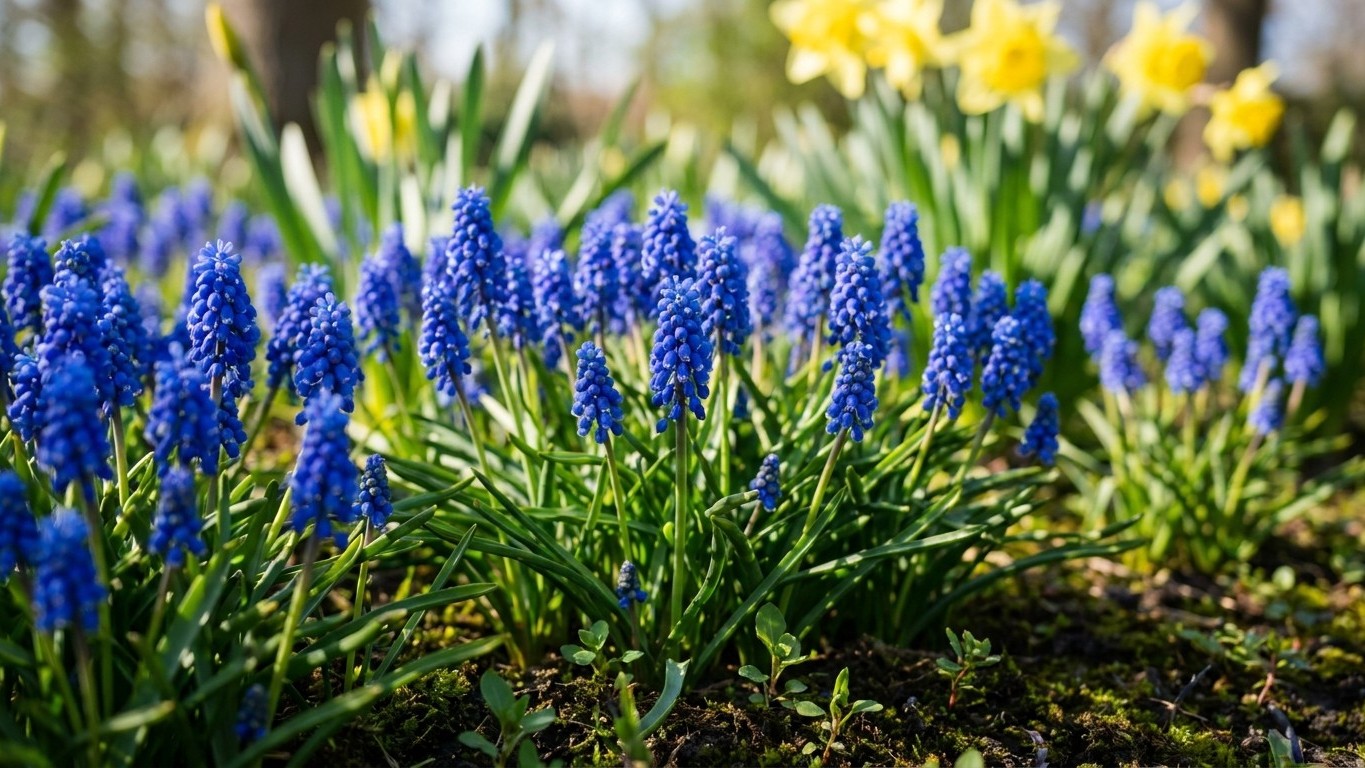

Grape hyacinth is one of the few spring bulbs where the number that matters most isn’t on the bag, it’s in the ground: 12 to 15 weeks of cold below 45°F, or the flower simply won’t show. Get that right, in USDA zones 4 through 8, and you get a low mat of blue spikes in mid spring that comes back for years.
What Grape Hyacinth actually is

Muscari, the botanical group behind the name grape hyacinth, is rated for USDA hardiness zones 4 through 8. Inside that range, the bulb still has one non-negotiable requirement: 12 to 15 weeks of temperatures below 45°F, according to research from Cornell University, Department of Horticulture, Flower Bulb Research Program. Fall short of that window and the bulb doesn’t necessarily die. It often just produces leaves and no flower, or a flower stem so short it hides under the foliage. A gardener sitting right at the edge of the range, say the warmer end of zone 8, isn’t guaranteed failure, but should expect an uncertain, sometimes disappointing bloom rather than a total no-show.
Bloom time lands in mid spring, which puts muscari after the earliest crocus and snowdrops but often overlapping with daffodils, so the blue spikes read as a low carpet under taller yellow trumpets rather than competing for the same moment. Color is a single note: blue, dense and saturated, in that tight cluster of tiny bells that gives the plant its grape-like look.
One habit trips up new growers every year. Muscari sends up leaves in autumn, and those leaves hold on all winter, green under snow, looking for all the world like something went wrong. It didn’t. That’s normal behavior for this bulb, not a sign of rot or a bad batch. The strappy foliage will still be there in spring when the flower spike finally pushes through, and it will keep growing after bloom before eventually going dormant for summer. The plant also spreads readily on its own, sometimes more readily than a bed was designed for, a trait worth knowing before the first bulb goes in the ground.
How deep and how far apart
The planting numbers for grape hyacinth are specific, not a range to eyeball:
- Depth: 3 to 4 inches
- Spacing: 3 inches apart
Depth does real work here. Sitting the bulb 3 to 4 inches down buffers it against the freeze-thaw cycles that otherwise heave small bulbs right out of the soil over a winter, a common failure point in regions where the ground thaws and refreezes repeatedly rather than staying frozen straight through. Shallow planting is one of the more common, and more avoidable, reasons a bulb bed thins out by its second year.
Spacing decides the look, not just the survival. At 3 inches apart, muscari reads as a dense drift, the effect most people picture when they think of grape hyacinth massed under a tree or edging a bed. Space them wider and the same bulb count reads as scattered dots instead of a carpet, since this is a small-scale plant that depends on density for visual impact.
Orientation matters, though muscari bulbs are forgiving. The pointed end faces up, the flatter, slightly rougher end with visible root scars faces down. When a bulb is rounded enough that the ends aren’t obvious, plant it on its side. The shoot finds its way up regardless, so a sideways bulb isn’t a wasted one, it just isn’t the ideal placement to aim for on purpose.
Will it come back next year
Grape hyacinth isn’t a one-season bulb dressed up as a perennial. Given its cold requirement is met, it comes back reliably and multiplies, spreading readily enough that overcrowding, not disappearance, is the more common long-term issue with an established planting. That puts it in a different category from bulbs that put on one strong show and fade within a couple of years.
The mechanism behind that return is simple biology, and it explains the single most common mistake gardeners make with any spring bulb, muscari included. After the flower fades, the leaves keep working. Left alone to yellow and die back naturally, over several weeks, those leaves photosynthesize and route energy down into the bulb, building the flower bud for next spring inside it. Cut the foliage back while it’s still green, whether out of tidiness or because it looks messy next to other plants, and that energy transfer gets cut short. The bulb survives, usually, but shows up the following spring with weak growth or no flower at all. It’s the most preventable reason a once-reliable planting quietly stops blooming.
Practically, that means tolerating a few weeks of yellowing, floppy foliage after the blue spikes are gone, resisting the urge to mow or trim it away, and letting it finish on its own schedule before it disappears back into the soil for summer dormancy.
What eats it, and what leaves it alone
Grape hyacinth has a reputation among bulb gardeners as one of the easier plantings to leave unprotected. Squirrels, voles, and deer that will dig up and eat tulip and crocus bulbs within days of planting routinely pass over muscari, which is why it’s a common recommendation for gardeners who’ve lost a tulip bed to rodents and want something that survives the same yard.
That reputation isn’t a guarantee, particularly for a bulb newly planted in loose, freshly disturbed soil, which reads to a digging animal as an easy target regardless of what’s actually in the ground. The measure that actually works during that vulnerable window, rather than the sprays and granules sold as repellents, is a simple layer of wire mesh laid over the planting bed and pinned down at the edges until the ground freezes hard. Once the soil is frozen solid, digging stops being worth the effort for most animals, and the mesh can come off. It’s a low-cost step that covers the only real gap in an otherwise low-maintenance bulb.