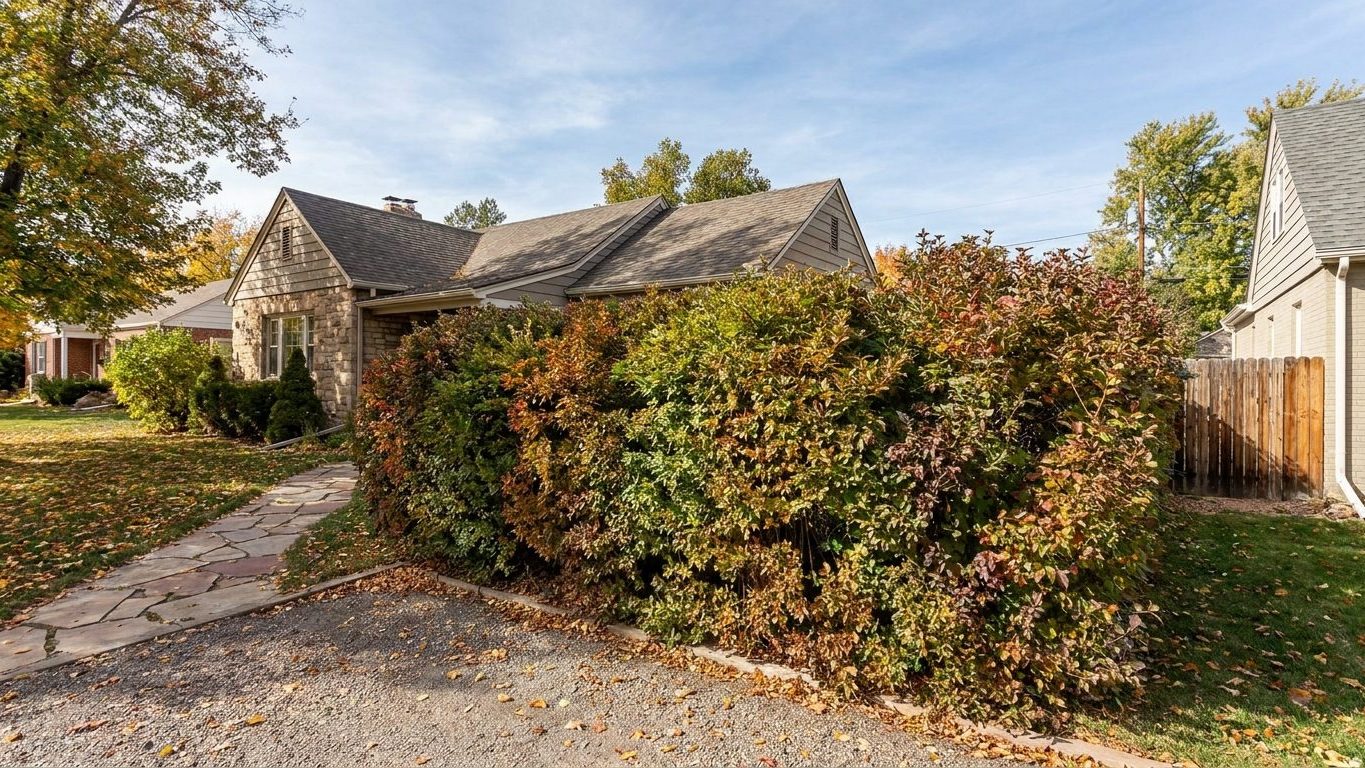

Colorado has no statewide statute capping hedge height. Search the Colorado Revised Statutes all you want: there is no section stating a hedge can be 6 feet, 8 feet, or any other figure. That rule lives at the municipal level, written into a zoning code your city or county council adopted on its own. Denver’s answer will differ from Boulder’s, which will differ from a rural county with no zoning code at all.
There is no Colorado hedge height law
This surprises people, because fence height feels like something a state would standardize. It doesn’t, and not just in Colorado. No state sets a single hedge height limit that applies statewide. Height control is a land-use decision, and land use is regulated locally, through zoning ordinances that vary block by block in some cities and county by county in unincorporated areas.
What that means in practice: commercial gardening sites claiming “Colorado law allows hedges up to X feet” are wrong, or at best repeating a figure from one town and presenting it as statewide. There’s no statute to fact-check that claim against, because it doesn’t exist. If a page won’t name which city’s code produced that number, treat the number as fiction.
Why states leave this to cities
Zoning power generally rests with municipalities and counties, not state legislatures. Colorado’s state government sets broad frameworks (water law, baseline building codes), but what you can build or grow in your front yard falls to local planning departments. A hedge is treated like a fence, shed, or retaining wall in this respect: a local land-use question, not a state one.
That’s actually good news. Local ordinances are usually more specific and current than a vague state rule would be. A city code can address corner lots, alley access, historic districts, and HOA overlays in ways a state statute never could.
What this means for you as a reader
If you live in Colorado Springs, your rule is Colorado Springs’ rule. If you live in unincorporated Weld County, your rule is whatever the county’s land-use code says, or there may be no height limit at all if that area isn’t zoned for it. There’s no shortcut. You have to look up your own jurisdiction, and the next section shows how to do that in a few minutes.
How to find the rule that actually applies to you
Three publishers host the vast majority of municipal codes in the United States, and one of them almost certainly hosts yours: Municode (library.municode.com), American Legal Publishing (codelibrary.amlegal.com), and eCode360. Search “[your city name] municipal code” and one of those three domains will usually come up first. None are paywalled or hard to navigate once you know where to go.
The height rule won’t be filed under “hedges” or “landscaping” in most codes. It sits inside the zoning chapter, under a section titled “fences” or “accessory structures,” sometimes cross-referenced with both. Some codes bury it further, in a section on “sight lines” or “vision clearance,” especially for the corner-lot rule discussed below. Search the code’s internal search bar for “fence” first, then check whether that chapter’s definition of “fence” explicitly includes hedges, vegetation, or living screens.
The word your code uses matters
Some municipalities define “fence” broadly enough to sweep in hedges, walls, and any physical barrier regardless of material. Others define it narrowly as a constructed structure, meaning a living hedge may fall outside that section entirely, or be regulated separately under landscaping or nuisance provisions. Assuming a hedge is a fence without checking is one of the most common mistakes homeowners make.
If the fence section doesn’t mention plants, search again for “vegetation,” “landscaping,” or “nuisance.” Some cities regulate overgrown vegetation only when it becomes a visibility hazard or a code-enforcement complaint, with no proactive height cap at all.
Who to call when the code is unclear
Every municipality has a planning or zoning department, sometimes folded into “Community Development” or “Building Services.” That office fields this question daily and can tell you, often by phone, whether your address falls under a height limit and what it is. For unincorporated county land, the equivalent is usually the county’s Planning and Zoning Division or Land Use Department. Calling is faster than parsing legal text, and it’s free.
A quick checklist before you dig in
- Confirm whether your address is inside city limits or unincorporated county land, since the two follow different codes.
- Search the code for “fence” first, then “vegetation” or “hedge” if the fence section is silent on plants.
- Check whether an HOA layers additional restrictions on top of the municipal code (HOAs can be stricter than the city, never looser).
- Note the department name and phone number on the city or county planning page, in case the written code leaves questions unanswered.
The branches that cross the line
Height limits address one problem. Overhang is a different one, governed by a different source of law. When a neighbor’s hedge grows branches, leaves, or roots across the property line, the zoning code’s height cap generally has nothing to say about it. What governs that is case law, not a statute, and the principle shows up in some form across most states.
The general rule: a property owner may trim back vegetation that crosses onto their land, up to the boundary line and no further. You can’t reach onto the neighbor’s side to cut the hedge shorter, and you can’t trim it in a way that kills the plant. Trim to the line and stop; if you’re not confident you can do that without damaging the whole hedge, talk to the neighbor before cutting.
Why this isn’t a statute you can look up
This principle comes from common law, developed through court decisions rather than legislation, which is why details vary by state even though the broad shape (trim to the line, don’t kill the plant, don’t trespass) repeats widely. Colorado has no single statute spelling this out with a citable section number. If a disagreement escalates, that’s the point to talk to a real estate attorney rather than rely on general web research, since specifics like a hedge’s age, a surveyed line, or a shared easement change the analysis.
The one rule that shows up almost everywhere: sight triangles
If there’s a near-universal exception to “there’s no state rule,” it’s the sight triangle, sometimes called a vision clearance zone. Nearly every municipal code, regardless of publisher, includes a rule that nothing (hedge, fence, parked trailer, sign) may obstruct a driver’s line of sight at an intersection or where a driveway meets a street. This limit is almost always set much lower than the general fence or hedge height allowed elsewhere, sometimes down to 2 or 3 feet, because the concern is a driver’s eye level, not privacy screening.
The sight triangle applies whether or not your city otherwise regulates hedge height at all. A jurisdiction with no general height cap can still cite you, or hold you liable after an accident, if a corner-lot hedge blocks intersection visibility. If your property sits on a corner or has a driveway close to a street, check this section specifically, even if the rest of your research turns up no general height limit.
What to check before you plant
Before choosing a hedge variety or planting it along a boundary, three checks save trouble later. None involve guessing at state law, because none of it lives there.
Check the property line, not the fence line
An existing fence, an old hedge row, or a line of stakes doesn’t guarantee that’s the actual boundary. Surveyed lot lines can sit a foot or two off from where a fence has stood for decades. Planting a new hedge directly on what you assume is the line, without confirming it against a plat map or survey, sets up exactly the overhang dispute described above once the hedge matures.
Check the zoning code for setback rules, not just height
Many fence and accessory-structure sections pair a height limit with a setback requirement, meaning the hedge must sit a minimum distance from the property line, street, or corner. A hedge legal at a given height in the middle of a large lot can still violate setback rules if planted too close to a sidewalk or shared driveway.
Check whether an HOA layers its own rule on top
If your property sits inside a homeowners association, the HOA’s covenants sit on top of the municipal code, and HOAs frequently impose stricter limits, particularly for front-yard hedges facing the street. The city might allow a 6-foot hedge; an HOA covenant might cap it lower for aesthetic uniformity. Check both, since the stricter one governs your property regardless of which you checked first.
Common questions
Is there a Colorado state law that caps hedge height at a specific number?
No. Colorado has no statewide statute setting a hedge height limit. Any figure quoted as “Colorado law” without naming a specific city isn’t sourced to an actual statute, because that statute doesn’t exist.
Where exactly in a city’s code should I look for the hedge rule?
Start in the zoning chapter, under “fences” or “accessory structures.” If that section doesn’t mention plants, search separately for “landscaping,” “vegetation,” or “nuisance,” since some cities regulate hedges under a different heading entirely.
Can my neighbor trim my hedge if it grows onto their property?
Under the general principle followed in most states, a neighbor may cut back branches or growth crossing the property line, up to the boundary and no further, without permission, but generally can’t reach onto your side or trim in a way that kills the plant. This comes from case law rather than a Colorado statute, so a real dispute is worth a conversation with a real estate attorney rather than a guess.
What if my city has no zoning code at all for hedges?
Some unincorporated county areas have limited or no zoning on residential vegetation. Even there, the sight-triangle rule for corners and driveways may still apply through a separate traffic-safety provision, even where no general height limit exists. Calling the county’s planning department directly is the fastest way to confirm whether any rule applies to your parcel.