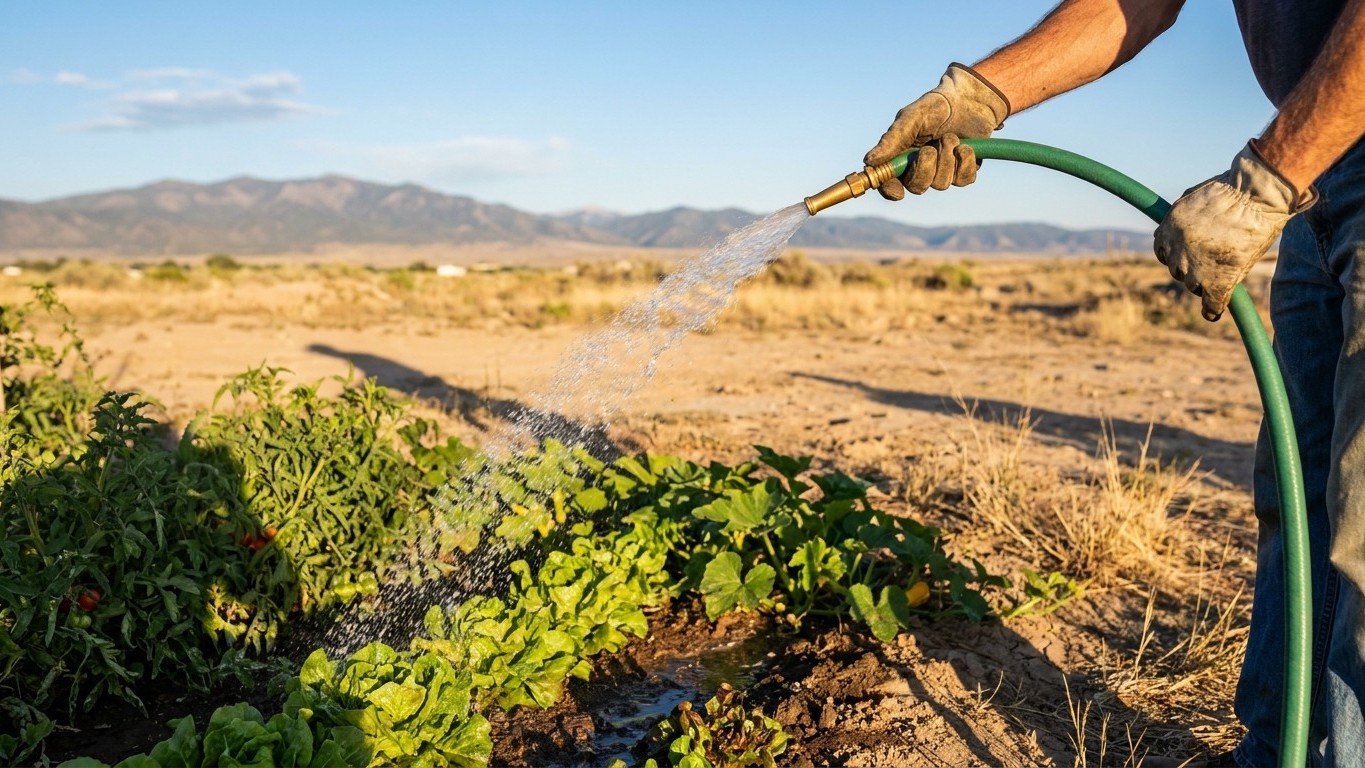

Colorado’s dry spell isn’t really a spell at all: it’s most of the growing season. August, the driest month, delivers just 1.58 inches of rain to a garden that wants roughly an inch a week, and the state’s reference station logs 39.6 days a year at or above 90F. Together, those two numbers mean the sky covers a fraction of the bill and the sun cashes the rest fast.
What changes here

Start with the two numbers that actually run a Colorado garden. The driest summer month, August, averages 1.58 inches of rain at the NOAA reference station used for this region’s climate normals. June comes in at 1.94 inches and July at 2.14 inches, so August is the low point of an already lean summer that totals about 5.7 inches for the three months combined, against 14.5 inches for the whole year. Layer on the heat: the same station logs 39.6 days a year that hit 90F or higher. Put those together and the message for a gardener is simple: the driest month is also riding through the heaviest stretch of high-evaporation days, so a bed can’t lean on rainfall to get it through August.
Do the arithmetic and it gets concrete. A vegetable or perennial bed generally wants about an inch of water a week. Spread August’s 1.58 inches evenly across its 31 days and an average week brings in roughly 0.36 inches from the sky. That leaves about 0.64 inches, close to two-thirds of an inch, for the gardener to supply by hose, drip line or sprinkler every single week of the driest month, before accounting for wind or a run of 90-degree afternoons that push demand higher still.
Soil texture decides how far that hand-delivered water actually goes. On sandy ground, water drains through within a day, so the same weekly total needs to be split into more frequent, smaller soakings or it simply passes below the root zone unused. On heavy clay, that same inch can sit in the profile for the better part of a week, which sounds convenient until a gardener adds more water before the clay has had a chance to dry, drowning roots instead of feeding them. Neither soil type changes the total demand; both change how that total should be delivered.
How to water when it matters
Deep and infrequent beats frequent and shallow for one physical reason: roots grow toward available moisture. A quick daily splash wets only the top inch or two of soil, so roots stay shallow and exposed right where 39.6 days of 90-plus heat will bake them. A deep soak that reaches six to eight inches down pulls roots downward, into cooler, more stable soil that buffers the plant against a hot afternoon. Watering at the base rather than overhead keeps that moisture where roots can use it instead of losing it to wind and sun on the way down, and it keeps foliage dry, which matters for the next reason: watering in the morning gives leaves and topsoil the whole day to dry off before nightfall, while an evening watering leaves things damp for hours in cooler, still air, which is exactly the setup fungal disease favors.
Checking soil moisture by eye is unreliable. The surface can look bone dry an hour after a soaking, or look fine while the root zone underneath is parched. A finger pushed two inches down, or a trowel pulled up for a quick look, tells the real story: dry down at that depth means it’s time to water; cool and moist means wait.
- Check before you water: push a finger or trowel two inches into the soil near the root zone; only water if it’s dry at that depth, not just on the surface.
- Water deeply: apply enough to wet the top six to eight inches of soil in one session rather than a light daily pass.
- Start from about two-thirds of an inch a week in August to cover the gap left by the month’s 1.58 inches of average rainfall, then adjust up on stretches of 90-degree days.
- Adjust the schedule to your soil: split that weekly total into shorter, more frequent soakings on sandy ground; stretch to a single weekly soak on heavy clay, and always recheck with a finger before adding more.
- Water at the base, in the morning, so moisture reaches roots directly and any dampness on stems or soil surface dries off well before evening.
Treat that two-thirds-of-an-inch figure as a starting point, not a rule. Every yard’s soil, slope and sun exposure shifts the real number, and the only way to know for certain is to check with a finger or a rain gauge on your own ground.
What goes wrong
“I water a little every day, just to be safe”
This is the single costliest habit during a Colorado summer. Light daily watering wets only the surface, so roots never have a reason to grow deep. Those shallow roots then sit in the top inch of soil on exactly the days, 39.6 of them in a typical year, when surface soil heats fastest and dries hardest. The plant ends up more heat-stressed under frequent watering than it would under a deeper, less frequent schedule.
“I ran the sprinkler in the evening so it wouldn’t evaporate”
The logic sounds reasonable but the mechanism works against it. Wet foliage and damp soil sitting through a cool, still night is close to ideal conditions for fungal disease to take hold. Morning watering gives the same moisture a full day of sun and air movement to dry off before nightfall arrives.
“It rained yesterday, so I’ll skip watering”
A summer thunderstorm can look generous and still barely wet the top half-inch of soil, especially when a burst of rain runs off hard ground rather than soaking in. Trusting the sky without checking is a gamble; a finger pushed two inches down settles it in seconds, and if that depth is still dry, the storm didn’t do the job.
“I didn’t bother with mulch this year”
Bare soil in a territory with 39.6 days of 90-plus heat loses moisture to evaporation almost as fast as it’s applied. A two- to three-inch layer of mulch slows that loss, keeping the two-thirds of an inch a gardener just delivered in the ground long enough for roots to actually use it instead of watching the sun take it back within hours.
Local help
Colorado State University Extension is the state’s land-grant resource for region-specific planting and watering guidance, backed by USDA NIFA’s extension network. Find local offices, soil information and seasonal advice at extension.colostate.edu. Watering restrictions vary by city and water district and change from year to year depending on drought conditions, so check current rules directly with your local water provider before setting a fixed schedule.
Common questions
How much should I water my garden during a Colorado dry spell?
Aim for roughly an inch of water a week total, factoring in what falls naturally. In August, the driest month, that means covering close to two-thirds of an inch by hand or irrigation, since average rainfall only supplies about 0.36 inches that week.
What time of day is best for watering in Colorado?
Morning. It lets soil and foliage dry out over the course of the day, cutting the risk of fungal disease that comes with damp, cool overnight conditions.
How do I know if my soil is actually dry enough to need water?
Push a finger or a trowel about two inches into the soil near the plant’s root zone. If it’s dry at that depth, water; if it’s still cool and moist, hold off, even if the surface looks parched.
Does mulch really make a difference in a place this hot?
Yes. With close to 40 days a year hitting 90F or higher, bare soil loses moisture fast to evaporation. A few inches of mulch slows that loss and keeps water in reach of the roots longer.