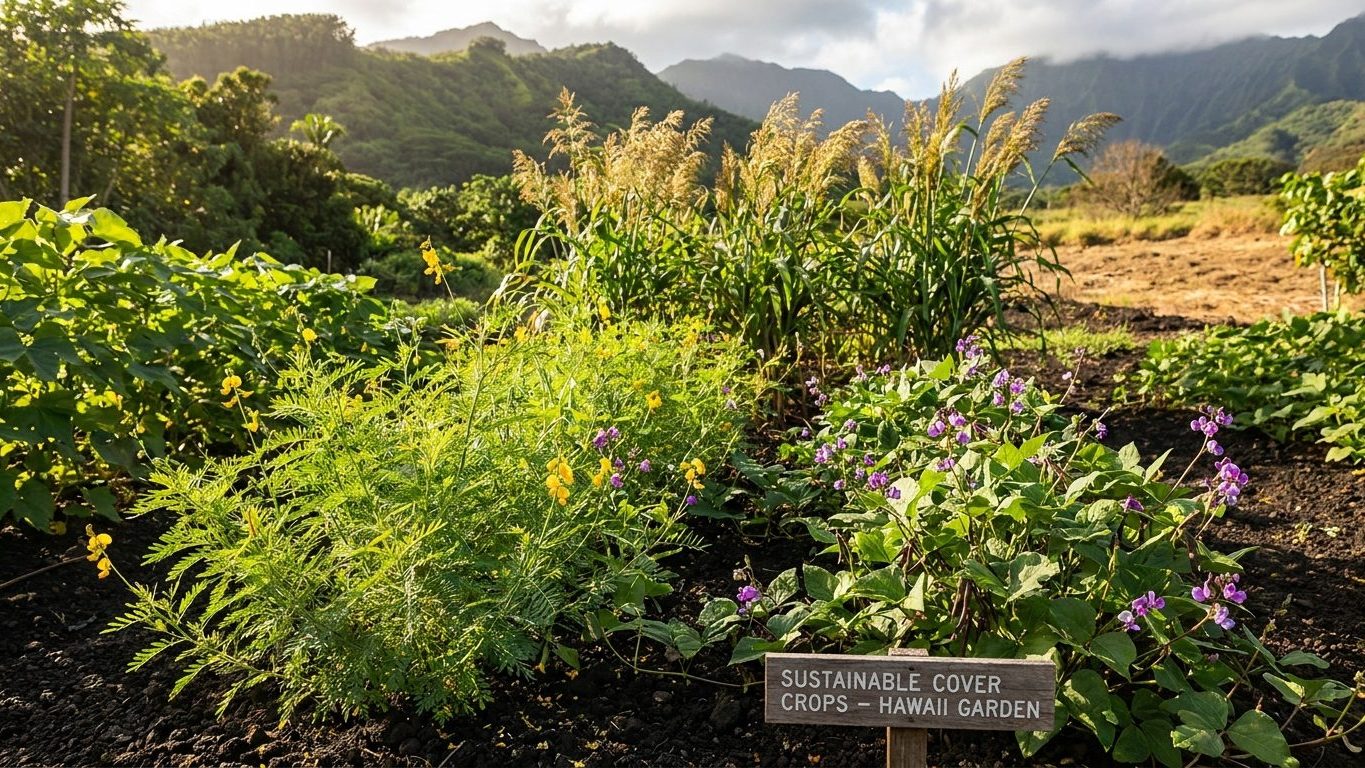

Winter rye is the one cover crop that works almost everywhere in Connecticut, in every part of the state and in nearly every kind of garden. For the rest, the right pick depends on when you’re sowing, how much cold you’re asking the plant to survive, and whether you need nitrogen, biomass, or just weed suppression before the ground freezes.
The short answer for Connecticut
Connecticut sits in USDA hardiness zone 6a-7b, with a frost-free window that runs roughly from April 2-12 (last spring frost) to October 28-November 10 (first fall frost) at the Bridgeport reference station. That’s a season of somewhere near 200 days along the coast, and shorter the further you move inland. The mean daily minimum of the coldest month is 24.4°F at that same coastal station, which is the number that actually decides whether a cover crop survives winter here, not the record low everyone remembers from one bad January.
That single figure, 24.4°F, splits the state’s cover crop options into two camps. Cereal rye shrugs it off. It’s the standard fall-sown, overwintering cover crop for Connecticut vegetable gardens and small farms because it keeps growing into late fall, stalls over winter, and resumes in spring well before most soil is workable. Hairy vetch does almost as well and adds nitrogen, which is why the two are so often seeded together: rye holds the soil and scavenges leftover nutrients, vetch fixes new nitrogen for the following crop.
Crimson clover is the riskier legume. It’s listed as reliably winter-hardy only in the milder end of the state’s zone range, and a mean coldest-month minimum around 24°F puts a lot of Connecticut gardens right at its limit. Treat it as a bonus in a warm, sheltered, coastal yard, not a crop to count on statewide.
For gardeners who want simplicity over performance, oats and forage radish are the winter-kill answer. Both grow fast in September, build real biomass and root structure, then die back on their own once temperatures drop hard, leaving a mat of residue to till in come spring with no need to kill a cover crop yourself. Buckwheat fills the opposite role entirely: a warm-weather, fast-cycling smother crop for the gap between an early vegetable harvest and a fall planting, not something sown anywhere near the first frost date.
| Cover crop type | Best window | Survives 24.4°F winter min? |
|---|---|---|
| Cereal (winter) rye | Late Aug – mid Oct | Yes, reliably |
| Hairy vetch | Late Aug – mid Sept | Yes, generally |
| Crimson clover | Late Aug – early Sept | Marginal, milder pockets only |
| Oats / forage radish | Early – mid Sept | No, winter-kills by design |
| Buckwheat | May – July (summer gap) | Not applicable, frost-killed at 32°F |
What will not work here
Warm-season cover crops built for a long, hot summer don’t fit Connecticut’s calendar. Sorghum-sudangrass and cowpea need a stretch of consistently warm nights to put on the biomass they’re grown for, and with a frost-free season capped at roughly 200 days along the coast, and less inland, sowing them any later than early summer leaves too little runway before the first fall frost arrives. Try to squeeze one in after a July harvest and you’re gambling against a hard October frost that can show up as early as October 28 in the mildest part of the state, and earlier still away from the coast.
Buckwheat fails for the same reason in reverse. It’s genuinely frost tender, killed outright at 32°F, so it only makes sense as a mid-summer planting with weeks of safety margin on both ends. Sow it in late August hoping for one more quick cycle before fall crops go in, and an early frost in an inland valley can wipe it out before it’s done its job of smothering weeds, wasting the seed and the window you’d set aside for it.
Crimson clover sown as a stand-alone winter cover, expecting it to behave like it does in the mid-Atlantic, is another mismatch. The 24.4°F coldest-month minimum at the Bridgeport station is already at the edge of what crimson clover reliably tolerates, and that station is the mildest, most coastal point in the state. Push that same planting into the Litchfield hills or another inland valley, where winter minimums run colder, and the odds of a clean stand surviving to spring drop further. It’s not that the crop can’t grow in Connecticut; it’s that betting on it alone, with no rye or vetch backup, is betting against the coldest data point on this page.
Late-sown daikon or tillage radish runs into a narrower version of the same problem. These deep-rooted brassicas need real time, generally six to eight weeks, to size up their taproot before winter. Sow them after a September harvest in a spot where fall frost lands on the early side of the October 28-November 10 range, and they’ll go into winter as thin, undersized roots that add little of the soil-loosening benefit they’re grown for.
What changes across Connecticut
A hardiness range of 6a to 7b is not a small spread for a state this size. It means the coldest parts of Connecticut and the mildest parts are separated by a full zone and a half on the USDA map, roughly the same gap you’d find between two states further apart on a map of the whole country. There is no single cover crop recommendation that fits all of it equally well, and this page can’t tell you which end of that range your own yard sits on.
The coastal band, represented here by the Bridgeport reference station, is the mild end: later fall frost, earlier spring frost, and a milder coldest-month minimum. That’s the part of the state where crimson clover has the best odds, where buckwheat has the longest safe window, and where a fall cover crop can go in a couple of weeks later than it could inland.
Inland valleys and the higher ground in the northwest corner sit toward the colder end of that 6a-7b range. Cold air pools in valley bottoms on clear nights, and elevation adds its own chill, so frost tends to arrive earlier in fall and linger later in spring than the coastal dates on this page suggest. A reader gardening in one of those areas should lean harder on cereal rye and hairy vetch, treat crimson clover as unreliable rather than marginal, and move fall sowing dates earlier rather than later.
None of that tells you which zone your specific property falls in, and this page won’t guess. The USDA Plant Hardiness Zone Map lets you check your zone by ZIP code, and it’s worth doing before you commit to a crop like crimson clover that only makes sense in part of the state.
Where to check this for your own county
Everything above is built from one coastal weather station and a statewide hardiness range, which makes it a reasonable starting point and nothing more. Connecticut’s official channel for county-level detail is the UConn Extension service, and it’s the resource to check before finalizing a planting plan, not after.
Two things are worth looking for specifically on the UConn Extension site. First, a local planting calendar or fact sheet for your county or region, since UConn Extension staff and local Master Gardener programs often publish sowing windows adjusted for inland versus coastal conditions, rather than the single statewide range used here. Second, look for any variety trial results or cover crop recommendations tied to your specific county, particularly for legumes like crimson clover where survival depends heavily on local winter minimums that a statewide figure can’t capture.
A county-level recommendation from UConn Extension will always beat what’s on this page, because it’s built from local trial data and local extension agents who see how these crops actually perform on the ground where you live. This page works from statewide averages and a single reference station; the county office works from your soil, your microclimate, and years of local observation. Treat this article as the frame and the extension office as the fine print.
If your county doesn’t have a dedicated page or fact sheet, UConn Extension offices also field direct questions from home gardeners, and a phone call or email asking specifically about cover crop performance in your town is a legitimate use of that resource. It’s a faster path to an accurate answer than guessing from a statewide range.
Checking this against your own garden
Every date and figure on this page is a regional average, and your own garden will tell you more than any of them once you know what to look for. Three signs matter more than the calendar.
Soil warmth by feel is the first. Before sowing a summer gap crop like buckwheat, press a hand into the top few inches of soil. If it feels cool and slightly damp rather than warm and crumbly, the soil hasn’t caught up to the air temperature yet, and seed sown into it will sit rather than germinate quickly. That’s a better test of your specific bed than any date on a calendar.
The pace of first true leaves on a fall-sown cover like oats or rye is the second. If true leaves show up within a week or so of sowing, your soil and microclimate are running close to the regional average used on this page. A slower emergence, stretching past two weeks, suggests your spot runs cooler than the coastal reference station, and it’s worth shifting sowing dates earlier the following year.
The third is buckwheat’s first flush of white flowers. That bloom is the signal to mow or turn the crop under before it sets seed and turns into next year’s weed problem. A fast bloom, arriving in three to four weeks rather than five or six, tells you your garden runs on the warmer side of the state’s range, which matters more for planning next season than any single frost date on this page.