
Delaware’s spring bulb question isn’t really about beauty, it’s about cold. This state’s winters, zone 7a to 8a on the USDA map, with a coldest-month average low of 25.6°F at the Wilmington reference station, supply plenty of chill for nearly every classic spring bulb. But plenty of chill doesn’t mean every bulb sold at the garden center will thrive here. Some come back for a decade. Others put on one good show, then quit for good. For gardeners who don’t want to wait out the full outdoor season, Forcing Spring Bulbs Indoors in Delaware offers a way to enjoy blooms well ahead of the natural planting timeline.
When to plant bulbs in Delaware

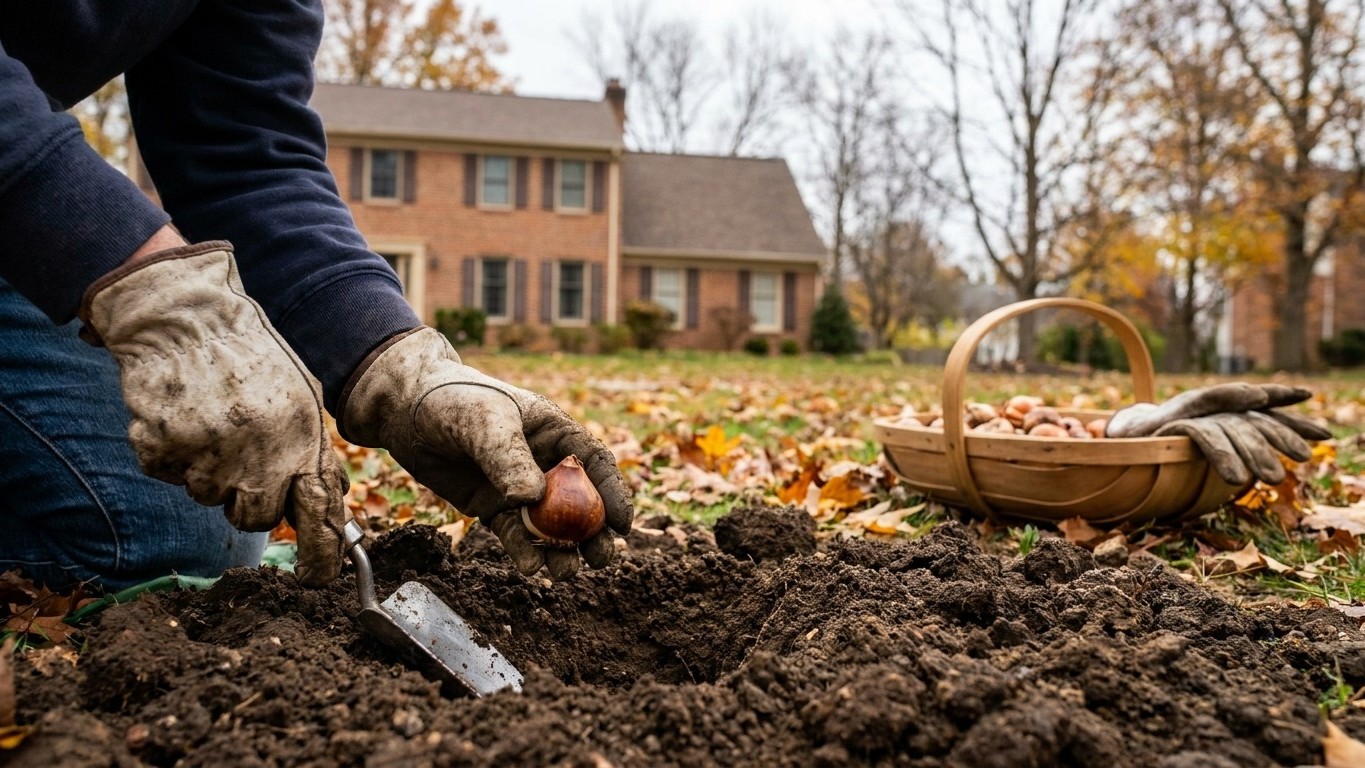
The calendar answer starts with a single number: October 26 to November 7. That’s the average first fall frost window at the Wilmington airport station, based on 1991-2020 climate data, and it’s the anchor for every bulb-planting decision in this state. The rule of thumb gardeners have used for generations still holds: get spring bulbs into the ground about six weeks before the soil freezes hard, which for most of Delaware means starting the job in mid-October and finishing by the third or fourth week of November.
That window isn’t arbitrary. Bulbs planted too early, while the soil is still warm from summer, often push up green top growth before winter arrives. That growth gets caught by the first hard freeze and killed outright, weakening the bulb before it’s even had a chance to root properly. Bulbs planted too late face the opposite problem: they go into cold, near-frozen ground without enough time to grow roots before winter locks everything down. The result the following spring is a stunted plant, a flower that never opens fully, or in some cases nothing at all pushing through the soil.
Why the frost date is only a guideline
The October 26 to November 7 range is an average built from three decades of weather records, not a promise. Roughly half of all years in Delaware see frost arrive earlier than that window, and half see it later. A gardener planting on a fixed date every year, say November 1, will occasionally get caught by an early cold snap or waste weeks waiting for a frost that shows up late. The safer approach is watching soil temperature directly: once it settles into the 40s to 50s Fahrenheit range at planting depth, roughly 6 to 8 inches down for most spring bulbs, the window is open regardless of what the calendar says.
Sussex County, further south and closer to the Delaware Bay, tends to run a week or two behind the Wilmington-area frost date. New Castle County and the areas closer to the Pennsylvania line tend to see frost arrive closer to the early end of that range. Neither difference is dramatic, but it’s enough to shift a planting decision by a couple of weeks in either direction.
Whether your winter is cold enough
Here’s the number that actually decides whether a spring bulb blooms at all: most need 12 to 14 weeks of soil temperatures below about 45°F before they’ll flower. Skip that cold requirement and the bulb doesn’t die, exactly, it just produces leaves with no flower, or a flower bud so weak it never clears the soil surface. This is the single most important thing to check before buying any bulb, no matter where it was grown or how it’s labeled at the store.
Delaware clears that bar without much drama. A coldest-month average low of 25.6°F, well below the 45°F threshold, combined with a winter season that runs from December through February in a zone 7a to 8a climate, gives the state’s soil far more than 12 to 14 weeks below that mark in a typical year. That margin means gardeners buying bulbs locally, or from any mainstream supplier shipping to a zone 7-8 address, don’t need to pre-chill anything. The cold does the work on its own.
Pre-chilling matters more for gardeners in warmer states, or for anyone forcing bulbs indoors for an early bloom, and it’s worth understanding even here. It means storing bulbs in a refrigerator for about 12 weeks at temperatures similar to what the ground would provide, and keeping them away from ripening fruit in the process. Apples, pears, and other fruit give off ethylene gas as they ripen, and that gas kills the flower bud inside a stored bulb before it ever gets planted. A gardener who skips pre-chilling in a climate that needs it doesn’t get a smaller flower. They get no flower, and the money spent on the bulb is gone.
How Delaware’s cold measures up, bulb by bulb
| Bulb | Cold required (weeks below 45°F) | What Delaware delivers | Verdict |
|---|---|---|---|
| Tulips | ~14 weeks | Well beyond 14 weeks most winters | Blooms reliably, no pre-chill needed |
| Daffodils | ~12-15 weeks | Well beyond required minimum | Blooms reliably, no pre-chill needed |
| Hyacinths | ~12-14 weeks | Well beyond required minimum | Blooms reliably, no pre-chill needed |
| Crocus | ~8-10 weeks | Comfortably exceeded | Blooms reliably, no pre-chill needed |
| Alliums | ~10-12 weeks | Comfortably exceeded | Blooms reliably, no pre-chill needed |
Every entry on that list ends the same way, which is the point. Delaware’s winter isn’t marginal for spring bulbs the way it might be for a plant near the edge of its heat tolerance in July. The state clears the chill threshold for the entire common bulb lineup with room to spare.
Which bulbs suit Delaware
Hardiness range and chill requirement both matter, and the bulbs below satisfy both for most of the state. Treat these zone numbers as a guide rather than a hard line, since a sheltered spot against a south-facing wall behaves differently than an open, wind-scoured bed even within the same yard.
- Daffodils (hardy zones 3-9): among the most dependable bulbs for this state, returning and multiplying for years with almost no care.
- Crocus (hardy zones 3-8): early bloomer, reliable across all of Delaware.
- Alliums (hardy zones 3-9): tolerant of Delaware’s clay soils better than most spring bulbs.
- Hyacinths (hardy zones 4-8): fits comfortably within the state’s zone range.
- Snowdrops (hardy zones 3-7): thrives in the cooler, northern half of the state; can struggle in the warmest pockets of zone 8a.
- Muscari (grape hyacinth) (hardy zones 4-8): reliable throughout Delaware and spreads readily.
Bulbs that struggle here
Many hybrid tulip varieties bred for cooler zones (roughly 3-7) run into trouble at the warmer edge of Delaware’s range, particularly in coastal Sussex County pockets closer to zone 8a. They often put on an impressive first-spring show, then fade to foliage-only in the following years as the bulb fails to reset properly in a winter that’s a touch milder than what it evolved for. Gardeners who want tulips as a permanent fixture rather than a one-season display should expect to replant every year or two, or treat them as annuals from the start.
Ranunculus, hardy only to about zone 8, sits right at the edge of what Delaware can support and rots easily in the state’s wetter winter stretches, especially in heavy clay soil that holds water. Raised beds or amended, well-drained soil make the difference between a bulb that survives and one that turns to mush by March.
What digs them up here
Squirrels and voles don’t raid bulb beds at random. The difference between a bulb that gets eaten and one that gets ignored comes down to chemistry. Daffodils and every member of the onion family, including alliums, contain compounds that are toxic or simply unpalatable to rodents. Tulips and crocus contain no such defense, and both rank among the most reliably dug-up bulbs in any Delaware yard with a squirrel population nearby.
- Bulbs squirrels and voles target: tulips, crocus
- Bulbs they generally leave alone: daffodils, alliums, snowdrops, muscari, hyacinths
The one defense that actually holds up
Repellent sprays sold for this purpose wash off with the first rain and need constant reapplication to do anything at all, which makes them a poor match for a bulb bed planted once and left alone for months. The measure that consistently works is physical: lay galvanized wire mesh flat over the planting area right after digging, pin it down at the edges, and leave it in place until the ground freezes solid, typically sometime in December for most of Delaware. Squirrels and voles can’t dig through it, and by the time the ground softens again in spring, the shoots are already up and the bulbs are no longer worth the effort to a hungry rodent.
Where to check for your own county
Every figure in this article, the frost date, the coldest-month low, the hardiness zone range, comes from the Wilmington reference station or state-wide USDA mapping. Delaware is a small state, but it still stretches from the Pennsylvania border to the Maryland line and from the Delaware Bay to the interior, and a planting calendar built around the Wilmington airport can run a week or two off for a garden in Sussex County or a low-lying spot near the coast.
For a planting window and variety recommendation tuned to your specific county, the University of Delaware Cooperative Extension maintains county offices with local frost data and soil guidance that account for exactly this kind of variation. A call or visit to the office nearest you turns a state-wide estimate into a number that actually matches your backyard.