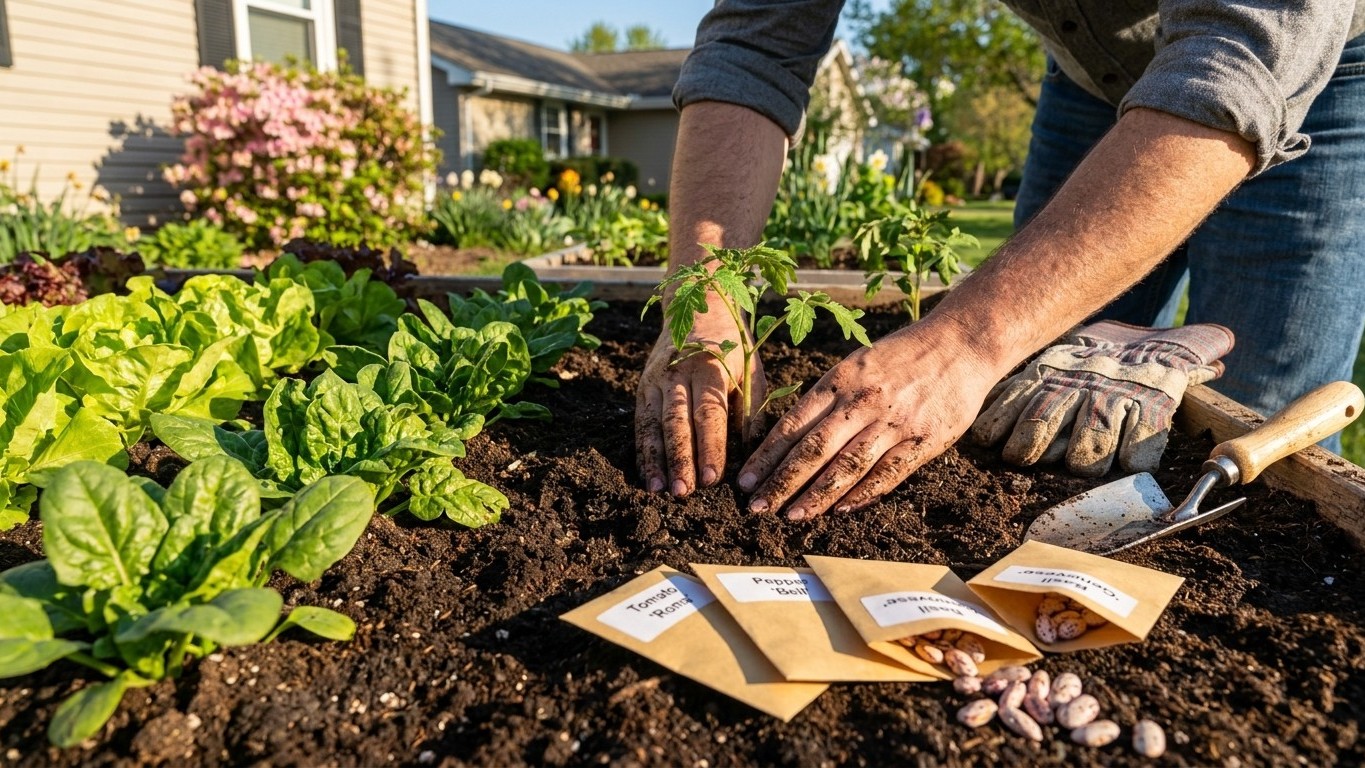

May is Delaware’s green light month: the reference weather station’s frost window closed between April 3 and April 14, so by the time May opens, warm-season crops can go into the ground with far less risk. Tomatoes, peppers, beans, squash and corn all belong in the plan now, alongside the tail end of cool-season greens still worth harvesting before the heat builds.
What goes in the ground in May

Soil temperature, not the date on the calendar, decides what survives this month. The frost window at the reference station ran April 3 to April 14, which means most of Delaware has cleared the risk of a killing freeze by the time May starts. But cold soil can still stall or rot seed even when the air feels warm, so the real question is what the ground itself is doing.
Beans and sweet corn germinate reliably once soil hits about 60 degrees Fahrenheit, a mark most Delaware gardens reach early in the month. Squash, cucumbers and melons want it warmer, closer to 65 to 70 degrees, so pushing those into cold, wet soil in the first week often means rot instead of sprouts. Waiting a week or two costs nothing and saves a reseeding.
Transplants of tomatoes, peppers, eggplant and basil can go outside once nights are reliably above 50 degrees, which for most of the state lines up with the middle to later part of May. Gardeners in the cooler inland pockets north of the reference station, or at any elevation, should hold those transplants a little longer and watch overnight lows rather than trust the date alone.
Cool-season crops are not finished yet. Lettuce, spinach and radishes can still go in as a quick, direct-sown crop early in the month, timed to mature before the real heat arrives. Onion sets should already be established from earlier plantings, but shallots and leftover sets can still go into workable soil if the bed is ready. Peas planted now are a gamble in the warmer parts of the state; they tolerate the tail end of cool weather but sulk once temperatures climb, so treat this as the last realistic window rather than a sure bet.
What to start under cover
Most of the classic seed-starting rush for spring crops has already happened by May, since tomatoes, peppers and eggplant are typically started six to eight weeks before the last frost date, back in March. What belongs under cover now is the next wave: fall brassicas. Broccoli, cabbage and cauliflower for a fall harvest are commonly started indoors or in a shaded cold frame in late May or June, counted backward from the first fall frost window of October 26 to November 7 rather than forward from any spring date.
Working that arithmetic in reverse matters more than following a fixed date. A fall cabbage that needs roughly 70 days from transplant to harvest, plus a few weeks in the tray before it goes outside, needs to be started with enough runway to mature before that October frost window closes in. Starting too early under cover in warm May conditions produces leggy, stressed seedlings that stall once transplanted; starting too late leaves the crop racing a shortening season it cannot win.
The same backward math applies to a second round of basil, cucumbers or summer squash raised indoors for transplant rather than direct-sown, useful for gardeners who lost an early planting to a cool spell or rot. Keep seedlings in bright, even light and pot up before roots circle the container; a rootbound start under cover rarely recovers its vigor once it hits the garden, no matter how good the soil is.
What is ready to pick
Asparagus beds established in prior years hit their stride in May, with spears ready to snap when they reach 6 to 8 inches and before the tips loosen. Overwintered spinach and kale, along with anything sown in a cold frame earlier in spring, are usually at peak eating quality now, before the leaves toughen in rising heat.
Lettuce and radishes sown in early spring are typically ready through the month, and the trick with lettuce is to pick outer leaves or cut whole heads before a warm stretch pushes them to bolt and turn bitter. Rhubarb stalks are usually thick enough to harvest by mid-month; pull rather than cut, and leave at least a third of the stalks to keep the plant strong.
Strawberries in the ground for a season or more often start ripening toward the end of May in the warmer parts of the state, a few days later farther north or at elevation. Check daily once the first berries blush red, since a day of delay in warm weather can hand the crop to birds or slugs.
Stored crops from the previous fall, onions, potatoes and winter squash kept in a cool, dark spot, are worth a check now. Sprouting onions, soft spots on potatoes and any squash with a give at the stem end should be used first or composted before they spread rot to the rest of the batch.
The jobs that matter this month
Mulching pays off the moment soil has warmed, which for most Delaware gardens is right around now. Mulch laid too early traps cold and slows the very warming a gardener is trying to speed up, so wait until the soil itself feels warm to the hand before covering beds with straw, shredded leaves or bark.
Staking and caging belong in the ground before plants sprawl, not after. Tomatoes, peas and any vining squash set out this month should get their support structure installed at planting, since threading stakes through an already-tangled plant a month later damages roots and stems.
Watering rhythm shifts here too. Spring rains that carried young plants through April often taper as May warms up, and newly transplanted tomatoes and peppers need consistent moisture in their first two weeks to root deeply rather than staying shallow and drought-prone. Deep, less frequent watering beats a light daily sprinkle.
Succession sowing keeps the harvest coming instead of arriving all at once. A fresh row of lettuce, radishes or bush beans every two to three weeks through May stretches the picking season well into summer rather than dumping everything on the table in one overwhelming week.
Pest scouting starts in earnest now. Colorado potato beetles show up on potato and eggplant foliage as soon as the plants have leaves worth eating, flea beetles riddle young brassica and eggplant leaves with small holes, and squash vine borer moths begin laying eggs at the base of squash stems once the vines get going. Checking the undersides of leaves weekly catches these problems while a squeeze or a floating row cover still solves them, before an infestation takes hold.
What not to do in May
The most common mistake this month is trusting warm air over cold ground. A string of 75-degree afternoons can feel like permission to set out tomatoes or peppers, but if the soil itself is still in the 50s from a wet April, those transplants sit and sulk instead of growing, and some rot at the root before they ever take off. Check soil temperature with a simple probe thermometer rather than judging by how the air feels on skin.
Pulling row covers or cold frame lids off too early after a mild stretch is another classic error. Delaware’s spring weather swings, and a cold frame opened during a warm week can leave tender greens exposed to a night that dips back down unexpectedly. Ease covers off gradually over several days rather than removing them all at once.
Nitrogen timing trips up a lot of tomato and pepper growers. Feeding a heavy dose of nitrogen right at transplant, or repeatedly through the first weeks, pushes lush green foliage at the expense of flowers and fruit. Hold off on nitrogen-heavy feeding until plants are established and starting to set blossoms, then favor a balanced or phosphorus-leaning feed instead.
Skipping the hardening-off step for transplants raised indoors is a fast way to lose a whole tray. Seedlings moved straight from a warm windowsill or grow light into full sun and wind can scorch or snap within a day. A week of gradually increasing outdoor exposure, starting in shade and building up, saves the investment of two months of indoor growing.
Checking this against your own county
A state-wide month is a starting point, not an instruction. The frost figures here come from one reference weather station, and gardens away from that station, especially at elevation or in low-lying frost pockets, commonly see their last spring frost land later and their first fall frost arrive earlier, sometimes by one to two weeks. Delaware’s own hardiness range spans USDA zones 7a to 8a, with the cooler end typically inland and the warmer end closer to the coast and lower Sussex County, so a planting date that works in one part of the state can be off by a week or more in another.
Before committing a full bed to any of the above, check local conditions against the University of Delaware Cooperative Extension, which tracks county-level frost data and crop timing specific to the state.
Common questions
Is it too late to plant tomatoes in Delaware in May?
No. May is close to the ideal window for setting out tomato transplants across most of Delaware, since the reference station’s frost risk had already passed by mid-April. Gardeners can plant through the month, though earlier in May favors a longer harvest season than waiting until the very end.
Can I still direct-sow beans and squash in May?
Yes, and for most Delaware gardens this is the best window to do it. Beans and corn germinate well once soil reaches about 60 degrees, and squash and cucumbers prefer closer to 65 to 70 degrees, both benchmarks that most of the state reaches during May.
What should I avoid planting in May in Delaware?
Peas sown late in May are risky in the warmer parts of the state, since they tolerate cool weather but decline once heat sets in. It is also the wrong time to plant heat-loving crops into soil that is still cold from a wet spring, since the air temperature can be misleading.
When should fall brassicas be started for a Delaware garden?
Fall broccoli, cabbage and cauliflower are commonly started under cover in late May or June, timed backward from the first fall frost window of October 26 to November 7, so the transplants have enough weeks to mature before frost arrives.