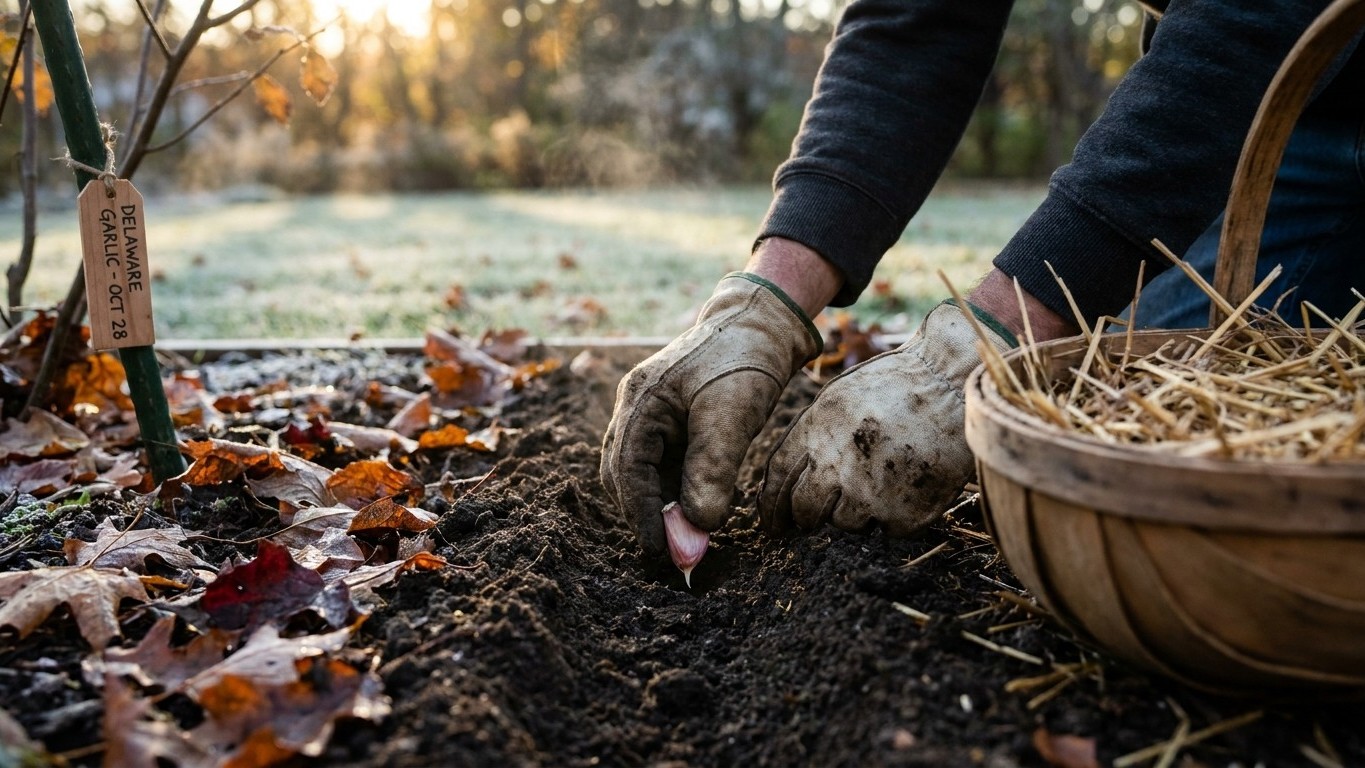

October in Delaware still lets you get garlic, shallots, and a handful of hardy greens into the ground, especially in the first half of the month before the frost window opens. Spring-flowering bulbs go in now too. Warm-season crops are done. The real work shifts toward cleanup, cover crops, and protecting what is left before the first freeze arrives sometime between October 26 and November 7.
What goes in the ground in October

The calendar says October, but the soil doesn’t care what the calendar says. What decides whether a seed or a clove of garlic will make it is soil temperature and how many weeks remain before that first freeze, which at the reference station near Wilmington lands somewhere between October 26 and November 7. Everything in this section is built around that window, not around the date on a wall calendar.
Garlic and shallots are the anchor crop for the month. They want four to six weeks of root growth before the ground locks up, and Delaware’s mild fall gives them almost exactly that if planted in the first half of October. Push the cloves in root-down, two inches deep, and cover with a few inches of straw once the ground starts to cool hard. They won’t sprout much top growth before winter, and that’s fine, that’s the plan.
Hardy greens still have a shot if they go in during the first week or two of the month. Spinach, mache, and quick radishes can be direct-sown and will either mature in the last mild stretch before frost or, in spinach’s case, simply sit as small plants and resume growing in late winter. Kale and collard transplants set out early in the month can often push through light frost without protection since both tolerate temperatures well below freezing once established.
Spring bulbs belong on this list even though nobody thinks of them as “planting a garden.” Daffodils, crocus, and alliums go into cooling soil now so they can root before the ground freezes, then bloom on schedule when the days lengthen again.
What’s a gamble rather than a plan: anything warm-season. Beans, squash, tomatoes, peppers, sweet corn, none of it belongs in Delaware soil in October regardless of how warm a particular afternoon feels. A mild stretch of weather doesn’t change the fact that a freeze is coming within the frost window, and tender crops planted now will die before they produce anything worth eating.
What to start under cover
Under cover this month means cold frames, low tunnels, or a sheltered spot against a south-facing wall, not a heated grow-light setup for spring transplants. The arithmetic runs backward from the frost window, not forward from a planting date. If the first freeze lands somewhere between October 26 and November 7, a quick green that needs 30 to 40 days to reach a pickable size needs to go in the ground, under cover, by the first week of the month at the latest to have any real shot at a harvest before growth stalls.
Good candidates for that window are mizuna, tatsoi, arugula, and baby lettuce mixes. All of them germinate fast in still-warm October soil and tolerate the cooler nights that follow once a row cover or frame lid is over them. Spinach sown under a low tunnel in mid-October often doesn’t mature before the freeze but survives as a small plant and takes off again once late-winter light returns, which functionally counts as a head start on next spring rather than a failed fall crop.
The two ways this goes wrong are worth naming plainly. Start too early, while daytime temperatures under the cover are still pushing 80 degrees, and greens bolt or turn leggy chasing light in warm, stuffy conditions. Start too late, past the first week or two of the month, and the shortening days simply don’t deliver enough light for the plant to size up before growth all but stops, cover or no cover. Daylight, not just temperature, is doing a lot of the work here, and no amount of plastic sheeting fixes a lack of sun hours.
What is ready to pick
October is a genuine harvest month in Delaware, not a scraps-and-leftovers one. Winter squash and pumpkins that have been sizing up all summer are ready when the rind resists a fingernail press and the stem has dried and corked over. Sweet potatoes should come out of the ground before soil temperatures drop much below 55 degrees, since cold soil damages the roots even if the foliage still looks fine above ground.
Fall brassicas hit their stride this month too. Broccoli, cabbage, and Brussels sprouts often taste noticeably better after a light frost touches them, since cold triggers the plant to convert starches to sugars. Carrots, beets, and turnips left in the ground do the same thing, and many gardeners intentionally leave root crops in place through the first frost or two specifically to sweeten them before pulling.
Lettuce, spinach, and other quick greens sown earlier in the fall should still be cutting well into the month as long as nights haven’t dropped hard enough to knock them back. Check stored crops from earlier harvests, too. Any squash, onion, or potato that’s gone soft, sprouted, or developed a soft brown spot needs to be pulled from storage and used or composted before it takes neighboring produce down with it. One bad squash in a bin will rot the ones touching it within days.
The jobs that matter this month
Cleanup earns its keep more in October than almost any other month. Pulling spent tomato and squash vines now, rather than leaving them to overwinter in the bed, removes a winter hideout for pests and disease spores that would otherwise be waiting for next season’s crop in the same soil.
Cover crops are the single highest-leverage job available right now. Winter rye or crimson clover sown in the first half of October has enough time to establish roots before the ground freezes, which protects bare soil from winter erosion and adds organic matter back in the spring. Wait past the middle of the month and germination gets unreliable as soil temperatures drop.
Mulch anything just planted, especially garlic and shallot beds, once the soil has started to cool but before it freezes solid. The goal isn’t to keep the soil warm, it’s to keep temperature swings from heaving young roots out of the ground during freeze-thaw cycles later in the season.
Drain and store hoses and disconnect irrigation lines before the first hard freeze catches water sitting in a line and cracks a fitting. Bring in any houseplants that spent summer outside once nights start dipping toward 50 degrees, well before the actual frost window arrives, since many tropical houseplants suffer chill damage at temperatures well above freezing.
Test soil now if a spring garden is on the plan. Lime and other slow-acting amendments need months to change soil pH, and applying them in fall rather than waiting for spring gives them the lead time to actually work. It’s also the easiest month to clean and sharpen tools before they get put away for the season, and to order garlic and spring bulbs if a first round didn’t already go in, since good varieties sell out earlier every season.
What not to do in October
The classic mistake is trusting a warm afternoon over the actual forecast. A 75-degree day in early October doesn’t mean the frost window has moved. Tender annuals, tropicals, and any leftover warm-season vegetables left outside on the logic that “it’s still warm” get caught out the moment temperatures drop overnight, which they will, somewhere in that October 26 to November 7 stretch and sometimes before it in a colder-than-average year.
Don’t apply nitrogen fertilizer to trees, shrubs, or perennial beds this month. Nitrogen pushes soft new growth, and that new growth has no time to harden off before cold arrives, which means it’s often the first thing damaged when frost does hit. If feeding is on the to-do list, save it for early spring instead.
Don’t leave winter squash or sweet potatoes in the ground past the first frost hoping for a few more days of sizing up. A hard freeze damages squash rind and turns sweet potato flesh mealy, and neither recovers once that happens. Pull them ahead of the freeze, not after.
Don’t strip covers off cold frames or low tunnels permanently just because a mild spell rolls through mid-month. Delaware’s fall weather swings, and a frame uncovered during one warm week can lose everything in it during the cold snap that inevitably follows a few days later.
Checking this against your own county
A statewide month is a starting point, not an instruction. The frost figures here come from one reference station, and gardens even a short drive away, especially at higher elevation or away from the coast, often see frost arrive a week or two earlier than that station records. Low-lying spots and valleys collect cold air and frost first, while gardens closer to the Delaware Bay tend to run a little warmer and later than the inland average.
Delaware’s hardiness range spans zone 7a to 8a depending on location, which is itself a signal that one date rarely fits the whole state. For a planting calendar built around actual local data, the University of Delaware Cooperative Extension is the right next stop.
Common questions
Can I still plant garlic in October in Delaware?
Yes, and it’s actually the best month to do it. Garlic planted in the first half of October has time to root before the ground freezes without pushing top growth that would be vulnerable to winter cold.
What vegetables can I harvest in October in Delaware?
Winter squash, pumpkins, sweet potatoes, fall brassicas like broccoli and cabbage, and root crops such as carrots, beets, and turnips are all in season. Lettuce and spinach sown earlier in the fall are often still producing as well.
Is it too late to start a vegetable garden in October in Delaware?
For most vegetables, yes, the growing season is closing. Quick greens under a cold frame or low tunnel sown in the first week or two of the month can still work, and garlic, shallots, and spring bulbs go in specifically because they need the fall and winter to establish.
When does the first frost typically hit Delaware?
At the reference weather station used for this page, the first fall frost falls between October 26 and November 7 in a typical year. Inland and higher-elevation gardens often see it a week or two earlier than that.
Gardeners who plant by the Moon can check the October 2026 moon planting calendar, a tradition rather than a proven method.
Related guides
- When to Plant Cucumbers in Delaware
- What to Plant in Delaware in June
- When to Plant Summer Squash in Delaware
- What to Plant in Delaware in September
- What to Plant in Delaware in November
Elsewhere? See what to plant in October in every state and province.